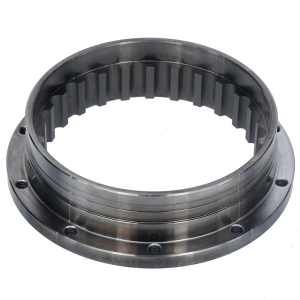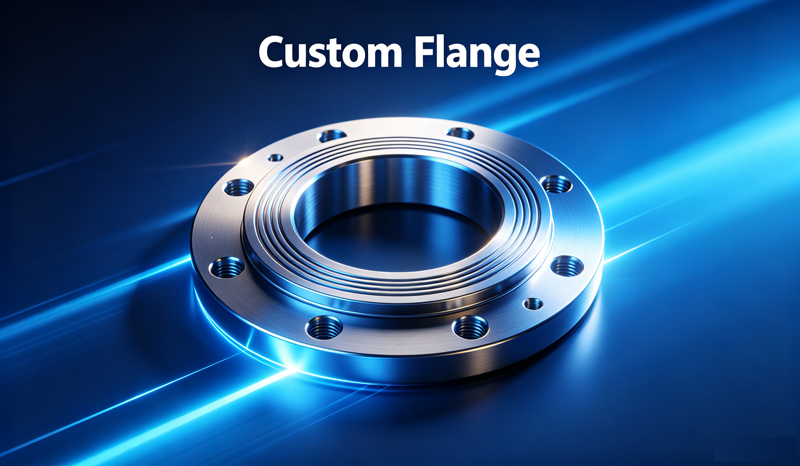
Standard flanges are widely used across industrial piping systems because they are cost-effective, readily available, and compatible with most common applications. In many situations, standard ANSI, ASME, DIN, or EN flanges provide everything needed for reliable pipe connections.
However, industrial systems are not always built around standard conditions.
As projects become more specialized, engineers often encounter problems that standard flanges simply cannot solve — dimensional mismatches, sealing failures, corrosion issues, limited installation space, or complex equipment interfaces. In these situations, a custom flange is no longer an optional upgrade; it becomes the most practical and reliable engineering solution.
Whether you are retrofitting aging equipment, designing high-pressure piping, or developing custom machinery, understanding when to use a custom flange can help reduce installation problems, improve sealing reliability, and extend long-term system performance.
Table of Contents
ToggleWhat Makes a Flange “Custom”?
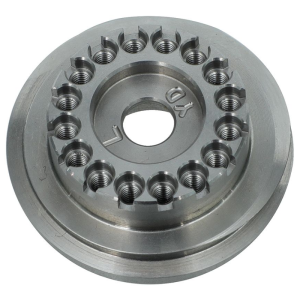
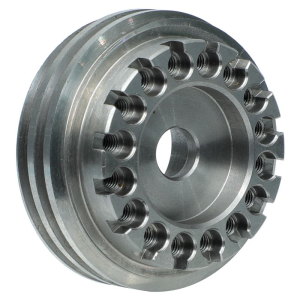
A custom flange is a flange specifically engineered to meet unique dimensional, mechanical, or operational requirements that fall outside standard industrial specifications.
Unlike standard catalog flanges, custom flanges can be manufactured with:
Non-standard diameters and thicknesses
Special bolt hole patterns
Custom sealing surfaces
Integrated machining features
Specialized materials
Compact or lightweight structures
Enhanced corrosion or temperature resistance
Modern CNC machining technology allows custom flanges to be manufactured with extremely high dimensional accuracy, tight tolerances, and complex integrated features for demanding industrial applications.
Your Existing Equipment Doesn’t Match Modern Standards
One of the most common reasons for using custom flanges is interface mismatch between existing equipment and current piping standards.
This is especially common in:
Brownfield retrofit projects
Older industrial plants
Imported machinery
Customized production equipment
Legacy pipeline systems
In many older facilities, the original flange dimensions no longer correspond to modern ASME or DIN standards. Bolt hole spacing, bore diameter, flange thickness, or sealing face geometry may differ from currently available standard products.
Using standard flanges in these situations often creates installation difficulties, alignment issues, leakage risks, or the need for multiple transition adapters.
A custom flange can be precisely machined to match the existing interface, allowing seamless integration without replacing the entire piping system.
For retrofit projects, this approach significantly reduces downtime, engineering complexity, and installation cost.
Your System Operates Under Extreme Conditions
Standard flanges are designed for general industrial service conditions. But in harsh environments involving extreme pressure, temperature, or corrosive media, standard flange configurations may not provide sufficient reliability or service life.
Custom flanges are commonly required in:
High-pressure hydraulic systems
Petrochemical processing plants
Offshore oil and gas equipment
Steam power generation systems
LNG and cryogenic applications
Chemical processing pipelines
In high-pressure or high-temperature systems, custom flanges can incorporate thicker wall sections, reinforced hub structures, and upgraded sealing designs to withstand severe mechanical stress and thermal cycling.
For corrosive environments involving seawater, acids, alkalis, or aggressive chemicals, custom flanges can be manufactured from advanced materials such as:
316L stainless steel
Super duplex stainless steel
Titanium alloys
Inconel
Hastelloy
Additional surface treatments and anti-corrosion coatings can further improve durability and long-term reliability.
You Need Specialized Sealing Performance
Sealing performance is often one of the most critical factors in industrial piping systems.
In applications involving high pressure, vacuum environments, hazardous media, or strict leakage control, standard flange sealing surfaces may not provide sufficient sealing reliability.
Custom flanges can incorporate advanced sealing features such as:
O-ring grooves
RTJ (Ring Type Joint) sealing faces
Metal-to-metal sealing surfaces
Precision gasket grooves
Vacuum sealing structures
Custom raised-face geometries
These sealing features require precision CNC machining to achieve accurate surface flatness, concentricity, and surface finish quality.
Industries such as semiconductor manufacturing, pharmaceutical processing, hydrogen energy, and chemical processing often rely on customized sealing structures to ensure operational safety and contamination control.
Installation Space Is Limited
Many industrial systems are installed in highly compact environments where standard flange dimensions create assembly or maintenance problems.
Examples include:
Offshore platforms
Ship engine rooms
Compact hydraulic systems
Automation equipment
Mobile machinery
Skid-mounted processing systems
Standard flanges may require excessive bolt clearance or occupy too much installation space.
Custom flanges allow engineers to optimize the connection structure for confined layouts by using:
Reduced outer diameters
Slim-profile flange bodies
Integrated connection structures
Customized bolt orientations
Lightweight designs
This improves installation accessibility while maintaining structural integrity and sealing performance.
Your Flange Requires Integrated Machining Features
Modern industrial systems increasingly require multifunctional components that combine multiple machining operations into a single part.
Custom CNC machined flanges can integrate features such as:
Threaded holes
Cross holes
Precision bores
Sensor ports
Alignment features
Deep cavity machining
Multi-axis angled holes
O-ring sealing grooves
Undercuts and recessed features
Integrating these features directly into the flange body reduces assembly complexity, minimizes part count, and improves manufacturing efficiency.
This is particularly valuable for hydraulic manifolds, automation equipment, fluid control systems, and high-precision mechanical assemblies.
You Are Developing Prototype or Custom Equipment
Prototype development and custom equipment manufacturing frequently require non-standard flange solutions.
During early-stage equipment development, engineers often need:
Small-batch flange production
Rapid design modifications
Experimental sealing configurations
Custom interface geometries
Flexible material selection
Traditional forging or casting methods are often too slow and expensive for prototype projects.
CNC machining allows rapid production of custom flanges without dedicated tooling, making it ideal for:
R&D projects
Prototype validation
Specialized machinery
Low-volume industrial equipment
Engineering test systems
This flexibility helps accelerate product development while reducing upfront manufacturing costs.
Benefits of Custom CNC Machined Flanges
Compared to modified standard flanges or adapter-based solutions, custom CNC machined flanges provide several important advantages.
Improved Equipment Compatibility
Custom flanges are manufactured specifically for the application, eliminating interface mismatch issues.
Reduced Leakage Risk
Precision-machined sealing surfaces improve sealing reliability under demanding operating conditions.
Simplified Assembly
Integrated machining features reduce the need for additional fittings and transition components.
Better Long-Term Reliability
Optimized materials and structural designs improve durability in harsh environments.
Faster Maintenance and Installation
Customized layouts improve accessibility and simplify maintenance procedures.
Enhanced System Performance
Tailored flange designs improve flow efficiency, pressure stability, and operational safety.
Industries That Commonly Require Custom Flanges
Custom flanges are widely used across industries that involve specialized operating conditions or non-standard equipment configurations, including:
Oil and gas
Petrochemical processing
Marine engineering
Power generation
Food and beverage processing
Pharmaceutical manufacturing
Semiconductor production
Hydrogen energy systems
Aerospace equipment
Industrial automation
Heavy hydraulic systems
Each industry may require unique materials, pressure ratings, machining tolerances, and sealing structures.
Conclusion
Standard flanges remain the preferred choice for most conventional piping systems because they are affordable, standardized, and easy to source. However, once a project involves non-standard dimensions, extreme operating conditions, specialized sealing requirements, compact installation spaces, or complex integrated machining features, custom flanges become essential.
A custom flange is not simply a non-standard component — it is often the most practical engineering solution when standard connections can no longer guarantee proper fit, sealing reliability, or long-term system performance.
With advanced CNC machining technology, custom flanges can now be manufactured with exceptional precision, material flexibility, and integrated functionality, helping engineers solve complex connection challenges across modern industrial systems.