Table of Contents
ToggleIntroduction
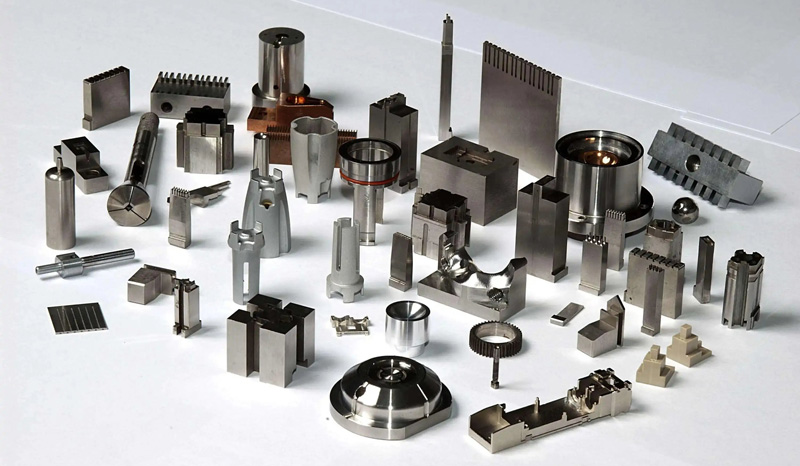
In the current precision manufacturing industry, high-mix low-volume (HMLV) production has become the mainstream demand for custom CNC machining. A large number of industrial equipment parts, automated fixture components, medical precision accessories, and aerospace prototype parts no longer require mass production. Instead, they feature diverse specifications, frequent style changes, and small single-batch quantities.
For purchasers and mechanical design engineers, unreasonable structural design, redundant processes, and non-standard dimensional tolerances are the core reasons for increased quotation costs, prolonged delivery cycles, and unstable quality in small-batch custom CNC orders. Industry data shows that in high-mix environments, setup and changeover activities can consume 20% to 30% of total production time — a hidden inefficiency that significantly drives up per-part costs and extends delivery timelines in small-batch manufacturing. ( Source: Modern Machine Shop — Why Setups Are the Real Bottleneck in High-Mix Machining ) Different from mass production design logic that focuses on standardized efficiency, HMLV CNC design needs to take processing versatility, quick setup, low iteration cost, and factory adaptability as the core priorities. For more information on how we apply these principles to custom CNC orders, visit the XINQIDA CNC Machining Design Guide
This guide summarizes practical CNC machining design rules for high-mix low-volume scenarios, helping customers who source CNC factories optimize part designs, reduce unnecessary processing costs, shorten proofing and production cycles, and improve the cooperation efficiency of custom orders.
1. Core Design Principles for HMLV Custom CNC Machining
The biggest pain point of small-batch and multi-variety processing is frequent machine tool debugging, fixture replacement, and program adjustment. Mass production can dilute the fixed cost of setup and debugging through large output, while HMLV orders will directly accumulate these costs into the unit price of parts. Therefore, the core of design optimization is to reduce the debugging threshold and simplify the processing flow.
First, follow the universal processing standard of CNC machine tools. Avoid designing special-shaped structures that require customized fixtures and special tools. For parts with similar structures, unify the mainstream tolerance range, aperture standard, and fillet specification as much as possible, so that CNC factories can use general-purpose tools and standard fixtures for production, eliminating the time and cost of custom tooling development.
Second, simplify the clamping structure of parts. Small-batch processing does not support complex multi-time clamping and ultra-precision positioning auxiliary structures. The design should retain a unified clamping datum and avoid irregular protrusions, deep grooves, and blind holes that are difficult to clamp. This can effectively reduce the repeated positioning error caused by multiple clampings and improve the one-time yield of customized parts.
Third, control the iteration cost of design changes. For prototype parts and trial-production parts with uncertain parameters, the design should adopt a modular split structure instead of integral forming. When subsequent functional adjustment and size modification are required, only individual modules need to be optimized, without reprocessing the whole part, which greatly saves the time and material cost of secondary proofing.
2. Dimensional Tolerance Optimization: Balance Precision Requirements and Processing Costs
Tolerance setting is the key factor affecting the quotation and delivery of HMLV CNC orders. Many purchasers and designers habitually set ultra-high precision tolerances for all dimensions to pursue product performance, which is unnecessary in most small-batch custom scenarios.
For core assembly dimensions and functional matching surfaces, it is necessary to retain strict tolerance standards to ensure the assembly accuracy and service performance of parts. However, for non-functional surfaces, redundant holes, and non-matching outer contour dimensions, loosen the tolerance range appropriately according to the processing standard of conventional CNC machine tools.
Reasonable tolerance differentiation can reduce the repeated finishing times of CNC machine tools, reduce the technical difficulty of processing, and enable factories to complete production with conventional processes instead of high-precision repeated calibration. For high-mix low-volume orders with frequent order switching, this optimization can directly reduce the processing cycle and effectively control the customized processing cost.
3. Material and Structural Design Adapted to Small-Batch Processing
In high-mix low-volume custom orders, material selection and structural design need to adapt to the flexible production mode of CNC factories. In terms of materials, prioritize conventional mainstream materials (such as 6061/7075 aluminum alloy, 304 stainless steel, ABS, POM) that are in stock in most processing factories. Avoid special specifications of alloy materials and rare engineering plastics that require customized procurement.
Special materials will lead to prolonged material procurement cycles for small-batch orders, and the small procurement volume cannot enjoy bulk material discounts, resulting in a sharp increase in overall order costs. Conventional stock materials can realize rapid feeding and emergency processing, meeting the urgent delivery needs of prototype proofing and small-batch trial production.
In terms of structural design, avoid ultra-thin walls, ultra-deep narrow grooves, and micro-structures that are easy to deform in processing. Small-batch CNC processing lacks repeated processing experience accumulation for new products, and special fragile structures are prone to processing deformation, tool collision and scrapping. The optimized structural design with moderate process redundancy can improve the processing pass rate of primary products and avoid rework losses caused by small-batch scrapping.
4. Process Simplification Design to Improve Custom Order Efficiency
The process flow of HMLV CNC orders directly determines the delivery speed and quality stability. Designers should integrate process simplification ideas into the product design stage in advance, reducing complex secondary processing procedures for factories.
Reduce unnecessary secondary processes such as special surface treatment, precision deburring, and irregular chamfering customization. For parts without special anti-corrosion and appearance requirements, adopt conventional processing and natural surface oxidation treatment; for edge structures that do not affect assembly and use, standard uniform chamfering or rounding is adopted to avoid manual personalized finishing.
At the same time, unify the processing technology of similar customized parts. For multi-specification parts of the same series, keep consistent clamping datums, processing sequences and tool paths. When CNC factories switch production of different specifications of parts, they do not need to rewrite programs and debug equipment repeatedly, which greatly improves the flexible production efficiency of mixed orders.
5. Practical Suggestions for Purchasers to Cooperate with CNC Factories
For purchasers who are responsible for custom CNC part procurement, design optimization is not only the work of engineers, but also the core link of cost control and delivery management. In high-mix low-volume procurement scenarios, it is recommended to communicate with processing factories in advance in the design stage, confirm the factory’s conventional processing capacity, tool configuration and fixture specifications, and adjust the part design scheme in a targeted manner.
Avoid rigid design standards that do not match the factory’s processing conditions, so as to prevent the factory from adopting temporary makeshift processes or high-cost customized processing methods. For multi-variety batch decentralized orders, unified design specifications and tolerance standards can be formed, which is convenient for long-term cooperative factories to form standardized processing mechanisms, and continuously optimize order delivery efficiency and quality stability.
Conclusion
High-mix low-volume custom CNC machining is no longer a simple small-batch processing service, but a flexible manufacturing solution focusing on design adaptation, cost optimization and efficient delivery. Different from the standardized design logic of mass production, HMLV design needs to fully consider the actual processing conditions of CNC factories, simplify processes, optimize tolerances, and standardize structures.
By adopting the above design strategies, enterprises can effectively solve the pain points of high cost, long cycle and unstable quality of small-batch multi-variety customized parts, maximize the processing efficiency of CNC factories, and create greater cost and delivery advantages for custom CNC orders. To learn more about our custom CNC solutions, visit XINQIDA Machining.