
Why Do Engineers Prefer Aluminum CNC Parts?
Engineers prefer aluminum CNC parts because they offer an excellent balance of strength, lightweight performance, machinability, and cost. Aluminum alloys such as 6061, 7075, and 2024 are easy to machine, achieve tight tolerances, and provide excellent corrosion resistance. These advantages make aluminum an ideal choice for aerospace, automotive, robotics, electronics, and industrial equipment.
Key Benefits
- Lightweight with high strength
- Excellent machinability
- Tight tolerances and precision
- Corrosion resistance
- Good thermal conductivity
- Easy anodizing and surface finishing
- Cost-effective for prototypes and production
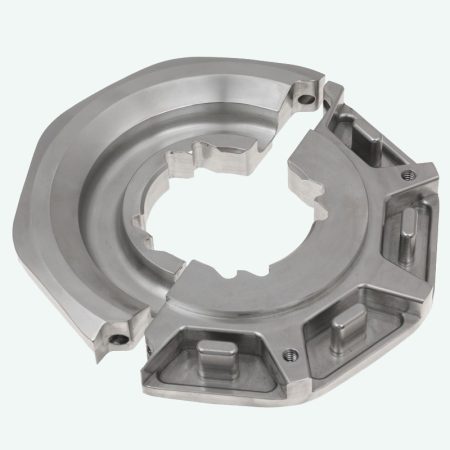
Properties of Different Aluminum Grades
Different aluminum grades offer distinct mechanical and physical properties, all CNC machining-optimized to meet your application’s specific strength, corrosion resistance, or durability needs. Aluminum Design Guide.
| Aluminum Grade | Density (g/cm³) | Tensile Strength (MPa) [T6 Temper] | Yield Strength (MPa) [T6 Temper] | Elongation at Break (%) | Max Service Temp (℃) | Hardness (HB) | Corrosion Resistance |
|---|---|---|---|---|---|---|---|
| 1100 | 2.71 | 110-130 | 35-50 | 20-25 | 150 | 23-28 | Good |
| Key Features: High purity, easy machining, no stress cracking risk | |||||||
| 5052 | 2.68 | 230-260 | 190-210 | 12-15 | 175 | 60-70 | Excellent (Seawater resistant) |
| Key Features: Medium strength, fatigue-resistant, minimal weld distortion | |||||||
| 6061 | 2.70 | 290-310 | 240-260 | 10-12 | 200 | 75-85 | Good |
| Key Features: Balanced performance, high dimensional stability, strength adjustable | |||||||
| 6063 | 2.70 | 240-260 | 200-220 | 12-14 | 180 | 65-75 | Good |
| Key Features: Low impurity, high surface finish, ideal for anodizing | |||||||
| 7075 | 2.81 | 540-580 | 480-510 | 8-10 | 120 | 150-160 | Moderate (Requires corrosion protection) |
| Key Features: Aerospace-grade strength, controlled cutting speed required | |||||||
| 2024 | 2.78 | 470-500 | 320-350 | 10-12 | 120 | 120-130 | Poor (Requires protection) |
| Key Features: High shear strength, post-machining stress relief needed | |||||||
| 5083 | 2.66 | 300-330 | 210-240 | 15-18 | 175 | 80-90 | Excellent |
| Key Features: High corrosion resistance, suitable for marine applications | |||||||
Applications of Aluminum CNC Machining Services
Aerospace
Automotive
Electronic
Medical
Industrial Machinery
Optics
Semiconductor
Heat Treatment For Aluminum CNC Machining
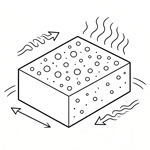
Solution Heat Treatment
Applicable to heat-treatable aluminum alloys such as 6061 and 7075, solution heat treatment dissolves alloying elements like magnesium, silicon, copper, and zinc into the aluminum matrix at elevated temperatures, creating a supersaturated solid solution that prepares the material for subsequent strengthening processes.

Quenching
After solution heat treatment, aluminum parts are rapidly quenched — typically in water or polymer solutions — to preserve the supersaturated structure. Fast cooling prevents premature precipitation of alloying elements and retains the alloy’s strengthening potential for the aging stage.

Aging
Aging strengthens aluminum alloys through controlled precipitation hardening. During natural or artificial aging, fine precipitates form within the aluminum matrix, significantly improving tensile strength, hardness, and mechanical performance while maintaining lightweight characteristics.
Surface Finishing Options for Aluminum CNC Services

Anodizing
Applicable to aluminum and aluminum alloys, the anodizing process significantly enhances the surface hardness (HV300-800) and salt spray resistance of components, while being dyeable to meet aesthetic requirements across multiple industries.

Powder Coating
Powder coating for aluminum, boasting core advantages of over 95% paint utilization rate and exceptional weather resistance (with an outdoor service life of more than 15 years), delivers dual decorative and protective functions through a straightforward process, making it the preferred choice for both commercial and industrial applications.

Electrophoretic Coating
Aluminum electrophoretic coating, catering to high-end requirements across diverse industries, combines decorative and protective properties with a coating that bonds tightly to the substrate and resists peeling, making it widely utilized in bathroom hardware, mid-frames for electronic devices, and other products.

Passivation
The passivation technology suitable for precision CNC aluminum components enhances corrosion resistance without compromising dimensional accuracy or appearance, and is widely utilized in high-end sectors such as electronics and automotive.
Cost-saving Design Tips
To cut costs while making aluminum alloy parts, first use DFM principles—don’t add features that are hard to machine.
Design Guide For Aluminum CNC Machining
It seems we can’t find what you’re looking for.
FAQ – Custom Aluminum CNC Machining Services
We commonly machine 6061, 6063, 7075, 2024, 5052, and 5083 aluminum alloys.
6061 is the most widely used due to its excellent balance of strength, corrosion resistance, and cost-effectiveness, making it suitable for most industrial and electronic components.
7075 aluminum is a high-strength aerospace-grade material used for demanding applications such as UAV structures, robotics arms, and high-load mechanical parts.
For marine or highly corrosive environments, 5052 and 5083 are preferred due to their superior corrosion resistance.
Our engineering team can recommend the most suitable alloy based on your application, strength requirements, and machining budget.
6061 aluminum offers good machinability, corrosion resistance, and moderate strength, making it ideal for general-purpose CNC parts such as housings, brackets, and enclosures.
7075 aluminum, on the other hand, provides significantly higher tensile strength and hardness, close to some steels, but has lower corrosion resistance and slightly higher machining cost.
In practice, 6061 is used for cost-sensitive and structural applications, while 7075 is selected for high-stress, aerospace, and performance-critical components.
For standard aluminum CNC machining, we typically maintain tolerances of ±0.01 mm.
With precision 5-axis machining and controlled production processes, critical features can reach as tight as ±0.005 mm depending on geometry and part complexity.
Final achievable tolerance also depends on part structure, wall thickness, and material stress behavior.
Each part is verified using CMM inspection to ensure dimensional accuracy before shipment.
Yes, thin-wall aluminum machining is possible with proper process control.
Aluminum has a relatively low stiffness, so thin structures are sensitive to cutting forces and heat.
We reduce deformation risk through optimized tool paths, multi-stage roughing and finishing, stress-relief pre-machining, and controlled cutting parameters.
For highly sensitive parts, we also recommend design optimization (DFM review) to improve rigidity before production.
We offer a full range of surface finishing options, including anodizing (clear, black, and color), hard anodizing, sandblasting, powder coating, and electrophoretic coating.
Anodizing is the most commonly used finish, providing improved corrosion resistance, surface hardness, and aesthetic appearance without significantly increasing part weight.
Surface treatment selection depends on application environment, wear resistance requirements, and cosmetic needs.
Yes, anodizing can slightly affect final dimensions due to oxide layer formation.
Standard anodizing typically adds around 5–25 microns of thickness per surface, depending on specification and process type.
For precision parts, we compensate for this change during machining to ensure final assembled dimensions remain within tolerance after finishing.
CNC machining cost can be reduced through several design and process optimizations:
- Avoid deep cavities and overly complex geometries
- Maintain consistent wall thickness
- Reduce unnecessary tight tolerances
- Select standard aluminum alloys like 6061
- Minimize secondary operations when possible
We also provide DFM (Design for Manufacturability) feedback to help optimize your design before production, reducing both machining time and cost.
Custom aluminum CNC parts are widely used in aerospace, automotive, robotics, electronics, medical devices, semiconductor equipment, and industrial automation.
Aluminum is preferred due to its lightweight properties, good thermal conductivity, corrosion resistance, and excellent machinability, making it suitable for both structural and functional components.
Lead time depends on part complexity, quantity, and surface finishing requirements.
Prototype parts are typically delivered within 3–7 working days.
Small batch production usually takes 7–15 days.
For larger volumes or complex multi-process parts, delivery schedules are confirmed after technical review of drawings.
We accept STEP, IGES, STL, and PDF drawings for quotation and production.
For accurate pricing, please also provide material requirements, quantity, surface finish specifications, and any critical tolerances.
Our engineering team will review your design and provide a quotation along with manufacturability suggestions if needed.