
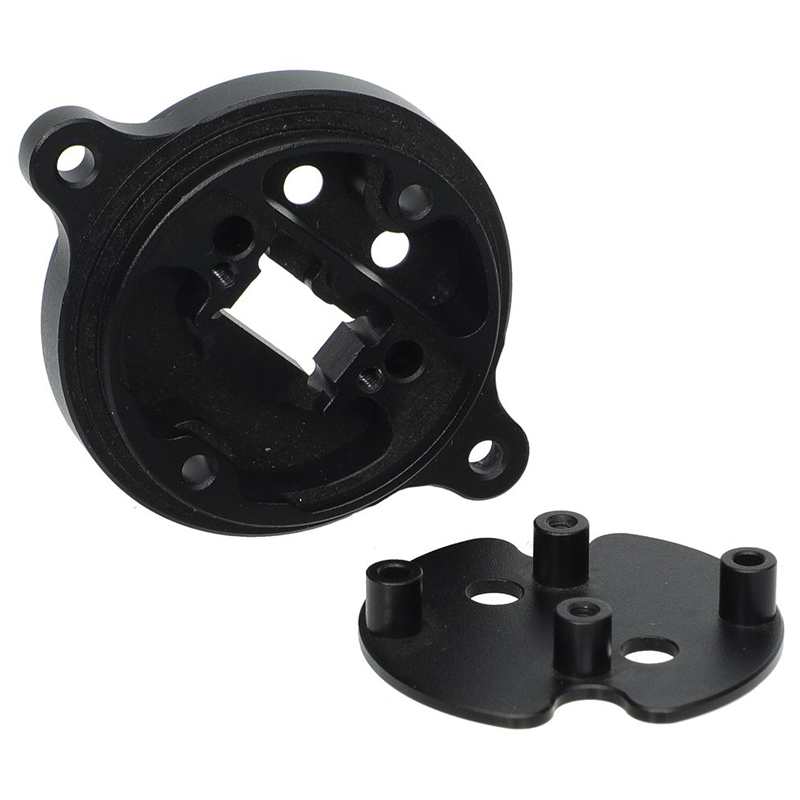


Custom CNC Machined Brass Clevis Connecting Sleeve Parts
Description
Product Overview
This Custom CNC Machined Brass Clevis Connecting Sleeve is a precision-machined mechanical component designed for customized connection, linkage, positioning, guiding, and assembly applications.
The component features a cylindrical sleeve body with an internal bore, longitudinal machined features, and a clevis-style end with two parallel fork ears and a transverse pin hole. This combination allows the sleeve to be integrated with mating components through a pin or similar mechanical fastening method.
Manufactured using a combination of CNC turning, CNC milling, drilling, and secondary precision machining, the part can be produced according to customer drawings, 3D CAD models, or approved samples.
The cylindrical body is primarily suited to CNC turning, while the clevis section, longitudinal slot, and cross hole require additional milling and drilling operations. This makes the component a typical example of a multi-operation CNC machined brass part where feature position, concentricity, wall thickness, and fork alignment need to be controlled throughout the manufacturing process.
Dimensions, bore size, fork width, pin-hole diameter, slot geometry, wall thickness, tolerances, and surface finish can all be customized according to the application requirements.
This clevis connecting sleeve is manufactured primarily through precision turning. Explore our CNC Turning Services to learn more about our capabilities for custom turned components.
CNC Machining Services & Specifications
| Parameter | Specification |
|---|---|
| Part Name | Brass Clevis Connecting Sleeve |
| Part Type | Custom Mechanical Connection Component |
| Manufacturing Process | CNC Turning + CNC Milling |
| Secondary Processes | CNC Drilling, Slot Milling, Chamfering, Deburring |
| Material | Brass |
| Common Brass Grades | C360, C377, C385, C464 and other grades upon request |
| Body Geometry | Cylindrical / Hollow Sleeve |
| Main Features | Internal Bore, Clevis Fork, Pin Hole, Longitudinal Slot |
| Machining Equipment | CNC Lathe, CNC Milling Machine, Turn-Mill / Multi-Axis Equipment |
| Typical Machining Tolerance | ±0.01–±0.05 mm, depending on feature and part geometry |
| Critical Feature Tolerance | Tighter tolerances available according to drawing requirements |
| Hole Position Accuracy | Controlled according to drawing and inspection requirements |
| Concentricity | Controlled according to specified functional requirements |
| Surface Finish | Machined, Polished, Brushed or Custom Finish |
| Deburring | Standard CNC Deburring |
| Inspection Equipment | Calipers, Micrometers, Gauges, Height Gauges, CMM |
| Production Volume | Prototype, Low Volume, Small Batch and Production Runs |
| Drawing Formats | STEP, STP, IGES, DWG, DXF, PDF, SolidWorks and other common formats |
| Customization | Material, Dimensions, Bore, Fork Geometry, Slots, Pin Holes, Tolerances and Finish |
Tolerance note: The tolerance values above are typical machining capabilities rather than a blanket tolerance guarantee for every feature. Actual achievable tolerance depends on material grade, part dimensions, wall thickness, feature geometry, machine setup, production volume, and inspection method. Critical dimensions should always be defined on the customer’s engineering drawing.
Key Design Features
1. Clevis-Type Forked End
The forked end consists of two parallel ears with a transverse hole. This geometry provides a mechanical interface for a mating component, pin, shaft, or fastening element.
The fork width, ear thickness, hole diameter, and hole position can be customized to suit the mating assembly.
2. Cylindrical Connecting Sleeve
The main body is manufactured as a cylindrical sleeve with an internal bore. CNC turning provides accurate control over the outside diameter, inside diameter, length, shoulders, and other rotational features.
The bore can be customized according to the required mating shaft, tube, pin, or internal component.
3. Longitudinal Machined Slot
The longitudinal slot is produced through CNC milling after the turning operation.
Depending on the customer’s assembly design, the slot may be used for clearance, access, adjustment, positioning, weight reduction, or interaction with a mating component.
Its exact function should be determined from the customer’s assembly rather than assumed solely from the appearance of the part.
4. Transverse Pin Hole
The cross-drilled hole through the clevis ears is a critical functional feature.
Its diameter, center position, perpendicularity, and alignment between the two fork ears can directly affect the fit and movement of the mating component.
Material Analysis
Brass
Brass is particularly suitable for precision CNC components with complex turned and milled features.
Its main advantages include:
- Excellent machinability
- Good dimensional stability
- Good corrosion resistance
- Good surface appearance
- Suitable strength for many mechanical connection applications
- Good electrical and thermal conductivity
- Efficient cutting performance for high-volume CNC production
Different brass grades provide different balances of machinability, strength, corrosion resistance, and conductivity.
C360 Brass
C360 is widely used for precision CNC machining because of its excellent machinability.
It is particularly suitable when the component contains:
- Internal bores
- Small holes
- Slots
- Threaded features
- Detailed turned profiles
- Multiple CNC machining operations
C377 Brass
C377 can be considered when greater emphasis is placed on strength and hot-forging characteristics compared with free-machining grades.
C464 Brass
C464 may be considered for applications requiring improved corrosion resistance, particularly in certain marine or outdoor environments.
Material selection should ultimately be based on the mechanical, environmental, electrical, and dimensional requirements of the final assembly.
CNC Machining Capabilities
Our CNC machining process can combine multiple operations to manufacture the complete connecting sleeve from brass bar or other suitable stock material.
CNC Turning
CNC turning is used for:
- Outside diameter
- Internal bore
- End faces
- Steps and shoulders
- Grooves
- Chamfers
- Cylindrical profiles
Turning provides the dimensional foundation for the sleeve body.
CNC Milling
CNC milling is used for:
- Clevis fork geometry
- Longitudinal slots
- Flats
- Relief features
- Non-round profiles
The fork geometry requires accurate positioning relative to the turned cylindrical body.
CNC Drilling
Cross drilling is used to produce the pin hole through the clevis ears.
For functional clevis assemblies, maintaining the correct relationship between the two fork ears and the pin hole is particularly important.
Deburring
After machining, burrs are removed from the bore, slot, fork edges, drilled holes, and other machined surfaces.
This is especially important around the clevis opening and cross hole because excessive burrs can interfere with assembly or pin movement.
Dimensional Tolerance Capability
For general CNC-machined features, a practical tolerance range can often be maintained around ±0.01 to ±0.05 mm, depending on the feature and component geometry.
For example:
| Feature | Typical Capability* |
|---|---|
| General turned dimensions | ±0.02–±0.05 mm |
| Precision turned dimensions | ±0.01–±0.02 mm |
| Bore diameter | ±0.01–±0.03 mm |
| Drilled pin hole | ±0.02–±0.05 mm |
| Slot width | ±0.02–±0.05 mm |
| Overall length | ±0.02–±0.05 mm |
| Fork width | ±0.02–±0.05 mm |
| Critical hole position | According to drawing / inspection requirement |
*Actual capability depends on part size, material, geometry, machine setup, tool condition, production volume, and inspection requirements.
For this type of component, feature-to-feature positional accuracy can be more important than simply achieving a very small dimensional tolerance.
For example, the following relationship may be critical:
Bore → Fork Centerline → Pin Hole → Mating Component
A component can have accurate individual dimensions but still create an assembly problem if these features are not correctly positioned relative to each other.
Manufacturing Challenges
1. Fork Alignment
The two clevis ears need to maintain the specified parallelism and relative position.
Excessive deviation can make pin installation difficult or cause unwanted movement in the assembled mechanism.
2. Pin Hole Position
The transverse pin hole must be positioned accurately relative to the fork geometry.
Hole diameter alone is not sufficient; the hole’s location and alignment are also important.
3. Thin-Wall Machining
If the sleeve wall or clevis ears are relatively thin, machining forces can cause deformation.
Tool selection, clamping pressure, cutting parameters, and machining sequence therefore need to be controlled.
4. Multiple Machining Operations
The component combines rotational and non-rotational features.
A typical process may involve:
CNC Turning → Repositioning → CNC Milling → Drilling → Deburring → Inspection
Each additional setup introduces another opportunity for positional variation.
5. Slot Machining
The longitudinal slot must maintain consistent width and depth while preserving sufficient wall thickness.
The machining strategy needs to balance dimensional accuracy with part rigidity.
6. Burr Control
The intersection between drilled holes, slots, and machined edges can create burrs.
Controlled deburring is therefore important for both appearance and assembly performance.
Application Scenarios
Depending on the final assembly and engineering requirements, custom brass clevis connecting sleeves can be used in applications such as:
- Mechanical linkage assemblies
- Industrial machinery
- Automation equipment
- Custom mechanical mechanisms
- Motion-control assemblies
- Instrumentation equipment
- Electromechanical equipment
- Mechanical connection systems
- Positioning and guiding mechanisms
- Custom fixtures and tooling
- Special-purpose industrial equipment
- Customized OEM assemblies
Many of these linkage‑style components serve robotic and automation projects. See our Custom Robot Parts Manufacturer page for more about our precision‑machined robot structural and joint components.
The actual application should be determined by the customer’s equipment and assembly design. The component geometry alone does not establish a specific end-use industry.
Customization Options
The connecting sleeve can be customized in multiple dimensions and configurations, including:
- Outside diameter
- Overall length
- Internal bore diameter
- Bore depth
- Fork width
- Fork ear thickness
- Pin-hole diameter
- Pin-hole position
- Slot width
- Slot length
- Slot depth
- Wall thickness
- Chamfer dimensions
- Corner radii
- Material grade
- Surface finish
- Dimensional tolerances
- Geometric tolerances
This makes the component suitable for OEM and non-standard CNC machining projects where standard off-the-shelf sleeves cannot meet the required geometry.
Quality Inspection
Quality control can focus on both individual dimensions and the relationship between functional features.
Typical inspection points include:
- Outside diameter
- Inside diameter
- Overall length
- Bore depth
- Fork width
- Fork ear thickness
- Pin-hole diameter
- Pin-hole position
- Slot width and depth
- Wall thickness
- Feature-to-feature position
- Concentricity
- Parallelism
- Surface condition
Depending on project requirements, inspection can be performed using:
- Digital calipers
- Micrometers
- Bore gauges
- Pin gauges
- Height gauges
- Optical measurement equipment
- Coordinate Measuring Machines (CMM)
Dimensional inspection reports can also be provided for projects requiring documented quality verification.
Why Use CNC Machining for Brass Connecting Sleeves?
CNC machining is particularly effective for this type of component because the part combines cylindrical and milled geometries.
A CNC turning operation can efficiently produce the sleeve body and internal bore, while CNC milling and drilling can create the clevis, slot, and transverse pin hole.
This combined manufacturing approach allows the component to be produced from a customer’s:
- 2D engineering drawing
- 3D CAD model
- STEP/STP file
- DXF/DWG file
- PDF drawing
- Existing sample
The machining process can then be adapted to the required quantity, tolerance, material, and inspection standard.
Frequently Asked Questions
What is a brass clevis connecting sleeve?
A brass clevis connecting sleeve is a custom mechanical component combining a cylindrical sleeve body with a clevis-style forked connection. The fork typically provides an interface for a pin or other mating component.
Is this an electrical fork connector?
No. The term clevis connecting sleeve refers to a mechanical connection component. It should not be confused with electrical fork terminals or fork wire connectors, which are used for electrical connections.
Why is brass used for this connecting sleeve?
Brass offers excellent machinability, good corrosion resistance, dimensional stability, and a combination of mechanical and electrical properties that can be useful in various industrial applications.
What brass grades can be used?
Common options include C360, C377, C385, and C464. The most suitable grade depends on the required machinability, strength, corrosion resistance, conductivity, and operating environment.
Can the clevis dimensions be customized?
Yes. The fork width, ear thickness, pin-hole diameter, hole position, bore size, sleeve diameter, slot dimensions, and overall length can all be customized according to the engineering drawing.
What CNC tolerance can you achieve?
Typical CNC machining tolerances may range from approximately ±0.01 to ±0.05 mm, depending on the feature, material, size, geometry, machining process, and inspection requirements. Tighter tolerances can be evaluated for specific critical dimensions.
Can you control the alignment of the two clevis ears?
Yes. Fork width, ear position, parallelism, and pin-hole alignment can be controlled according to the specified engineering requirements.
Can this part be manufactured from a 3D CAD model?
Yes. STEP, STP, IGES, SolidWorks and other common CAD formats can be used for CNC machining quotation and production.
Do you accept prototype and small-batch orders?
Yes. The manufacturing process can be adapted for prototypes, low-volume production, small batches, and larger production quantities.
Can you provide inspection reports?
Yes. Dimensional inspection and CMM measurement can be arranged when required by the customer or engineering specification.
Additional information
| material |
|---|
Reviews
There are no reviews yet.