
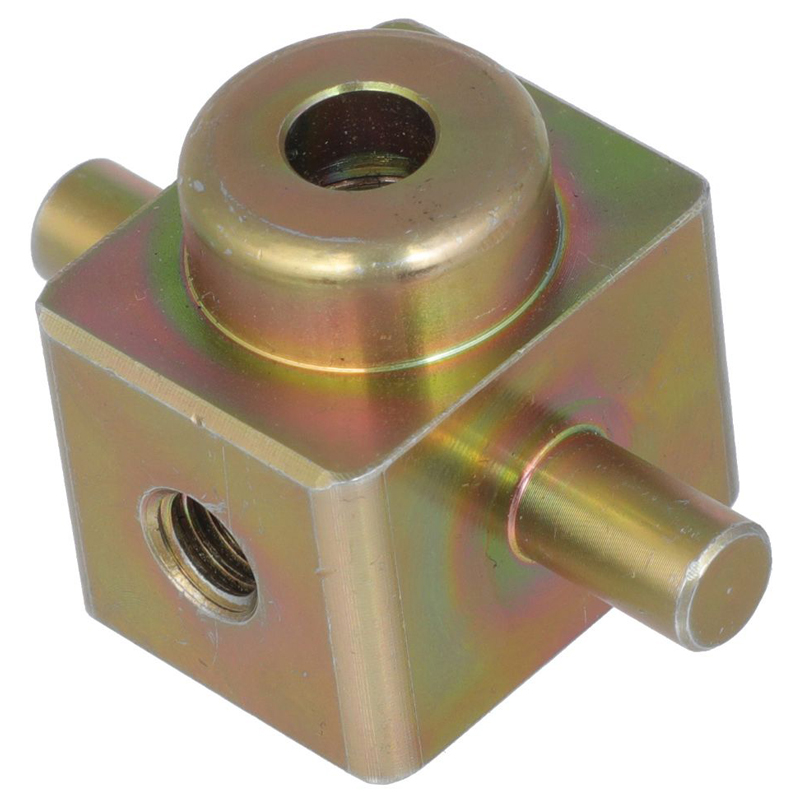
Custom CNC Machined Steel Mechanical Linkage Block with Integrated Pins and Threaded Holes
Description
Product Overview
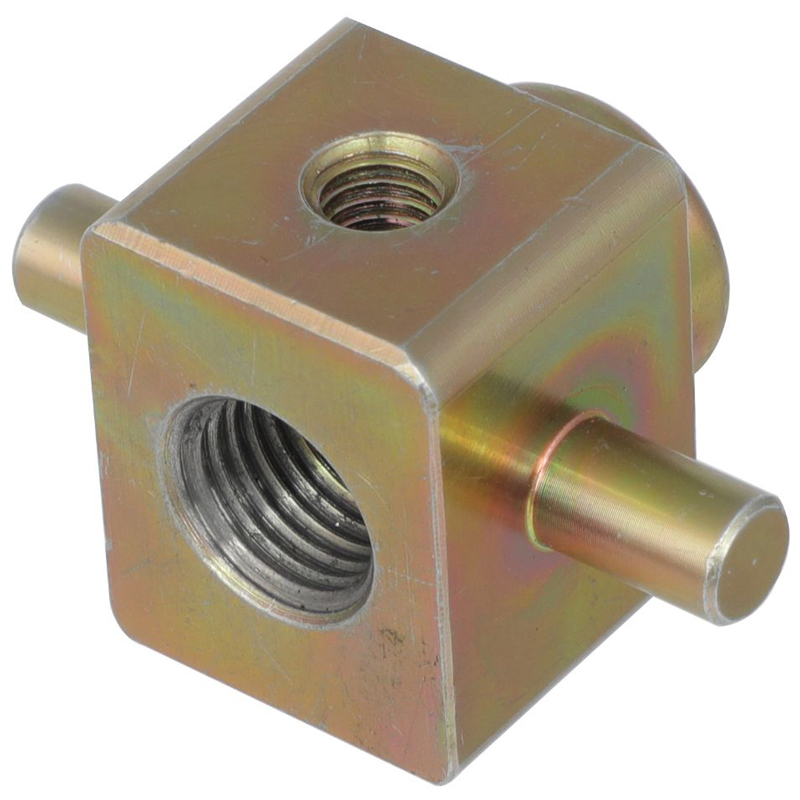
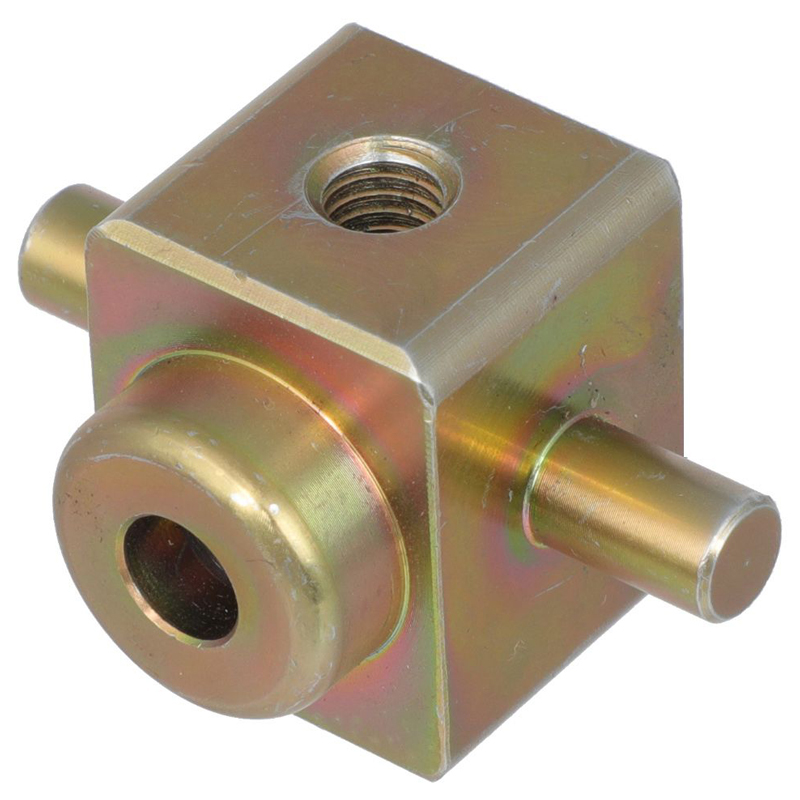
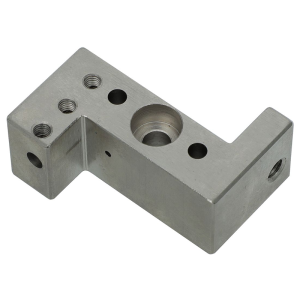
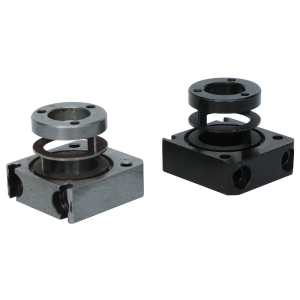
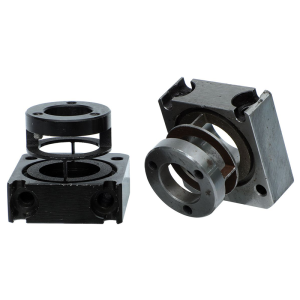
This custom CNC machined steel mechanical linkage block is designed as a compact connection and positioning component for mechanical linkage and reciprocating mechanisms. The part combines a solid machined body with integrated cylindrical pins, threaded holes, and precision-machined locating features, allowing multiple mechanical components to be connected within a limited installation space.
Unlike a simple mounting block, this type of mechanical linkage block can combine several functions in one component, including positioning, fastening, pivoting, guiding, and mechanical connection. CNC milling allows the threaded interfaces, cylindrical features, and reference surfaces to be machined from a common datum structure, helping maintain positional accuracy between multiple functional features.
The component can be manufactured according to customer drawings or 3D CAD models, with material selection, heat treatment, surface finishing, dimensional tolerances, and inspection requirements adjusted to the actual application.
CNC Machining Services & Specifications
| Parameter | Typical Capability |
|---|---|
| Part Type | Mechanical Linkage Block / Mechanical Joint Block |
| Manufacturing Process | CNC Milling, CNC Drilling, CNC Threading, Precision Reaming |
| Material | Carbon Steel, Alloy Steel, Stainless Steel |
| Typical Steel Grades | 1045, 4140, 40Cr, 303, 304, 316, or customer-specified grades |
| Maximum Part Size | Up to 400 mm, depending on geometry |
| General Machining Tolerance | ±0.01 mm to ±0.05 mm |
| Precision Tolerance | Up to ±0.005 mm for selected features |
| Hole Diameter Tolerance | Typically ±0.01 mm, subject to hole size and depth |
| Thread Type | Metric, UNC, UNF, BSP, NPT, or drawing-specified threads |
| Machined Features | Threaded Holes, Bores, Pins, Bosses, Slots, Locating Surfaces |
| Surface Finish | As-machined, Zinc Plating, Black Oxide, Passivation, or specified finish |
| Inspection | Vernier Calipers, Micrometers, Height Gauges, Gauges, CMM |
| Drawing Format | STEP, STP, IGES, X_T, DWG, DXF, PDF |
| Production Volume | Prototype, Low Volume, Small Batch, and Production Runs |
Actual tolerances depend on material, feature size, part geometry, machining process, and inspection requirements. Critical dimensions are controlled according to the customer’s engineering drawing.
This linkage block is mainly produced by milling. View our CNC Milling Services to know more about our milling capability.
Key Design Features
Integrated Cylindrical Pins
The integrated cylindrical features provide locating, guiding, or linkage functions while keeping the component compact. Machining these features as part of the main body can reduce the number of separate components and simplify assembly.
Multi-Directional Threaded Holes
Threaded holes on different faces allow the linkage block to connect with components from multiple directions. This configuration is useful where installation space is restricted and the mechanism requires several fastening or adjustment points.
Compact Mechanical Connection
The solid steel body provides a rigid connection between mechanical components while combining several locating and fastening functions into one machined component.
CNC-Machined Reference Surfaces
Critical mounting and locating surfaces can be machined from controlled datums. This is important when the linkage block must maintain the relative position of pins, holes, bosses, and mating components.
Applications
A mechanical linkage block can be used in equipment where compact mechanical connections and repeatable positioning are required, including:
- Industrial sewing and textile machinery
- Reciprocating mechanical mechanisms
- Mechanical linkage assemblies
- Small industrial machinery
- Automation equipment
- Packaging machinery
- Motion-control mechanisms
- Custom mechanical assemblies
- Special-purpose machinery
- OEM replacement and maintenance components
When the final application requires a specific motion relationship, XINQIDA can manufacture the linkage block according to the customer’s assembly drawing rather than relying only on the external shape of the component.
Material Selection
Carbon Steel
Carbon steel is suitable for general mechanical linkage blocks where good strength, machinability, and cost efficiency are required. Grades such as 1045 are commonly considered when the component needs greater mechanical strength than aluminum while remaining practical to machine.
Alloy Steel
Alloy steels such as 4140 or 40Cr are appropriate when the linkage block experiences higher mechanical loads, repeated movement, or increased wear at functional interfaces. Heat treatment can be considered when the engineering requirements call for improved hardness or mechanical strength.
Stainless Steel
Stainless steel can be selected when corrosion resistance is more important than the cost and machinability advantages of carbon or alloy steel. Grades such as 303, 304, and 316 can be evaluated according to the operating environment and required machining characteristics.
Surface Treatment
Depending on the application, steel linkage blocks can receive surface treatments such as zinc plating or black oxide. The selected finish should be matched to the required corrosion resistance, dimensional requirements, appearance, and contact surfaces.
Tolerance and Inspection Capability
Mechanical linkage blocks often contain several functional features that must maintain their relative position rather than simply meeting individual dimensional tolerances.
For example, the positional relationship between an integrated pin and a threaded hole may be more important than the nominal size of either feature. For this reason, inspection can include:
- Dimensional inspection of critical lengths and widths
- Hole and bore diameter inspection
- Thread gauge inspection
- Pin diameter inspection
- Positional relationship between functional features
- Flatness and perpendicularity inspection
- CMM measurement for complex geometries
- First Article Inspection for new components
For critical applications, the inspection method and tolerance requirements can be defined directly from the customer’s engineering drawing.
Manufacturing Challenges
1. Maintaining Positional Accuracy Between Multiple Features
The main challenge is not simply machining the block to size. Multiple threaded holes, pins, bosses, and reference surfaces may need to maintain a controlled relationship to each other.
A suitable datum strategy and machining sequence are therefore important.
2. Machining Cylindrical Pins Accurately
Integrated pins require careful control of diameter, concentricity, perpendicularity, and surface condition when they function as locating or pivoting features.
3. Threaded Holes on Multiple Faces
Machining threads from different orientations requires accurate workholding and coordinate control. The machining sequence must also prevent previously finished reference surfaces from being damaged during subsequent operations.
4. Controlling Deformation
Steel components can experience dimensional changes from machining stress, heat treatment, or surface treatment. For tighter-tolerance parts, machining allowance, process sequence, and final inspection need to be considered together.
5. Surface Treatment After Machining
When zinc plating or another coating is applied, coating thickness can affect critical holes, pins, and mating surfaces. Functional dimensions should therefore be specified with the finishing process in mind.
Why Use CNC Machining for a Mechanical Linkage Block?
CNC machining is particularly suitable for this type of component because the part combines multiple three-dimensional features within a relatively compact body.
Compared with assembling several separately manufactured pieces, machining the main body and integrated locating features as one component can reduce assembly interfaces and improve repeatability. CNC milling also allows the manufacturer to control the relationship between holes, pins, bosses, and reference surfaces directly from the CAD model or engineering drawing.
For prototype and low-volume production, CNC machining also avoids the need for dedicated tooling associated with some mass-production processes.
Custom Manufacturing for OEM Requirements
XINQIDA provides custom CNC machining for mechanical linkage blocks manufactured to customer drawings, CAD files, samples, or specified dimensions.
Depending on the project, the manufacturing process can include:
Material sourcing → CNC milling → drilling and threading → precision machining → deburring → surface treatment → dimensional inspection → final quality control
Customers can specify:
- Material and material grade
- Critical dimensions
- GD&T requirements
- Thread standards
- Surface treatment
- Heat treatment
- Inspection requirements
- Quantity
- Packaging requirements
This approach is suitable for prototypes, replacement components, small batches, and OEM production.
Frequently Asked Questions
What is a mechanical linkage block?
A mechanical linkage block is a machined component used to connect, locate, guide, or support parts within a mechanical linkage or motion mechanism. Its exact function depends on the surrounding assembly.
Can this mechanical linkage block be customized?
Yes. The dimensions, hole locations, integrated pins, threads, material, surface treatment, and tolerances can be customized according to an engineering drawing or 3D CAD model.
What materials can be used for CNC mechanical linkage blocks?
Carbon steel, alloy steel, and stainless steel are common options. The appropriate grade depends on load, wear, corrosion resistance, machining requirements, and surface treatment.
What tolerance can you achieve on a CNC machined linkage block?
Typical general tolerances can range from ±0.01 mm to ±0.05 mm depending on the component. Selected critical features can be manufactured to tighter tolerances, subject to geometry, material, machining process, and inspection requirements.
Can the integrated pins be machined together with the block?
Yes. Integrated pins, bosses, bores, and other cylindrical features can be CNC machined as part of the main body when the design is suitable for integrated machining.
Can steel mechanical linkage blocks be surface treated?
Yes. Depending on the material and application, options can include zinc plating, black oxide, passivation for stainless steel, and other customer-specified finishes.
Can you manufacture from a sample instead of a drawing?
For suitable projects, a physical sample can be used as a reference for reverse-engineering and quotation. A 2D drawing or 3D CAD model is preferred when precise functional tolerances and GD&T requirements must be controlled.
Is CNC machining suitable for low-volume linkage block production?
Yes. CNC machining is well suited to prototypes, replacement parts, low-volume production, and small-batch OEM components because it does not normally require dedicated production tooling for each part.
Custom CNC Machined Mechanical Linkage Blocks
If you need a custom CNC machined steel mechanical linkage block, send your 2D drawing, 3D CAD model, or part specifications for engineering review and quotation.
The manufacturing process can be adapted to the required material, dimensional tolerances, threaded interfaces, integrated pins, surface treatment, and inspection requirements.
Additional information
| material |
|---|
Reviews
There are no reviews yet.