
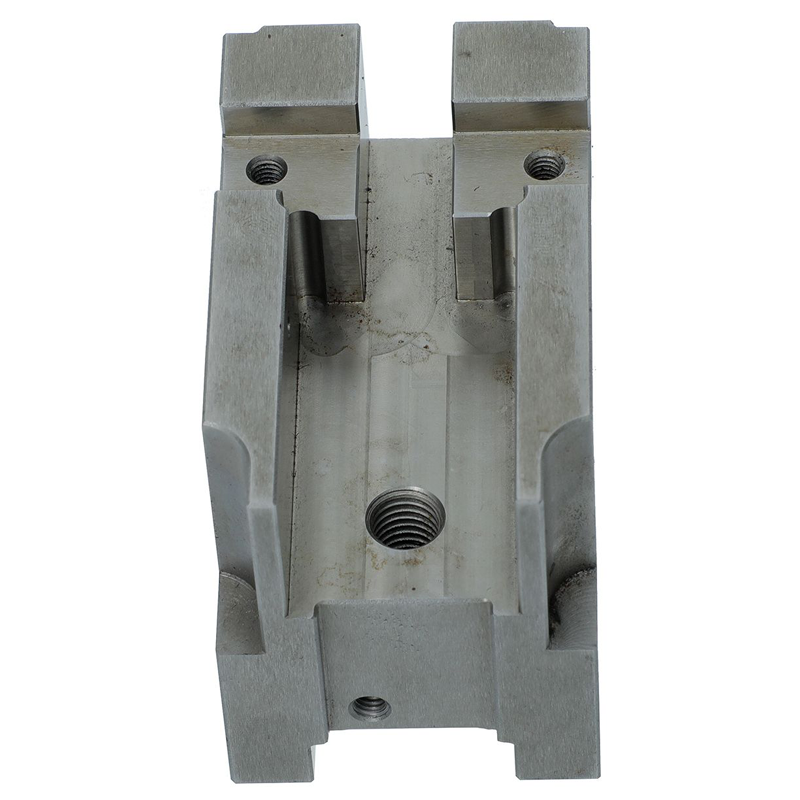
Custom CNC Machined Alloy Steel Pneumatic Gripper Body for Automation Equipment
Description
1. Product Overview
In modern high-speed automated assembly lines, the pneumatic gripper body serves as the structural backbone of the end-effector. This Custom CNC Machined Alloy Steel Pneumatic Gripper Body is engineered to provide uncompromising rigidity and longevity in harsh, repetitive industrial environments. Unlike standard aluminum grippers that suffer from premature wear, this alloy steel variant is specifically designed for heavy-duty pick-and-place operations requiring extreme cycle counts and high clamping forces.
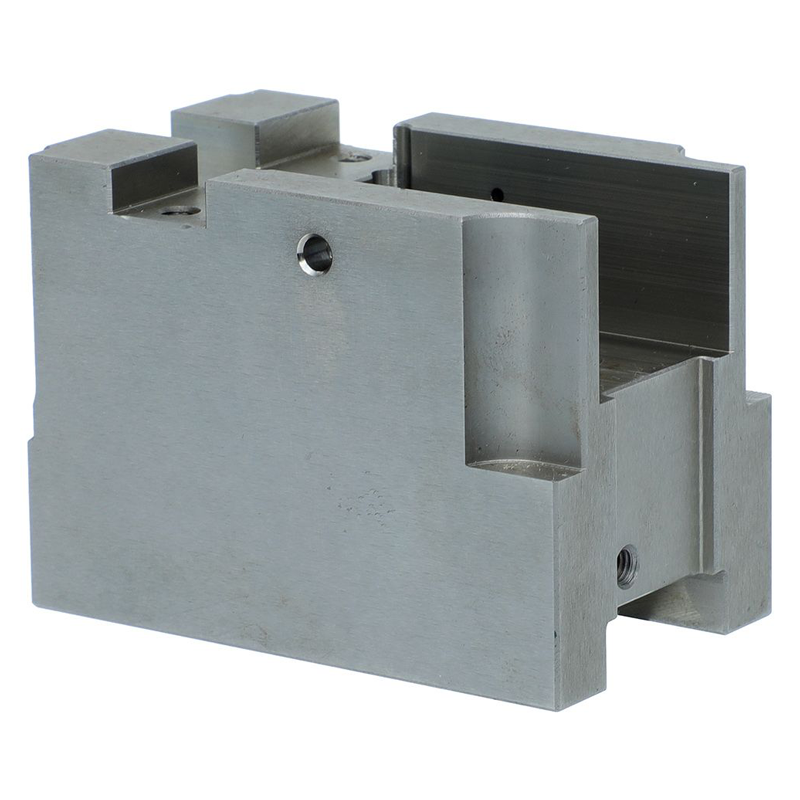
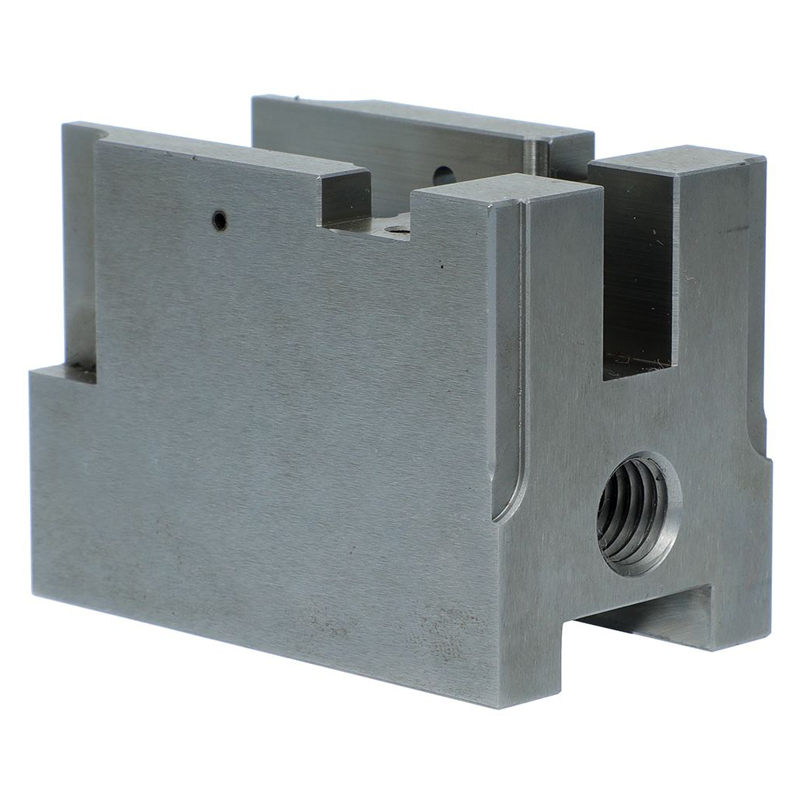
Precision-machined from high-grade alloy steel, this component features precision linear guide slots and a centralized wedge-drive cavity, ensuring flawless synchronization of dual jaws. Whether you are retrofitting an existing robotic arm or designing a proprietary automation fixture, this custom-machined block delivers the dimensional stability required for ±0.01mm positioning accuracy in the final assembly.
2. CNC Machining Services & Specifications
To meet Google’s preference for structured data, we present our machining capabilities in a clear table format:
| Specification / Parameter | Capability / Standard |
|---|---|
| CNC Machining Services | 3-Axis, 4-Axis, and 5-Axis Precision Milling |
| Primary Material | Alloy Steel (4140 / 42CrMo / 8620) |
| Alternative Materials | P20 Tool Steel, 17-4PH Stainless Steel, 7075 Aluminum (upon request) |
| Standard Tolerances | ±0.01mm (±0.0004 inches) for critical sliding surfaces |
| Ultimate Precision Capability | ±0.005mm for reference bores and jaw guide rails (post-grinding) |
| Surface Finish (Milled) | Ra 1.6μm (Standard), Ra 0.8μm (High-precision sliding faces) |
| Hole Accuracy | ISO 6H / 7H Internal Threads; Reamed holes up to H7 class |
| Surface Treatment Options | Black Oxide (anti-rust), Electroless Nickel Plating, or QPQ Nitriding |
| Max Part Dimensions | Up to 600mm x 400mm x 300mm (custom sizes available) |
| Inspection Equipment | CMM (Coordinate Measuring Machine), Micrometers, and Optical Comparators |
| Lead Time | 7-15 working days (depending on complexity and quantity) |
3. Material Analysis: Why Alloy Steel?
Choosing the right material is critical for this component. Here is the breakdown of why Alloy Steel is the premium choice for this gripper body:
-
Superior Wear Resistance: Aluminum grippers deform over time in high-speed, heavy-load applications. Alloy steel (e.g., 4140) provides excellent resistance against abrasion, ensuring the guide slots remain perfectly parallel for millions of cycles.
-
High Tensile Strength: With a yield strength typically exceeding 800 MPa (after heat treatment), alloy steel prevents structural deflection when clamping heavy workpieces. This ensures the gripping force is transmitted directly to the jaws without energy loss in the base body.
-
Fatigue Endurance: Automated robots often run 24/7. Alloy steel excels in dynamic load environments, resisting metal fatigue and micro-cracking significantly better than aluminum.
-
Thermal Stability: In environments with fluctuating operating temperatures, alloy steel maintains its structural dimensions, whereas aluminum may expand, leading to dimensional errors in the gripping process.
Note: If the application requires high-speed, lightweight motion, we highly recommend switching to Hard-Anodized 7075 Aluminum. We offer both options with full Material Test Reports (MTR).
4. Critical Tolerance & Geometric Requirements
This is not a simple “block”; it is a functional precision housing. Our machining process strictly controls the following GD&T (Geometric Dimensioning and Tolerancing):
-
Parallelism of Jaw Rails: The two lateral linear guide slots must be perfectly parallel within 0.015mm. Any deviation will cause jaw “sticking” or uneven force distribution.
-
Perpendicularity: The internal wedge-drive cavity must be perpendicular to the guide rails within 0.02mm to ensure the internal piston/taper operates smoothly without jamming.
-
Concentricity of Critical Bores: If this body houses a pilot valve or pneumatic piston, the internal bore concentricity must be maintained within 0.01mm to guarantee proper air sealing.
-
Flatness of Mounting Face: The bottom and side mounting surfaces require a flatness of 0.02mm to allow for rigid fixation onto robot flanges without inducing stress.
5. Manufacturing Challenges (Why Choose a Professional Shop?)
Producing an Alloy Steel Gripper Body involves significant engineering hurdles that distinguish a novice shop from an expert:
-
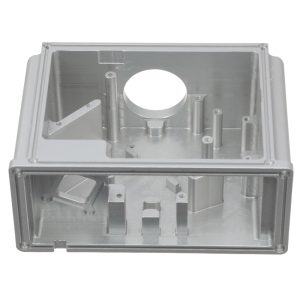
Internal Deep Pocket Milling: The central cavity (visible in the top view) is deep and narrow. Machining this in tough alloy steel requires rigid CNC machines and long-reach, high-performance carbide end mills to prevent tool chatter and vibration, which would ruin the cavity surface finish.
-
Heat Treatment Distortion: Alloy steel parts are typically machined pre-heat-treated (Hardened to HRC 28-32). Releasing internal stresses during the heavy material removal process can cause the part to warp. Our process includes roughing, stress-relieving, and semi-finishing before final precision passes to lock in geometry.
-
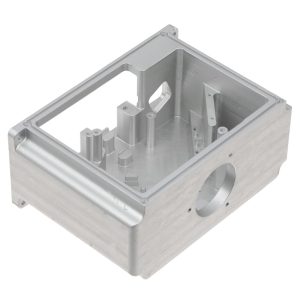
Threaded Ports in Hard Material: The large pneumatic ports require precise threading. Tapping high-hardness alloy steel requires specialized machine taps and a strict coolant flush to prevent broken taps inside the part, which would scrap the entire $200+ workpiece.
6. Application Scenarios
This Alloy Steel Pneumatic Gripper Body is widely utilized in:
-
Heavy-Duty Robotic Arms: Perfect for handling large automotive components, engine blocks, and transmission housings.
-
High-Cycle Assembly Lines: Use in palletizing and packaging machines that operate 24/7, demanding long maintenance intervals.
-
Industrial Die Casting / Forging: Specifically designed to withstand the high ambient heat and vibration found near forging presses or die-casting machines.
-
CNC Machine Tool Loaders: As the gripping base for automatically loading/unloading metal billets into turning centers.
7. Frequently Asked Questions (FAQ)
Q1: How do I know if I need Alloy Steel instead of Aluminum?
A: If your robot arm operates at a rapid pace (high acceleration) with heavy payloads, the repetitive stress will wear out aluminum guide rails quickly. Additionally, if the ambient temperature exceeds 80°C (176°F), Alloy Steel is the mandatory choice for thermal stability.
Q2: Can you machine this part directly from hardened steel (HRC 45+)?
A: Yes, we offer high-precision wire EDM and grinding services for fully hardened steel blanks. However, for best cost-efficiency, we recommend our standard process: Pre-hardened alloy steel (HRC 28-32) for the CNC milling, followed by nitriding or black oxide treatment for surface protection.
Q3: What is your minimum order quantity (MOQ)?
A: Since we specialize in custom CNC machining, we have No MOQ. We accept prototypes and single-piece orders for testing, as well as mass-production batches for OEMs.
Q4: Do you provide a 2D/3D drawing review before manufacturing?
A: Absolutely. We provide a free DFM (Design for Manufacturing) analysis. Our engineers will review your drawings to optimize manufacturing processes, reducing lead time and costs while preserving the mechanical integrity of the gripper body.
Q5: How do you ensure the pneumatic O-ring grooves are perfectly sealed?
A: We use high-precision CNC tooling to ensure the surface finish of O-ring grooves meets Ra 0.8μm or better. We also run a 100% visual and dimensional inspection on all sealing features to ensure zero leakage risks.
Additional information
| material |
|---|
Reviews
There are no reviews yet.