
Custom Electronic Device Housings – Precision CNC Milling One-Piece Aluminum Alloy Enclosures
Description
Product Overview
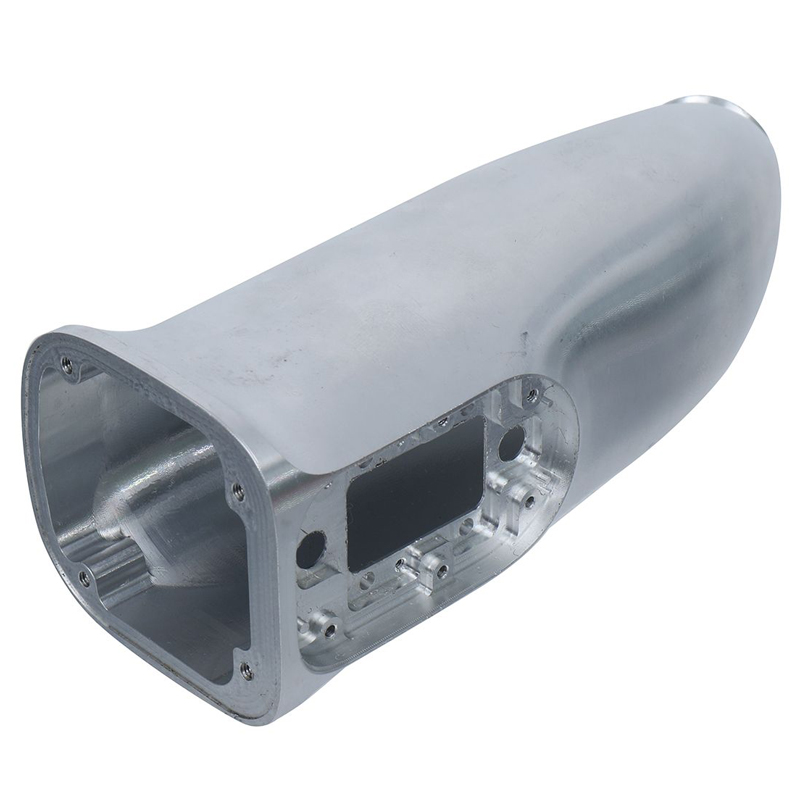
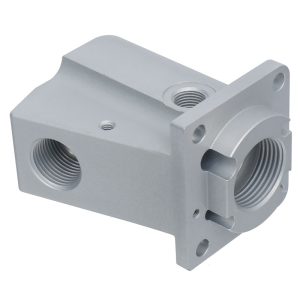
XINQIDA’s custom electronic device housings are precision CNC-machined aluminum alloy enclosures manufactured using advanced 5-axis CNC machining one-piece forming technology-1. Unlike traditional fabricated or multi-piece assemblies, these monolithic housings are milled from a single block of high-grade aluminum, delivering superior structural integrity, dimensional stability, and a seamless, premium aesthetic.
Specifically engineered for medical equipment, industrial testing instruments, and high-end portable electronic products, these housings combine excellent structural stability with ergonomic design advantages, serving as core load-bearing components for handheld smart devices-1.
The hollow cavity design, achieved through precision 5-axis CNC milling, accurately reserves installation spaces for PCB boards, battery modules, sensors, and optical drive modules, with positioning accuracy up to ±0.01mm-1. The streamlined ergonomic curved surface—featuring a closed tail and open front end—ensures comfortable handling and superior portability, making it ideal for handheld device applications-1.
Applications
| Industry | Typical Applications |
|---|---|
| Medical | Handheld detectors, diagnostic equipment mainframes, portable patient monitors, ultrasound probes |
| Industrial | Industrial rangefinders, scanning equipment terminals, measurement instruments, control interfaces |
| Consumer Electronics | High-end portable electronic devices, handheld terminals, data loggers |
| Telecom | Communication test equipment, portable network analyzers, RF testing devices |
These housings support both small-batch customized production and mass production, with 5-axis CNC machining ensuring high consistency and complex geometry capability to accurately match customers’ exclusive equipment design schemes-1.
Material Analysis
Aluminum Alloy Options
| Material | Key Properties | Best Suited For |
|---|---|---|
| 6061-T6/T651 | Excellent machinability, good strength-to-weight ratio, natural corrosion resistance, cost-effective– | General-purpose housings, medical devices, industrial equipment—the most popular choice for CNC enclosures– |
| 6063 | Superior surface finish, good extrudability, excellent anodizing response | Applications requiring premium cosmetic appearance and smooth surface texture-1 |
| 7075-T6 | Aerospace-grade strength, hardness comparable to steel, exceptional strength-to-weight ratio– | High-stress applications, rugged environments, where maximum structural strength is required |
All selected materials are lightweight, high-strength, and offer excellent thermal conductivity and corrosion resistance-1. Precision CNC machining maximizes the structural advantages of these materials while maintaining tight dimensional control-1.
Dimensional & Tolerance Capabilities
| Parameter | Capability | Notes |
|---|---|---|
| Positioning Accuracy | ±0.01mm | Guarantees precise assembly of internal components-1 |
| Linear Tolerances | Down to ±0.005mm (±0.0002″) on critical dimensions– | Industry-leading precision for critical features |
| Geometric Tolerances | Controlled to industry-leading standards– | Includes flatness, parallelism, perpendicularity |
| Surface Roughness | Ra 0.8μm – 1.6μm (fine-milled)– | Further improved with post-machining finishing |
| Overall Dimensions | Fully customizable | Tailored to customer device design drawings-1 |
| Wall Thickness | 1.0mm – 3.0mm typical– | Optimized for weight reduction while maintaining rigidity |
Standard Tolerance References
XINQIDA maintains tolerances to ISO 2768-f (fine) on aluminum alloys–. Tighter tolerances are achievable on critical features where functional requirements demand it–. For EMI-critical applications, dimensions should be specified with consideration of pre- vs. post-anodize measurements–.
Manufacturing Challenges & Solutions
1. Work-Hardening of High-Strength Aluminum Alloys
Challenge: High-strength aluminum alloys such as 6061 and 7075 exhibit work-hardening tendencies during machining, which can lead to accelerated tool wear and reduced tool life–.
Solution: XINQIDA employs optimized cutting parameters, specialized tooling, and advanced cooling strategies to minimize work-hardening effects and maintain consistent machining quality.
2. Thin-Wall Deformation
Challenge: Thin-walled structural components (typical wall thickness 1.0–3.0mm) have low rigidity and are sensitive to vibration and cutting forces, making them prone to distortion–.
Solution: Proprietary fixturing strategies, multi-stage roughing and finishing passes–, and carefully controlled cutting parameters ensure dimensional stability throughout the machining process.
3. Thermal Management & Warpage
Challenge: Precision electronics enclosures require exceptional dimensional stability; heat generated during machining can cause thermal warpage–.
Solution: Advanced cooling systems, strategic toolpaths, and controlled machining environments maintain thermal stability, achieving up to 99.8% dimensional stability in precision applications–.
4. Complex Internal Features
Challenge: Internal hollow cavities, high-precision threaded holes, and positioning steps must all be integrally formed-1—requiring multi-axis machining capability.
Solution: 5-axis CNC machining enables complete machining of complex internal geometries in a single setup, eliminating the need for secondary operations and ensuring perfect alignment–.
5. Surface Finish Quality
Challenge: Achieving consistent surface quality across complex curved surfaces while maintaining tight tolerances.
Solution: Multi-stage machining (roughing → semi-finishing → finishing) with dedicated toolpaths ensures superior surface finish while preserving critical dimensional accuracy–.
Surface Finishing Options
| Finish | Characteristics | Applications |
|---|---|---|
| Sandblasting + Anodizing | Matte texture, excellent corrosion resistance, customizable colors-1– | Medical devices, consumer electronics, cosmetic surfaces |
| Brushed Anodizing | Linear grain pattern, premium aesthetic– | High-end portable electronics, visible exterior surfaces |
| Chemical Film (Alodine/Chromate Conversion) | Conductive surface, effective EMI shielding, electrical grounding– | EMI-critical applications, RF devices, telecommunications equipment– |
| Powder Coating | Heavy-duty protective layer, full RAL color range– | Industrial equipment, harsh environments |
Note: Anodizing creates a non-conductive surface and should be avoided on mating surfaces where electrical conductivity is required–.
CNC Machining Service Specifications
| Parameter | Specification |
|---|---|
| Processing Technology | 5-axis CNC Machining, 5-axis CNC Milling, One-piece Forming-1 |
| Base Material | 6061, 6063, 7075 series aluminum alloy (customizable)-1 |
| Positioning Accuracy | Up to ±0.01mm-1 |
| Dimensional Tolerance | Down to ±0.005mm on critical features |
| Surface Roughness | Ra 0.8μm – 1.6μm (fine-milled) |
| Internal Structure | Hollow cavity, high-precision threaded holes, positioning steps-1 |
| Surface Finishing | Sandblasting, Anodizing (Type II/III), Chemical Film, Powder Coating-1 |
| Inspection | CMM inspection, in-process quality control– |
| Production Volume | Prototype to mass production-1 |
| Lead Time | Customized based on complexity and volume |
FAQ
Q1: What is the advantage of a one-piece CNC-milled enclosure over sheet metal or cast enclosures?
One-piece CNC-milled enclosures offer no seams, resulting in a clean, aesthetically appealing finish–. They provide superior structural integrity, tighter tolerances, better EMI shielding (continuous metal body with minimal gaps)–, and eliminate the need for assembly bonding–. Unlike casting, CNC machining requires no costly tooling, making it ideal for custom designs and low-to-medium volume production.
Q2: What thickness should I specify for my aluminum enclosure walls?
Machined aluminum enclosures typically use 1.5 to 3.0mm walls–. Thinner walls (down to 1.0mm) save weight but increase the risk of distortion during machining and leave less material for threaded mounting bosses–. XINQIDA’s engineers can advise on optimal wall thickness based on your specific design requirements.
Q3: What tolerances can you achieve on aluminum CNC machined housings?
XINQIDA routinely achieves positioning accuracy of ±0.01mm and can hold tolerances down to ±0.005mm (±0.0002″) on critical dimensions-1–. Standard tolerances follow ISO 2768-f (fine)–. We recommend specifying tight tolerances only on features where functionality demands it to optimize cost–.
Q4: Can you machine enclosures with undercut features?
Yes. 5-axis CNC machining enables the creation of complex enclosures with undercuts, compound angles, and intricate internal features in a single setup–. With the right tools, techniques, and expertise, we can produce high-quality aluminum enclosures that meet specific design requirements–.
Q5: Which aluminum alloy should I choose for my enclosure?
-
6061-T6 is the most popular choice—excellent machinability, good strength, and cost-effective for most applications–.
-
6063 offers superior surface finish and anodizing response for cosmetic applications-1.
-
7075-T6 provides aerospace-grade strength for high-stress or rugged applications–.
Q6: Does anodizing affect the dimensions of my enclosure?
Yes. Anodizing adds a thin oxide layer to the surface (typically 0.005–0.025mm per surface depending on Type II vs. Type III). It is critical to specify whether dimensions are pre- or post-anodize–. XINQIDA’s engineering team will work with you to ensure proper dimensioning.
Q7: Can you provide EMI shielding on CNC-machined aluminum enclosures?
Yes. For EMI-critical applications, chemical film (Alodine/chromate conversion) provides a conductive surface that enables effective EMI shielding and electrical grounding–. Anodizing creates a non-conductive surface and should be reserved for non-mating cosmetic surfaces–.
Q8: What is the typical cost and lead time for custom CNC-machined enclosures?
Cost and lead time depend on complexity, material, volume, and finishing requirements. For prototyping and small-batch production, pricing typically ranges from $50–$150 per piece, while volumes of 500+ units can reduce costs to $15–$30 per piece–. Contact XINQIDA with your design specifications for a custom quote.
Q9: What file formats do you accept for design submissions?
XINQIDA accepts standard CAD file formats including STEP (.stp), IGES (.igs), SolidWorks (.sldprt), and AutoCAD (.dwg/.dxf). 2D drawings with GD&T callouts are recommended for critical features.
Q10: Do you offer design for manufacturability (DFM) support?
Yes. XINQIDA provides comprehensive DFM feedback to optimize your design for cost-effective manufacturing while maintaining performance requirements—including recommendations on wall thickness, corner radii, tolerances, and surface finishes–.
For technical consultations, custom quotes, or design reviews, please contact XINQIDA’s engineering team.
Additional information
| material |
|---|
Reviews
There are no reviews yet.