
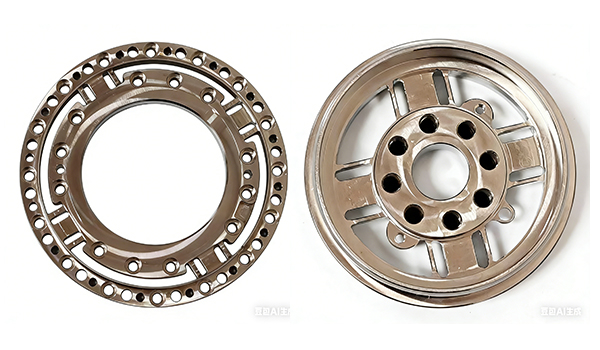
In 2026, the humanoid robotics industry has officially moved from technical validation to large-scale commercialization. As the “motion heart” of a robot, the joint system determines movement precision, load capacity, and overall service life. At the center of this system is the joint housing—the structural component that integrates the harmonic drive seat, motor mounting interface, cross-roller bearing bore, sealing grooves, and cable routing channels.
With increasingly compact, thin-walled, and highly integrated geometries, traditional 3- and 4-axis CNC machining—requiring multiple setups and fragmented operations—can no longer meet the micron-level precision, structural rigidity, and production stability demanded by mass production.
Against this backdrop, 5-axis simultaneous CNC machining with one-piece (done-in-one) manufacturing has emerged as the mainstream solution in 2026. By completing all operations in a single setup, eliminating geometric blind spots, and enabling closed-loop micron-level accuracy control, this approach resolves the long-standing conflicts between precision, efficiency, cost, and production flexibility—providing critical manufacturing support for the industrialization of humanoid robot core components.
Table of Contents
ToggleCore Manufacturing Challenges of Humanoid Robot Joint Housings
Humanoid robot joint housings integrate multiple precision features into a compact, irregular geometry. Designed for biomimetic motion, they are characterized by ultra-compact layouts, thin walls, and complex multi-surface transitions. These features introduce four major CNC machining challenges:
1.1 Micron-Level Dimensional and Geometric Tolerances
Joint housings directly influence transmission backlash and repeat positioning accuracy. Industry standards typically require:
Dimensional tolerances within ±0.005 mm
Concentricity and runout at IT5 grade
Surface roughness Ra ≤ 0.4 μm
Traditional 3/4-axis processes often require 4–6 setups to complete all features. Each re-clamping introduces positioning deviation, resulting in cumulative errors that can lead to joint vibration, abnormal noise, accelerated wear, or even batch rejection.
1.2 Deformation Control in Thin-Walled Structures
To achieve lightweight design, joint housings commonly feature 1–2 mm ultra-thin walls, typically made from 7075 aerospace aluminum or TC4 titanium alloy.
During machining, these thin sections are highly susceptible to:
Cutting stress deformation
Thermal distortion
Chatter vibration
Tool deflection (“spring-back”)
Traditional processes yield only 60–70% acceptable parts, which is inadequate for scalable production.
1.3 Accessibility Limitations in Complex Geometries
Biomimetic designs incorporate spatial curves, angled cross-holes, deep cavities, and narrow slots. Conventional machines lack the tool orientation flexibility required to reach these features, leading to:
Multi-machine transfers
Disconnected process baselines
Extended lead times
Inconsistent batch quality
1.4 Rapid Iteration vs. Mass Production Flexibility
The humanoid robotics sector remains in rapid evolution. R&D stages require small-batch prototypes (1–100 units), while production phases demand stable, high-volume output.
Traditional processes involve long setup times and costly tooling adjustments, making them incompatible with fast validation and rapid scale-up cycles.
2026 Technological Breakthroughs in Five-Axis Integrated Machining
Simultaneous 5-axis machining combines X/Y/Z linear axes with A/C rotary axes and RTCP (Rotational Tool Center Point) control. This enables real-time tool orientation adjustment, allowing complete machining in a single setup—from raw billet to finished component.
In 2026, this technology has been optimized specifically for humanoid robot joint housings through four key advancements:
2.1 Full Closed-Loop Micron Precision Control
Modern trunnion-style 5-axis machining centers are equipped with linear scale full closed-loop systems:
Positioning accuracy: ±1 μm
Repeatability: ±0.5 μm
Single-setup machining eliminates datum transfer errors, ensuring:
Bearing bore and harmonic drive seat concentricity ≤ 0.003 mm
On-machine Renishaw probing systems enable real-time dimensional verification and closed-loop compensation, resolving the long-standing issue of “qualified first article but unstable batch output.”
2.2 Adaptive Anti-Deformation Machining for Thin Walls
A complete deformation-control strategy includes:
FEA Pre-Simulation
Virtual stress and deformation analysis optimizes toolpaths before production. Strategies such as island roughing and circular finishing distribute residual stress evenly.
Adaptive Cutting Algorithms
Dynamic spindle speed, feed rate, and depth control combined with High-Speed Machining (HSM) reduce cutting forces and heat input, suppressing chatter.
Custom Vacuum + Flexible Fixturing
Full-contact vacuum fixtures provide uniform support for thin walls, enabling stable machining of 1 mm sections with deformation controlled within 0.005 mm.
As a result, yield rates improve from 60–70% to over 99%.
2.3 High-Efficiency Cutting for Advanced Materials
In 2026, material options have expanded beyond aluminum to titanium alloys, carbon fiber composites, and PEEK engineering plastics.
Dedicated solutions include:
Diamond-coated and ultra-fine carbide tooling
Minimum Quantity Lubrication (MQL) systems
Continuous 5-axis tilt machining for optimal cutting angles
Benefits:
40% longer tool life (titanium machining)
Delamination-free composite cutting
Over 30% improvement in overall machining efficiency
2.4 Digital Twin Integration for Rapid Iteration
Full CAD/CAM digital twin integration enables:
Toolpath simulation
Collision detection
Deformation prediction
Changeover time is reduced from 72 hours to under 4 hours.
With upfront DFM (Design for Manufacturability) optimization, structure and tolerance distribution can be refined without affecting functional performance. Prototype delivery can be achieved within 72 hours from drawing release.
Complete Five-Axis Integrated Manufacturing Workflow
The mature 2026 solution covers the full lifecycle:
3.1 Design Collaboration & DFM Optimization
Structural refinements to eliminate machining blind spots
Tolerance grading for cost-performance balance
Material selection guidance
3.2 One-Setup Integrated Machining Process
Pre-machining and stress release
Symmetrical roughing
Aging treatment
Semi-finishing
5-axis simultaneous finishing
In-process probing
3.3 Full Quality Assurance System
Material spectral verification
In-process inspection
100% CMM inspection for key dimensions
Complete traceability documentation
Compliant with ISO 9001 and ISO 13485 standards.
3.4 Surface Treatment Capabilities
Hard anodizing
Micro-arc oxidation
Hard chrome plating
Passivation / black oxide
Surface hardness can exceed HV500 while maintaining dimensional stability.
3.5 Flexible Production Capacity
Prototyping: 1-piece minimum, 24-hour expedited
Pilot production: 3–5 days
Mass production: Dedicated lines with JIT delivery
Proven Industrial Value
This 5-axis integrated solution has been successfully deployed across leading domestic humanoid robotics manufacturers, covering micro hand joints, waist rotation joints, and high-load leg joints.
Key benefits include:
1. Superior Joint Performance
15 dB noise reduction
50% increase in structural rigidity
2× service life improvement
2. Lower Total Manufacturing Cost
70% fewer process steps
60% shorter production cycle
99% yield rate
3. Rapid Iteration Capability
Fast model changeover
Accelerated product validation
Reduced time-to-market
4. Multi-Industry Compliance
Industrial, medical, and specialty robotics applications
Full traceability and certification support
Conclusion
The industrialization of humanoid robotics depends on balancing precision, performance, and cost at the component level.
In 2026, the maturity of five-axis integrated machining technology has fundamentally solved the precision manufacturing challenges of humanoid robot joint housings. More than a process upgrade, it represents a strategic enabler for large-scale production, cost optimization, and domestic capability advancement in intelligent manufacturing.
As humanoid robotics continues to evolve, five-axis done-in-one machining will remain a cornerstone technology powering the next generation of high-performance robotic systems.


