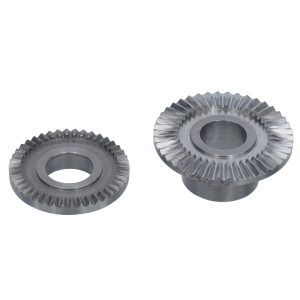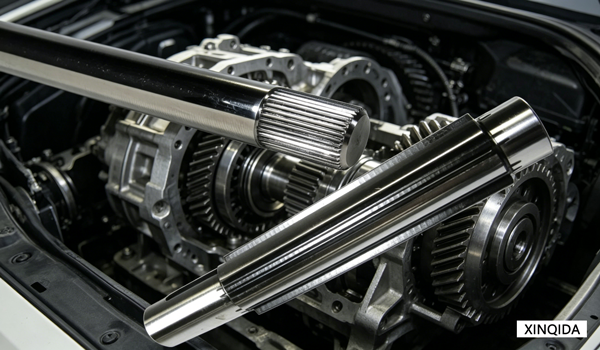
As the global automotive industry rapidly advances toward electrification, lightweight engineering, and intelligent manufacturing, the performance requirements for automotive transmission systems are becoming increasingly demanding. Modern vehicles—especially electric vehicles (EVs), hybrid powertrains, and high-speed reduction systems—require drivetrain components that deliver higher transmission efficiency, lower noise, greater durability, and superior operational stability.
Among all critical drivetrain components, the precision automotive gear shaft plays a fundamental role in torque transmission, rotational synchronization, and load distribution. Its structural design directly affects transmission accuracy, NVH performance (Noise, Vibration, and Harshness), fatigue resistance, and the overall reliability of the powertrain system.
Today, precision automotive gear shafts are evolving toward higher accuracy, integrated lightweight structures, improved fatigue strength, and intelligent manufacturing compatibility. For automotive OEMs and precision CNC machining manufacturers, advanced gear shaft structural design has become a key factor in achieving high-performance transmission systems.
What Is a Precision Automotive Gear Shaft?
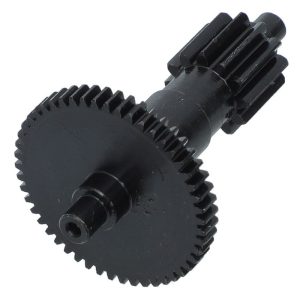
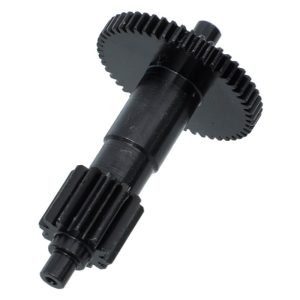
A precision automotive gear shaft is an integrated mechanical transmission component that combines both shaft and gear functions into a single precision-engineered structure. It is widely used in:
- Automotive transmission systems
- EV reduction gearboxes
- Differential assemblies
- Hybrid drivetrains
- Steering systems
- Drive motors
- Transfer cases
The primary functions of a gear shaft include:
- Transmitting torque and rotational power
- Supporting rotating transmission components
- Maintaining precise gear meshing
- Bearing bending, torsional, and axial loads
- Ensuring transmission stability under high-speed operation
Compared with conventional assembled gear-and-shaft structures, integrated precision gear shafts provide several advantages:
- Higher concentricity
- Better rigidity
- Reduced assembly errors
- Improved transmission efficiency
- Lower vibration and noise
- Enhanced long-term reliability
Core Design Principles of Precision Automotive Gear Shafts
The structural design of a precision automotive gear shaft is a comprehensive engineering process involving mechanical design, material science, manufacturing technology, and fatigue analysis. The design must balance multiple factors simultaneously, including precision, strength, stiffness, manufacturability, durability, and lightweight optimization.
1. Precision-Oriented Structural Design
Precision is the foundation of gear shaft performance.
High-speed automotive transmission systems require extremely strict dimensional and positional tolerances to ensure stable gear meshing and smooth rotational performance.
Critical precision requirements include:
- Shaft concentricity
- Gear runout control
- Journal roundness
- Tooth profile accuracy
- Axial positioning accuracy
- Surface roughness consistency
Poor concentricity or excessive runout may cause:
- Transmission vibration
- Abnormal gear wear
- Increased NVH
- Reduced bearing life
- Transmission efficiency loss
Typical precision requirements for high-performance automotive gear shafts include:
| Parameter | Typical Requirement |
|---|---|
| Concentricity | ≤ 0.01 mm |
| Runout | ≤ 0.005 mm |
| Surface Roughness | Ra 0.4–0.8 μm |
| Gear Accuracy | DIN 6–DIN 8 |
To achieve these standards, precision CNC turning, cylindrical grinding, gear grinding, and advanced inspection technologies are commonly used.
2. Reliability and Fatigue Resistance
Automotive gear shafts operate under continuous cyclic loading conditions involving:
- Torsional stress
- Bending stress
- Axial force
- Impact loading
- High-frequency vibration
Therefore, structural reliability and fatigue resistance are critical design priorities.
The most common failure modes include:
- Fatigue fracture
- Gear tooth pitting
- Excessive wear
- Plastic deformation
- Surface cracking
To improve durability, designers typically adopt:
- Optimized shaft diameters
- Smooth transition fillets
- Stress-relief grooves
- Balanced load distribution
- Surface hardening treatment
- Gear tooth profile modification
Reducing stress concentration at shaft shoulders, keyways, spline roots, and gear roots is especially important for extending service life.
3. Lightweight and Integrated Structure Design
With the rapid development of electric vehicles, lightweight transmission components have become increasingly important for improving energy efficiency and driving range.
Modern gear shaft structures often adopt:
- Hollow shaft design
- Integrated multi-gear structures
- Reduced wall thickness optimization
- High-strength alloy materials
- Topology optimization
Compared with solid shafts, hollow shafts can significantly reduce weight while maintaining high torsional rigidity and bending stiffness.
Integrated gear shaft structures also reduce:
- Assembly complexity
- Tolerance accumulation
- Part quantity
- Maintenance requirements
This improves both transmission efficiency and overall drivetrain compactness.
Material Selection and Heat Treatment
Material selection directly affects the mechanical strength, wear resistance, fatigue life, and machining performance of precision automotive gear shafts.
Common Gear Shaft Materials
| Material | Characteristics | Applications |
|---|---|---|
| 20CrMnTi | Excellent carburizing performance | Transmission gear shafts |
| 40Cr | Good strength and toughness | General automotive systems |
| 42CrMo | High fatigue resistance | Heavy-duty drivetrain systems |
| SCM415 / SCM420 | Excellent wear resistance | Precision transmission gears |
| Stainless Steel | Corrosion resistance | Special automotive environments |
Among these materials, low-carbon alloy steels such as 20CrMnTi are widely used in automotive transmissions because they achieve excellent “hard surface + tough core” characteristics after carburizing and quenching.
Heat Treatment Processes
Heat treatment plays a decisive role in gear shaft durability and wear resistance.
Common heat treatment methods include:
- Quenching and tempering
- Carburizing and quenching
- Induction hardening
- Nitriding
- Vacuum heat treatment
Carburizing and quenching are especially common in automotive transmission systems because they provide:
- High surface hardness
- Excellent wear resistance
- Improved fatigue strength
- Strong impact resistance
Typical carburized layer depth ranges from 0.8–1.2 mm depending on load conditions.
For high-precision gear shafts, nitriding is also widely used because it minimizes heat-treatment deformation while improving surface hardness and corrosion resistance.
Shaft Body Structural Design
The shaft body is responsible for transmitting torque and supporting gears and bearings. Its structural design directly influences stiffness, vibration behavior, and fatigue strength.
Stepped Shaft Structure
The stepped shaft is the most common structural form in automotive gear shafts.
Advantages include:
- Easy positioning of gears and bearings
- Improved assembly accuracy
- Better load distribution
- Approximate equal-strength design
- Enhanced rigidity
Different shaft diameters are designed according to bending moment distribution and assembly requirements.
Transition Structure and Stress Reduction
Stress concentration is one of the primary causes of gear shaft fatigue failure.
Critical stress concentration areas include:
- Shaft shoulders
- Keyways
- Spline roots
- Gear roots
- Groove sections
To reduce stress concentration, designers typically use:
- Large transition fillets
- Smooth contour transitions
- Stress-relief grooves
- Rounded keyway ends
- Optimized spline geometry
These design improvements significantly increase fatigue life under cyclic loading conditions.
Gear Structure Design
The gear portion is the core functional area of the gear shaft and directly affects transmission efficiency, load-bearing capacity, and operational noise.
Helical Gear Design
Helical gears are widely used in automotive transmissions because they offer:
- Smoother meshing
- Lower noise
- Higher contact ratio
- Better load distribution
However, larger helix angles also generate higher axial force, requiring careful coordination with bearing selection and transmission layout.
Gear Tooth Modification
To improve meshing performance and reduce NVH, precision automotive gears often adopt:
- Tooth tip modification
- Tooth root modification
- Lead correction
- Profile correction
These modifications help:
- Reduce edge contact
- Improve load distribution
- Lower vibration and noise
- Enhance gear durability
Positioning and Connection Structure
Precision positioning structures are essential for ensuring stable operation and accurate assembly.
Common positioning methods include:
- Shaft shoulders
- Retaining rings
- Shaft collars
- Set screws
For split gear shafts, common connection methods include:
| Connection Type | Characteristics |
|---|---|
| Key Connection | Simple and economical |
| Spline Connection | High torque capacity and precision |
| Interference Fit | High rigidity and reliability |
Spline connections are especially common in automotive transmission systems because they provide:
- Uniform torque distribution
- High positioning accuracy
- Reduced stress concentration
- Sliding movement for gear shifting
CNC Machining and Manufacturing Process
The manufacturing process directly determines the final precision and performance of the gear shaft.
Typical manufacturing procedures include:
- CNC turning
- Gear hobbing
- Heat treatment
- Cylindrical grinding
- Gear grinding
- Spline machining
- Dynamic balancing
- Precision inspection
Advanced multi-axis CNC machining centers significantly improve:
- Machining consistency
- Production efficiency
- Dimensional accuracy
- Surface quality
High-precision inspection equipment such as CMM systems and gear measuring instruments are essential for maintaining automotive-grade quality standards.
Design Verification and Structural Optimization
Modern gear shaft development heavily relies on computer-aided engineering technologies.
Strength and Stiffness Analysis
Design verification typically includes:
- Static strength analysis
- Fatigue strength analysis
- Torsional stiffness analysis
- Bending stiffness analysis
- Critical speed analysis
For precision transmission systems, excessive shaft deformation must be strictly controlled to maintain accurate gear meshing.
Finite Element Analysis (FEA)
Finite Element Analysis (FEA) is widely used to simulate:
- Stress distribution
- Deformation behavior
- Dynamic vibration
- Thermal effects
- Fatigue life
FEA helps engineers identify structural weak points and optimize:
- Shaft geometry
- Fillet dimensions
- Hollow structures
- Gear root strength
- Weight distribution
Common Failure Problems in Automotive Gear Shafts
Improper structural design or manufacturing defects may lead to several common failure modes.
Fatigue Fracture
Usually caused by:
- Stress concentration
- Insufficient material strength
- Poor heat treatment
- Excessive cyclic loading
Gear Tooth Pitting
Typically related to:
- Excessive contact stress
- Poor lubrication
- Surface hardness insufficiency
Vibration and Noise
Often caused by:
- Excessive runout
- Poor concentricity
- Gear meshing errors
- Dynamic imbalance
Early structural optimization can significantly reduce these risks.
Future Development Trends
As automotive technology continues evolving, precision automotive gear shafts are developing toward:
- Higher rotational speeds
- Lower NVH performance
- Lightweight integrated structures
- Intelligent manufacturing
- Higher machining precision
- AI-assisted design optimization
- Digital twin simulation
- Automated quality inspection
Electric vehicle transmission systems especially require ultra-high precision gear shafts capable of stable operation at extremely high rotational speeds.
At the same time, advanced manufacturing technologies such as:
- Intelligent CNC machining
- Robotic automation
- Precision forming
- Digital manufacturing systems
are further improving production efficiency and product consistency.
Conclusion
The structural design of precision automotive gear shafts is a critical foundation of modern automotive transmission systems. From material selection and shaft geometry to gear optimization, heat treatment, and CNC machining, every design detail directly influences transmission efficiency, operational stability, fatigue life, and overall vehicle performance.
With the rapid advancement of electric vehicles, intelligent manufacturing, and lightweight engineering, automotive gear shafts are evolving toward higher precision, greater integration, improved durability, and smarter manufacturing technologies.
For manufacturers specializing in precision CNC machining and automotive transmission components, mastering advanced gear shaft structural design and manufacturing capabilities is becoming increasingly essential in the global automotive supply chain.