
Precision Turn-Mill 5-Axis Aluminum Actuator Housing for Industrial Robot
Description
Product Overview
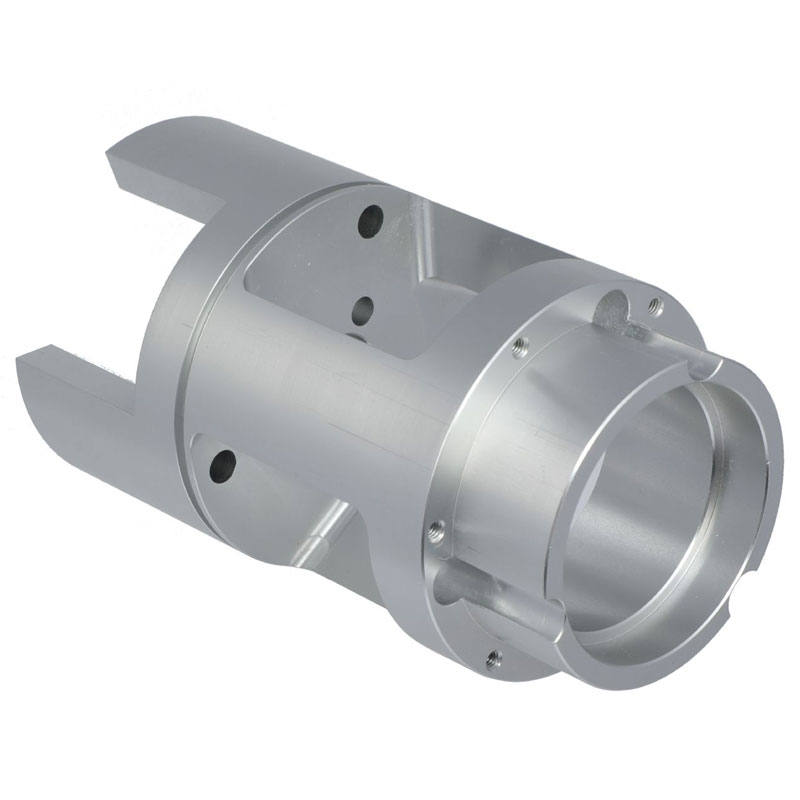
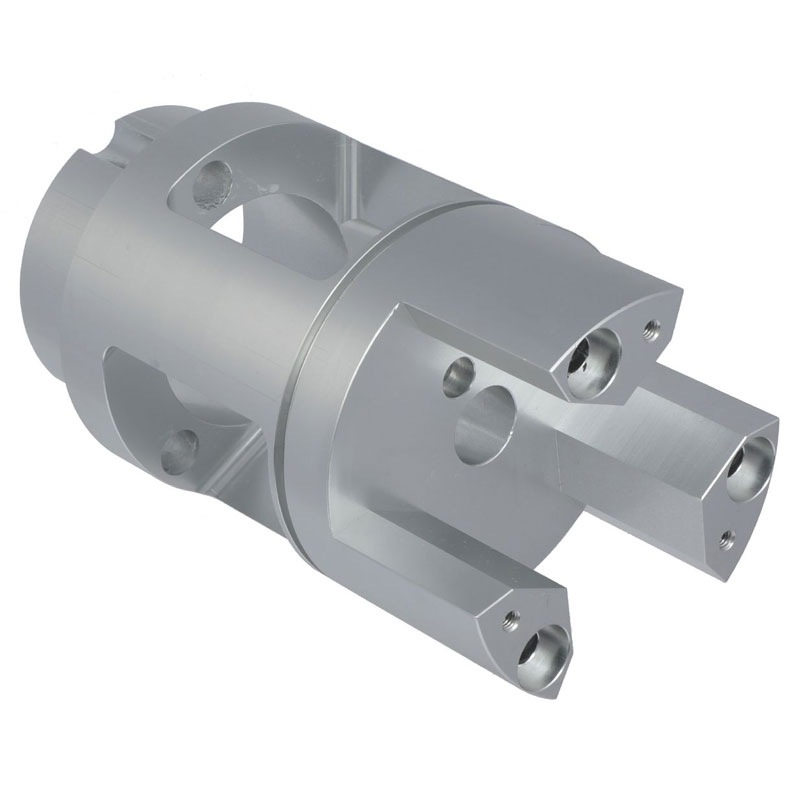
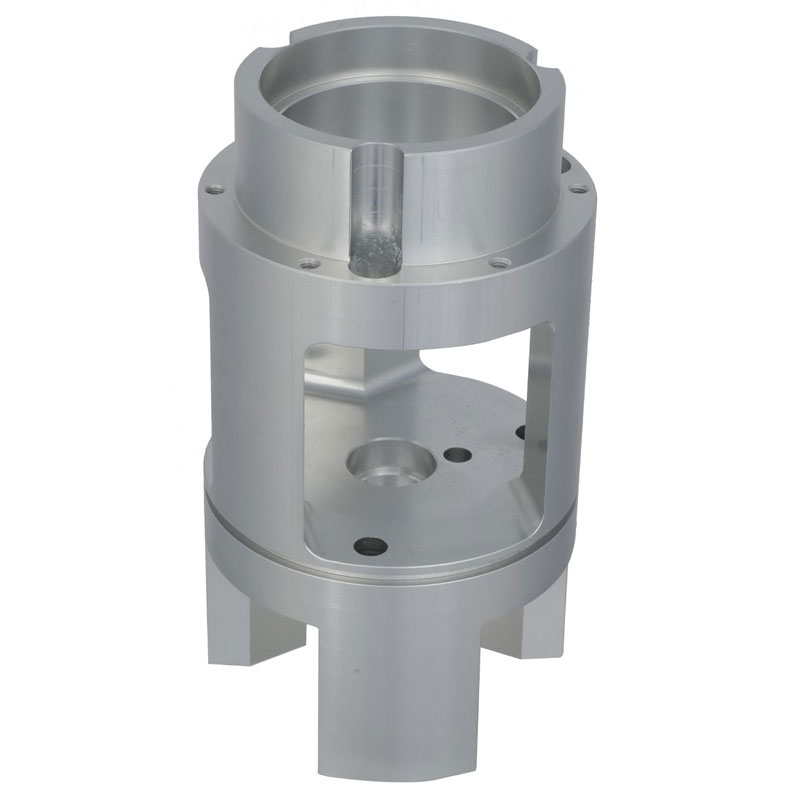
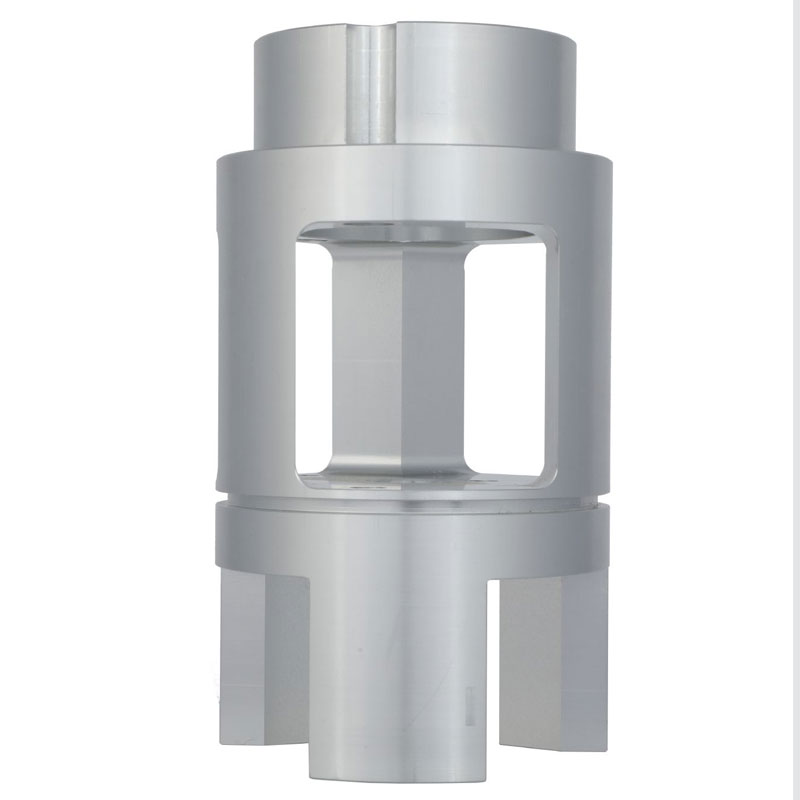
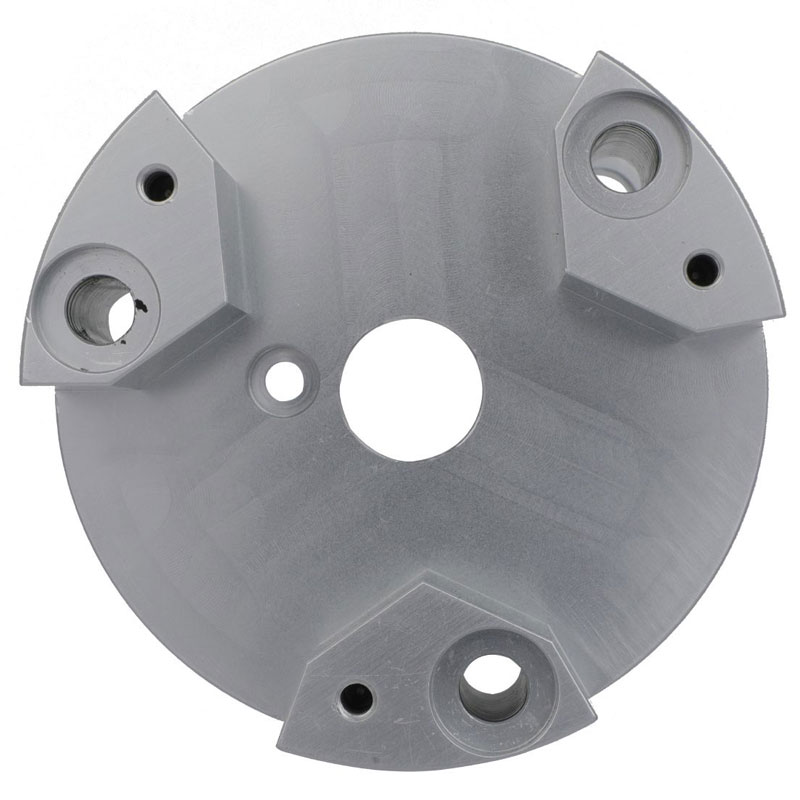
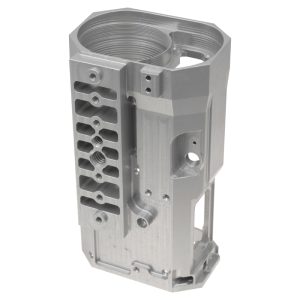
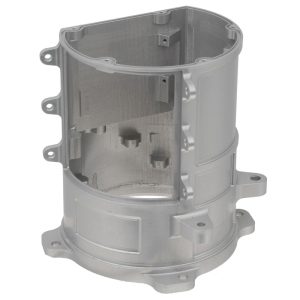
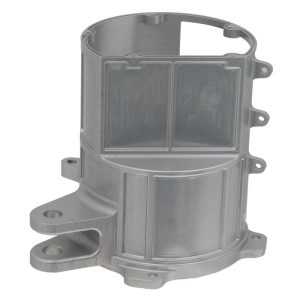
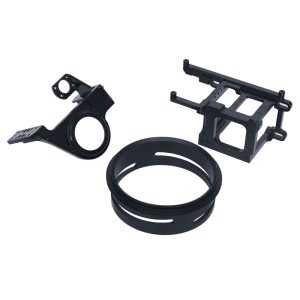
This precision-engineered aluminum actuator housing is a critical structural component designed for high-performance rotary motion systems. Manufactured using state-of-the-art 5-axis turn-mill CNC machining technology, this hollow cylindrical housing features a lightweight, optimized structure with large side pockets for weight reduction, a precision bearing seat, and a 120° equally spaced 3-jaw mounting flange. It serves as the backbone for industrial robot joints, automation rotary stages, and heavy-duty PTZ camera gimbals.
CNC Machining Services & Technical Specification Table
Below is the standard manufacturing capability data for this aluminum housing. We customize every parameter based on your 2D/3D engineering drawings.
| Parameter | Specification / Capability | Additional Details |
|---|---|---|
| Machining Process | CNC Turn-Mill (Swiss/Lathe + 3/4/5-Axis Milling) | Single setup processing ensures concentricity between front and rear bearing seats. |
| Recommended Material | 6061-T6 Aluminum Alloy (Standard) | Alternative: 7075-T6 (high strength), 2024, or Stainless Steel 304/316 (on request). |
| Surface Finish | Clear/Black Hard Anodized (Type III) | Other options: Sandblasting, Brushing, Electroless Nickel Plating, or Powder Coating. |
| Standard Tolerances | ISO 2768-mK (General) | Precision seats: ±0.01mm (0.0004″). |
| Critical Geometries | Concentricity ≤ 0.02mm; Parallelism ≤ 0.02mm; Surface Roughness Ra ≤ 1.6μm (fine turning/boring). | Verified via CMM (Coordinate Measuring Machine) reports. |
| Thread Specs | Standard Metric M2-M12 / UNC, UNF | Thread depth controlled to prevent breakage in thin walls. |
| Minimum Wall Thickness | 1.0mm – 1.5mm (depending on aspect ratio) | Dedicated fixturing used to prevent deformation during thin-wall machining. |
| Lead Time | 15 – 25 working days | Expedited shipping (DHL/FedEx/UPS) available for prototypes. |
| MOQ (Minimum Order Quantity) | 1 Piece (Prototypes & Mass Production) | Tiered pricing structure for cost optimization in large batches. |
| Quality Control | 100% Critical Dimension Inspection | Includes visual check, dimensional check, and material certificate. |
Application Scenarios
Due to its high rigidity, lightweight structure, and precision rotating interface, this machined aluminum housing is widely utilized in:
-
Collaborative & Industrial Robots: Used as a middle joint housing in lightweight robotic arms, protecting internal servo motors and harmonic drives.
-
Intelligent Security & Surveillance: The core structural body for PTZ gimbal camera systems, supporting pitch, roll, and yaw axes while routing slip-ring cables through its hollow center.
-
Automated Guided Vehicles (AGVs) & Mobile Robots: Acts as a rotating support base for LIDAR scanners and vision systems mounted on the chassis.
-
Precision Semiconductor & Medical Equipment: Employed in precision rotary stages, surgical robot joints, and wafer handling mechanisms requiring high cleanliness and no contamination.
Material Analysis: Why 6061-T6 Aluminum?
-
Strength-to-Weight Ratio: 6061-T6 offers an excellent tensile strength (approx. 310 MPa) while remaining significantly lighter than steel, crucial for reducing the overall inertia of robot joints and enabling faster movement.
-
Weldability & Machinability: It offers excellent machinability, ensuring smooth surface finishes during deep pocket milling. It also eliminates the “porosity” or “voids” commonly found in die-casted housings.
-
Corrosion & Thermal Performance: The natural aluminum oxide layer protects it from corrosion. Furthermore, its high thermal conductivity allows the internal motor and bearings to dissipate heat effectively.
-
Surface Adaptability: It accepts Type II and Type III (Hard) anodizing perfectly, giving the part an abrasion-resistant, anti-reflective matte surface required for outdoor optics and robotics.
Tolerance & Engineering Capability
At our CNC facility, we do not just machine parts; we engineer solutions. For this specific housing:
-
Concentricity & Cylindricity: Because the housing requires multiple bearing seats, we utilize turn-mill centers to machine the front and back inner bores in a single setup. This ensures a high precision concentricity of ≤ 0.02mm to prevent axial runout in robot arms.
-
Positional Accuracy: The three 120° mounting pincer holes require precise angularity. We use 5-axis milling to ensure these holes are drilled and tapped within ±0.01mm positional tolerance relative to the central axis.
-
Surface Finish: The large side window pockets are machined with high-speed toolpaths to achieve a visually appealing Ra 1.6 finish, eliminating the need for secondary polishing and reducing lead time.
The Manufacturing Challenge (Why Choose Us?)
Production of this part is not easy. It takes a professional CNC shop to overcome these three hurdles:
-
Thin-Wall Distortion: The large side windows make the cylinder thin and fragile. We use special soft-jaw fixturing and optimized high-speed cutting strategies to prevent the housing from snapping or warping under vibration.
-
Deep Cavity Milling: Reaching the internal bottom holes requires long-reach tooling. We mitigate tool deflection using advanced CAM toolpath simulations to guarantee the flatness of the internal mounting platform.
-
Integration of Rotation & Fixation: Machining the longitudinal anti-rotation slot (keyway) on the inner bore without degrading the concentricity of the main bearing seat requires precise 5-axis interpolation, which only highly skilled tooling engineers can execute.
FAQs (Frequently Asked Questions)
Q1: Can you machine this housing from a different material, like 7075 aluminum or titanium?
A: Absolutely. We stock a wide range of materials. If your robot joint requires extreme stiffness (such as for high-payload arms), we can switch to 7075-T6 aluminum. For high-temperature or heavy-duty environments, we can also process stainless steel or titanium, though lead times may be slightly longer.
Q2: What information do I need to provide to get a formal quote?
A: To give you the most accurate price and lead time, please provide:
-
3D CAD file (STEP, IGES, or SolidWorks format).
-
2D technical drawing (PDF), clearly marking critical tolerances and surface finishes.
-
Your required order quantity (prototype vs. mass production).
-
Preferred surface treatment (e.g., clear anodized vs. black hard anodized).
Q3: What is the typical lead time for a prototype?
A: For a single-piece prototype made of 6061 aluminum, our express service can deliver within 7 to 10 working days. However, we strongly recommend a lead time of 15 to 20 days to allow for rigorous quality inspection and anodizing processes.
Q4: Do you offer surface treatment in-house?
A: We partner with certified ISO aerospace-level surface treatment partners. We manage the entire process, sending your batch for hard anodizing, black oxide, or chemical film (Alodine) directly after CNC machining, fully guaranteeing the coating thickness and evenness.
Q5: How do you ensure the parts are 100% accurate before shipping?
A: We follow a strict quality control workflow. All critical dimensions (bore diameters, thread gauges, and concentricity) are inspected. We provide a complete CMM (Coordinate Measuring Machine) inspection report with every shipment to verify that all tolerances meet your specifications exactly.
Why Choose Our CNC Machining Services?
-
ISO 9001:2015 & IATF 16949 Certified – Strict quality management.
-
Advanced Equipment – Full 5-Axis + Turn-Mill machines (Mazak/Doosan).
-
Engineer-to-Engineer Support – Our in-house machinists provide DFM (Design for Manufacturability) feedback to help you reduce costs and optimize assembly.
-
Global Shipping – Safe packaging for sea and air freight to the US, EU, and Asia.
Ready to start your project? Click the “Request a Quote” button or upload your 3D CAD file today to get a 24-hour response from our technical sales team.
Reviews
There are no reviews yet.