
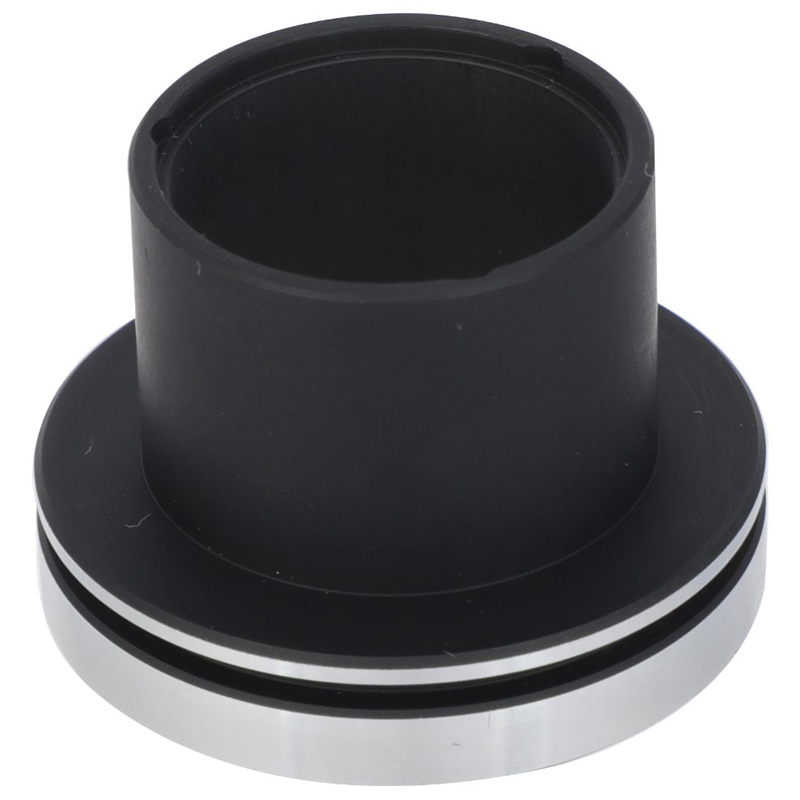
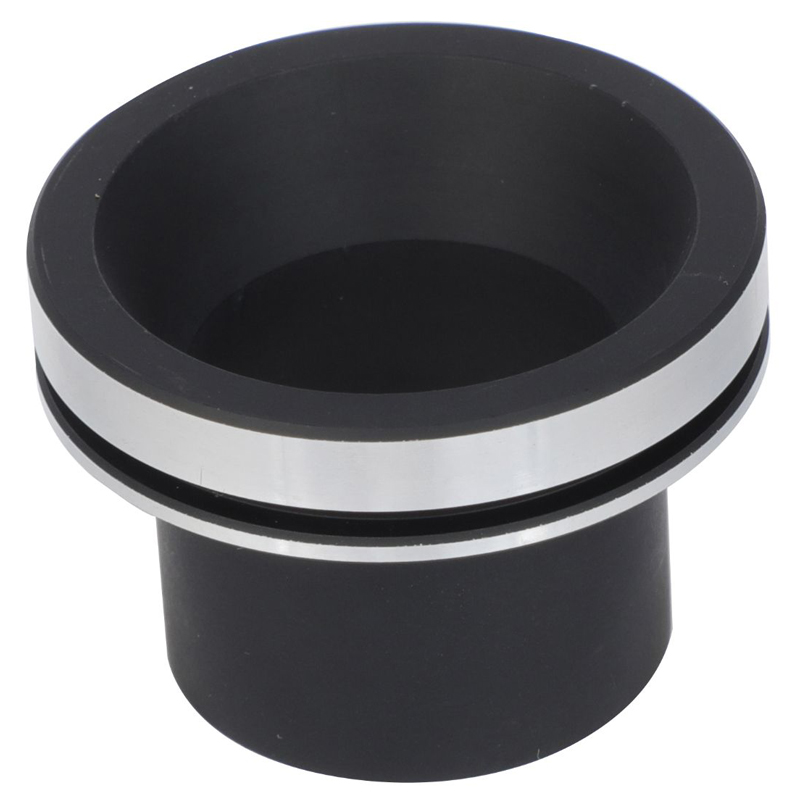
Custom CNC Machined Flanged Sleeve Wheel Hub Spacer for Motorcycles
Description
Product Overview
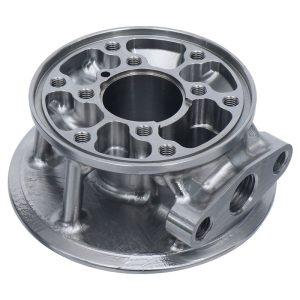
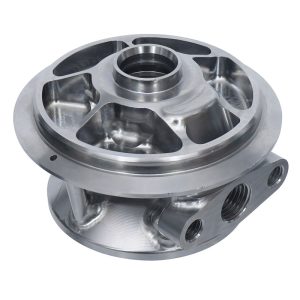
Our Custom CNC Machined Flanged Sleeve Wheel Hub Spacer is a precision-machined stainless steel component designed for custom wheel hub, axle, and mechanical spacing applications. Featuring a cylindrical sleeve body, stepped outer diameters, and an integrated flange, this component can be manufactured to customer drawings to meet specific dimensional, alignment, and assembly requirements.
As a CNC machining service provider, XINQIDA supports custom stainless steel spacers and sleeve components for motorcycle parts manufacturers, aftermarket component suppliers, and mechanical engineering projects. We work from 2D drawings, 3D CAD models, or approved samples to produce components with controlled bore dimensions, flange geometry, overall length, and surface finish.
Depending on the application, a flanged sleeve may help maintain axial spacing, locate mating components, or provide a defined contact surface within an axle or hub assembly. Final dimensions, material grade, surface treatment, and inspection requirements are established according to the customer’s specifications.
Request a CNC machining quote with your drawings, required quantity, stainless steel grade, and dimensional tolerances.
CNC Machining Services – Technical Specifications
| Parameter | Specification |
|---|---|
| Product Name | Custom CNC Machined Flanged Sleeve Wheel Hub Spacer |
| Part Type | Flanged Sleeve / Stepped Spacer |
| Target Application | Motorcycle wheel hub and axle assemblies, subject to design confirmation |
| Material | Stainless Steel; grade specified by customer |
| Manufacturing Process | CNC Turning; CNC Milling or secondary machining as required |
| Part Geometry | Cylindrical body, stepped diameters, flange, and specified internal bore |
| Bore Features | Straight bore, stepped bore, or other drawing-defined features |
| Dimensional Tolerances | According to customer drawings and agreed inspection requirements |
| Surface Finish | As-machined or specified finishing process |
| Surface Treatment | Passivation or other compatible treatment when required |
| Production Volume | Prototype, small batch, and production orders |
| Quality Inspection | Dimensional inspection using suitable calibrated measuring equipment |
| Documentation | Material certification and inspection reports available upon agreement |
| Customization | Dimensions, flange thickness, bore diameter, length, and finish made to specification |
Note: Final material grade, tolerances, surface roughness, and inspection documentation are confirmed during quotation. The table describes available customization parameters, not guaranteed specifications for every part.
Material Analysis: Stainless Steel
Stainless steel is a suitable material option for custom wheel hub spacers and flanged sleeve components when corrosion resistance, dimensional stability, and mechanical performance are important.
Potential material grades
| Stainless Steel Grade | Key Characteristics | Selection Considerations |
|---|---|---|
| 304 Stainless Steel | General corrosion resistance and good machinability with appropriate tooling | Suitable for many general-purpose components |
| 316 Stainless Steel | Improved resistance to chloride-related corrosion compared with 304 in many environments | Consider for applications exposed to moisture, road salts, or more corrosive conditions |
| 17-4 PH Stainless Steel | Can provide higher strength after appropriate heat treatment | Consider when strength requirements justify the additional material and processing controls |
The appropriate grade depends on the required strength, corrosion exposure, wear conditions, and mating components. These grades are options for engineering evaluation; the actual grade used for this product must follow the approved drawing or purchase specification.
Why consider stainless steel?
- Corrosion resistance: Helps protect the component in outdoor and moisture-exposed environments, depending on grade and surface condition.
- Mechanical performance: Provides a range of strength and hardness options depending on the selected alloy and condition.
- Machined surface quality: CNC turning can produce controlled cylindrical surfaces, flange faces, and internal bores.
- Long-term dimensional function: Proper material selection and machining help maintain the required fit during service.
For a wheel hub or axle-related component, material selection should also consider contact pressure, wear, galvanic compatibility with aluminum parts, and the possibility of fretting at mating surfaces.
Typical Applications
The following applications are relevant when the part’s dimensions and assembly function have been confirmed.
1. Motorcycle Wheel Hub Assemblies
A wheel hub spacer can maintain the specified distance between components within a wheel and axle assembly. Its bore, overall length, and flange geometry must match the intended hub and axle design.
2. Motorcycle Axle Spacing and Alignment
Stepped spacer geometry can help position mating components along an axle. Accurate overall length and end-face geometry are important for maintaining the specified assembly position.
3. Custom Motorcycle Aftermarket Components
Motorcycle parts manufacturers and aftermarket suppliers may require custom stainless steel spacers for replacement components, modified assemblies, or application-specific designs.
4. Other Mechanical Assemblies
Depending on its geometry and intended function, a similar flanged sleeve design may also be used for mechanical positioning, spacing, or interface applications outside the motorcycle industry.
Engineering note: A wheel hub spacer should not be assumed to function as a bearing, load-bearing axle sleeve, or torque-transmitting component without confirming its design and installation position.
CNC Machining Capabilities and Tolerance Control
Flanged sleeves and wheel hub spacers often contain several related dimensions that must work together during assembly. XINQIDA can review drawing requirements and select appropriate CNC machining and inspection methods for the specified geometry.
| Feature | Manufacturing Consideration | Inspection Focus |
|---|---|---|
| Outer Diameter | Control turning parameters and tool wear | Diameter measurement |
| Internal Bore | Select suitable boring or drilling operations and finishing tools | Bore diameter, roundness where specified |
| Overall Length | Maintain consistent facing and cutoff operations | End-to-end length |
| Flange Thickness | Control facing depth and tool setup | Thickness measurement |
| Shoulder Position | Maintain dimensional relationships between stepped features | Shoulder location |
| End-Face Geometry | Control facing operations and part seating | Flatness or perpendicularity when specified |
| Surface Finish | Select tooling and cutting conditions appropriate to the stainless steel grade | Roughness measurement when required |
Custom CNC machining tolerances
Tolerances are established according to the drawing, material, feature geometry, and inspection method. Tighter tolerances may require additional finishing operations, dedicated fixtures, or more detailed inspection.
For quotation purposes, please identify critical dimensions such as the bore diameter, outer diameter, flange thickness, and overall length. Geometric tolerances such as concentricity, perpendicularity, and runout should be specified where they affect the actual assembly.
Rather than applying an arbitrary precision claim to every feature, XINQIDA evaluates the required tolerances against the part geometry and manufacturing process before confirming capability.
Manufacturing Challenges and Our Solutions
1. Maintaining Bore-to-Outside-Diameter Relationships
Challenge: The internal bore and external cylindrical surfaces may need to align accurately to achieve the intended fit with an axle or mating component.
Our approach: We review the datum scheme, machining sequence, and workholding method to control the relationship between critical cylindrical features. Where suitable, related surfaces can be machined in a common setup.
2. Controlling Flange Thickness and Overall Length
Challenge: Small dimensional deviations in flange thickness or overall length can affect axial spacing and assembly position.
Our approach: We establish machining references from the drawing, control facing operations, and inspect the dimensions identified as critical to assembly.
3. Machining Stainless Steel Efficiently
Challenge: Depending on the grade and material condition, stainless steel may generate significant cutting heat, work-harden, and accelerate tool wear.
Our approach: Appropriate cutting tools, cutting parameters, chip control, and coolant strategies are selected to suit the specified stainless steel grade and component geometry.
4. Protecting Mating Surfaces and Edges
Challenge: Burrs, sharp edges, or surface damage may interfere with assembly or affect contact between components.
Our approach: Deburring, edge finishing, and surface protection are defined according to the drawing and functional requirements. Critical bores and flange faces receive particular attention during handling and inspection.
5. Maintaining Consistency Across Production Batches
Challenge: Production variation can affect interchangeability when multiple spacers are assembled into similar wheel or axle systems.
Our approach: Inspection plans focus on critical dimensions, with suitable sampling or additional checks based on order volume, drawing requirements, and the agreed quality plan.
Frequently Asked Questions
1. What is a flanged sleeve wheel hub spacer?
A flanged sleeve wheel hub spacer is a sleeve-shaped component with an integrated flange that may be used to maintain spacing or locate components in a wheel hub or axle assembly. Its exact function depends on its installation position and design.
2. Can you manufacture stainless steel wheel hub spacers to custom drawings?
Yes. XINQIDA supports custom CNC machining based on customer drawings, CAD files, or approved samples. Material grade, dimensions, tolerances, finishing requirements, and quantities are reviewed before production.
3. Which stainless steel grade is suitable for a motorcycle wheel hub spacer?
The choice depends on the required strength, corrosion resistance, wear conditions, and mating materials. Grades such as 304, 316, or 17-4 PH may be evaluated for different requirements, but the final selection should follow the engineering specification.
4. Does a stainless steel wheel hub spacer require anodizing?
No. Conventional aluminum anodizing is not the standard surface treatment for stainless steel. Depending on the requirements, the component may be supplied as machined, passivated, polished, or treated with a compatible coating.
5. What tolerances can you achieve for a custom flanged sleeve?
Tolerance capability depends on the material, feature size, geometry, machining process, and inspection requirements. Please provide the drawing with critical dimensions and geometric tolerances so feasibility can be assessed before quotation.
6. Can you produce prototypes and small batches?
XINQIDA supports prototype and small-batch CNC machining, as well as production orders subject to part complexity, material availability, and order requirements.
7. What information is needed for a quotation?
Please provide as much of the following information as possible:
- 2D engineering drawing or 3D CAD file
- Stainless steel grade and material condition
- Required quantity and expected order frequency
- Critical dimensions and tolerances
- Surface finish and any required treatment
- Inspection or material certification requirements
8. Can this component be used on any motorcycle?
Not automatically. Fitment depends on the motorcycle model, axle and hub dimensions, bearing arrangement, and the manufacturer’s design requirements. The part should be verified against the intended assembly before use.
Request a Custom CNC Machining Quote
Looking for a manufacturing partner for stainless steel flanged sleeves, wheel hub spacers, or other precision-turned components?
Send XINQIDA your drawings or CAD files for a manufacturability review and quotation. Our team can assess the material, critical dimensions, machining sequence, and inspection requirements for your custom part.
Contact XINQIDA for a drawing-based CNC machining quote.
Additional information
| material |
|---|


Reviews
There are no reviews yet.