
Custom CNC Machined Indexing Rotary Plate for Automation Assembly & Medical Equipment
Description
Product Overview
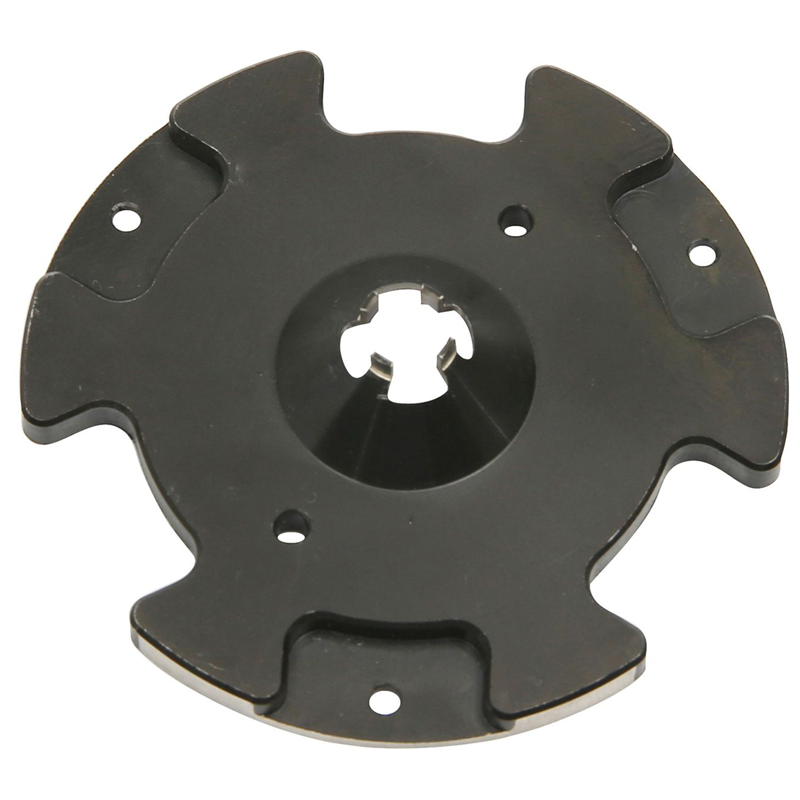
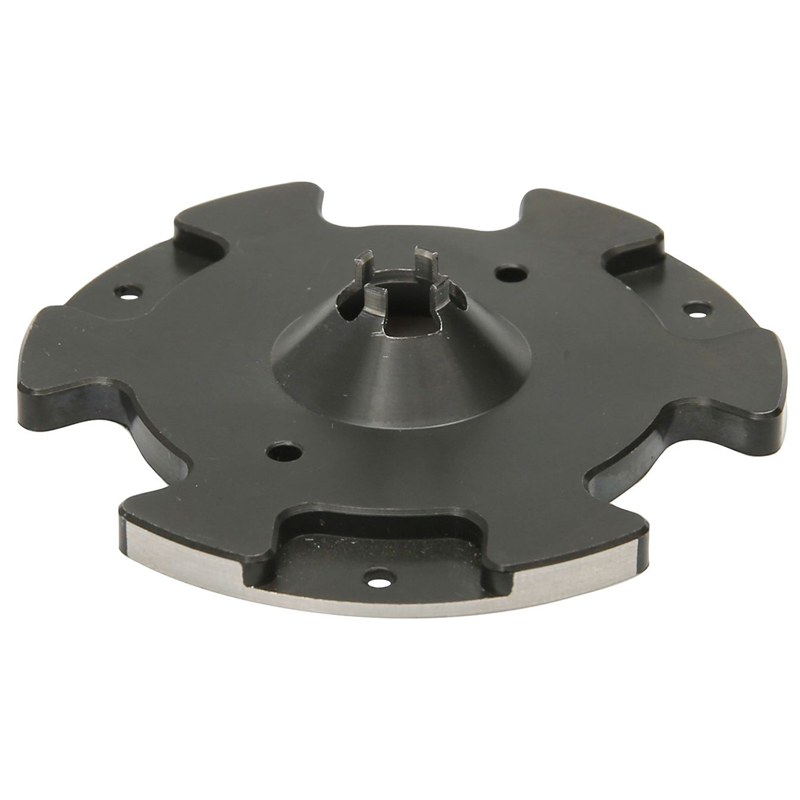
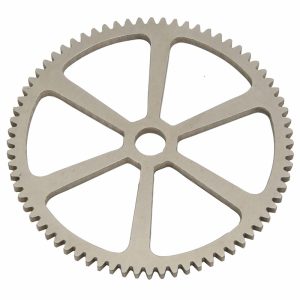
Precision-engineered for the most demanding rotary indexing applications, our Custom CNC Machined Indexing Rotary Plate serves as the critical interface between your drive mechanism (Cam Indexer or Servo Motor) and your automated tooling fixtures. Designed with a standard 6-station configuration and a precision internal spline hub, this disc-type component delivers exceptional torque transmission, zero-backlash positioning, and long-term dimensional stability.
Whether utilized in high-speed medical device assembly lines, pharmaceutical packaging machinery, or automotive part testing SPMs (Special Purpose Machines), this rotary dial plate ensures uninterrupted, precise intermittent motion, reducing downtime and enhancing overall production efficiency.
Technical Specifications (CNC Machining Capabilities & Parameters)
This table highlights our manufacturing precision and material capabilities tailored for this specific plate.
| Parameter Category | Specification / Capability |
|---|---|
| Material Options | Standard: 45# Steel (C45 / S45C) – Black Oxide Finish Upgrades: 4140 Alloy Steel, 304/316 Stainless Steel, 6061/7075 Aluminum |
| Max Outer Diameter (O.D.) | Up to 600mm (23.6 inches) |
| Standard Thickness | 10mm – 50mm (depending on design and loading requirements) |
| Internal Spline Types | Straight-sided splines, Involute splines (Metric & SAE standards), Custom helical splines |
| Machining Processes | CNC Milling (3-axis, 4-axis, 5-axis), CNC Turning, CNC Drilling, Contour Milling, Boring, Pocketing |
| Tolerances Achievable | Positional Accuracy: ±0.01mm (0.0004″) Spline Fit Tolerance: H7/g6 (Sliding fit) or H7/k6 (Interference fit) Concentricity (Runout): ≤ 0.02mm T.I.R. |
| Surface Finish | As-machined: Ra 1.6 ~ 3.2μm Fine Milling: Ra 0.8μm Surface Treatment: Black Oxide (standard), Hard Anodizing, Electroless Nickel Plating, Zinc Plating |
| Balancing Quality | G6.3 (Standard rotational balancing), G2.5 (High-speed precision balancing available) |
| Detection Features | Precision-machined trigger edge for proximity/optical sensor alignment |
Material Analysis: Why We Choose the Right Alloy
Choosing the correct material ensures the plate withstands high cyclic loads without deformation.
-
45# Steel (Carbon Steel) with Black Oxide (Best Price-Performance): For general automation use. It offers excellent machinability and tensile strength. The Black Oxide coating provides mild corrosion resistance and reduces light reflection, which is critical for sensor-based automation environments.
-
4140 Alloy Steel (High-Strength): Recommended when the plate needs to withstand extremely high torsional shock or heavy fixture loads. It offers superior wear resistance and toughness.
-
Stainless Steel (304/316): Imperative for Medical Equipment and Pharmaceutical applications. It provides complete resistance to sterilization chemicals and humidity, ensuring a sterile environment.
-
Aluminum (6061/7075): Perfect for ultra-high-speed indexing applications. The reduced weight lowers the moment of inertia, allowing the drive motor to start and stop more quickly, saving energy.
Advanced Tolerance & Quality Control Capabilities
For an Indexing Plate, the core challenge is not just cutting a circle; it’s ensuring every feature aligns perfectly when rotated.
-
Concentricity & Runout Control: The center of the internal spline must be perfectly concentric with the outer diameter and the mounting hole pattern. We utilize CNC 5-axis machining to machine the entire part in a single setup, eliminating cumulative errors from manual repositioning.
-
Spline Fit Guarantee: Splines are the heart of torque transmission. We strictly inspect spline fit using CMM (Coordinate Measuring Machines) and custom GO/NO-GO gauges, ensuring your Cam Indexer shaft slides in perfectly with the exact fit tolerance (e.g., H7 fit).
-
Surface Integrity: To prevent stress fractures during high-cycle rotation, our machined edges are deburred and radiused meticulously, removing sharp micro-cracks.
Manufacturing Challenges (The “Hidden Difficulty”)
Why high-quality plates are expensive:
-
Spline Manufacturing Complexity: Cutting a precise internal spline with a blind or through-hole is geometrically complex. Incorrect indexing of the spline cutter leads to backlash, destroying the accuracy of the indexing station.
-
Stress Relieving: The “star/cross” shape of a 6-station plate involves extensive material removal. Uneven stress release during machining can cause the plate to warp significantly after unclamping. We utilize a stress-relieving annealing process before final finishing to guarantee flatness.
-
Dynamic Balancing: Even a 2-gram imbalance at a 200mm radius creates significant vibration at high RPMs, potentially damaging the downstream cam indexer. We employ specialized dynamic balancing machines to ensure vibration-free rotation. For comprehensive design recommendations and manufacturability tips that help avoid these challenges, explore our CNC Machining Design Guide.
Application Scenarios
-
Medical Device Assembly Lines: Used as the central turntable in automated manufacturing for syringes, vial filling, and surgical tool assembly, where strict sterilization protocols and non-reactive materials (Stainless Steel) are required.
-
Pharmaceutical Packaging: Drives the rotary table for precise blister packing, where consistent high-speed intermittent stops are essential to align packaging films and pill trays.
-
Automotive Component Testing SPMs: Acts as a multi-station fixture holder for testing fuel injectors or brake calipers. Tests are performed simultaneously at different stations, significantly reducing production testing time.
-
Electronics & Semiconductor Manufacturing: Serves as the wafer carrier or component positioning stage in high-accuracy pick-and-place machines.
Frequently Asked Questions (FAQ)
Q1: Is this Indexing Plate compatible with my specific Cam Indexer brand?
A: Yes. We manufacture based on your original drawings or sample dimensions. We commonly work with standard spline shafts used by major brands (e.g., Sankyo, CKD, Camco). If you provide your shaft’s spline specs, we will custom-machine the bore for a perfect fit.
Q2: How do I choose between Carbon Steel, Aluminum, and Stainless Steel for my plate?
A: If weight is critical and speeds are high: choose Aluminum. If the environment is wet or requires sterility (Medical): choose Stainless Steel. If you prioritize low cost and high strength for general use: choose 45# Carbon Steel. Still exploring options? Browse our full range of custom CNC machined plates.
Q3: Can you machine the sensor trigger edge if I don’t have the CAD file?
A: Absolutely. We offer reverse-engineering services. You can send us the physical old part, and our engineering team will measure and digitally model it, including the critical sensor trigger location.
Q4: What is the typical lead time for a custom indexing plate?
A: For the first sample prototype, the lead time is approximately 10–15 working days. For bulk production (MOQ 50-100pcs), we can achieve a 20–25 day delivery.
Q5: Is dynamic balancing included in the price?
A: Standard G6.3 balancing is included in our standard pricing. If your application requires high-speed rotation (above 1000 RPM), we recommend G2.5 balancing, which may incur a minimal additional setup fee.
Additional information
| material |
|---|
Reviews
There are no reviews yet.