
Custom Precision CNC Milling Two-Piece Sliding Guide Frame Assembly for Industrial Automation
Description
Product Overview
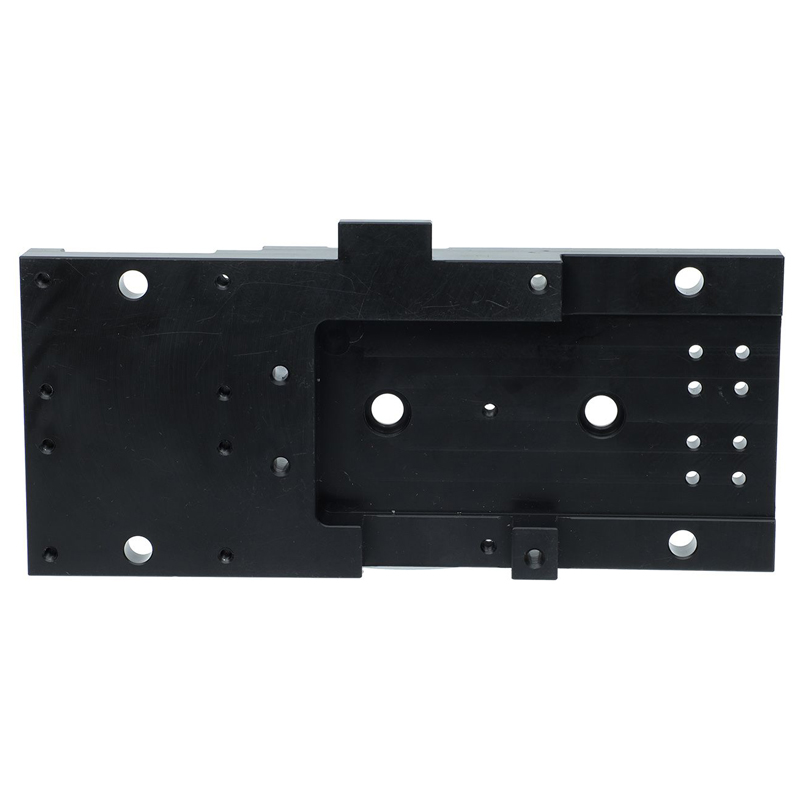
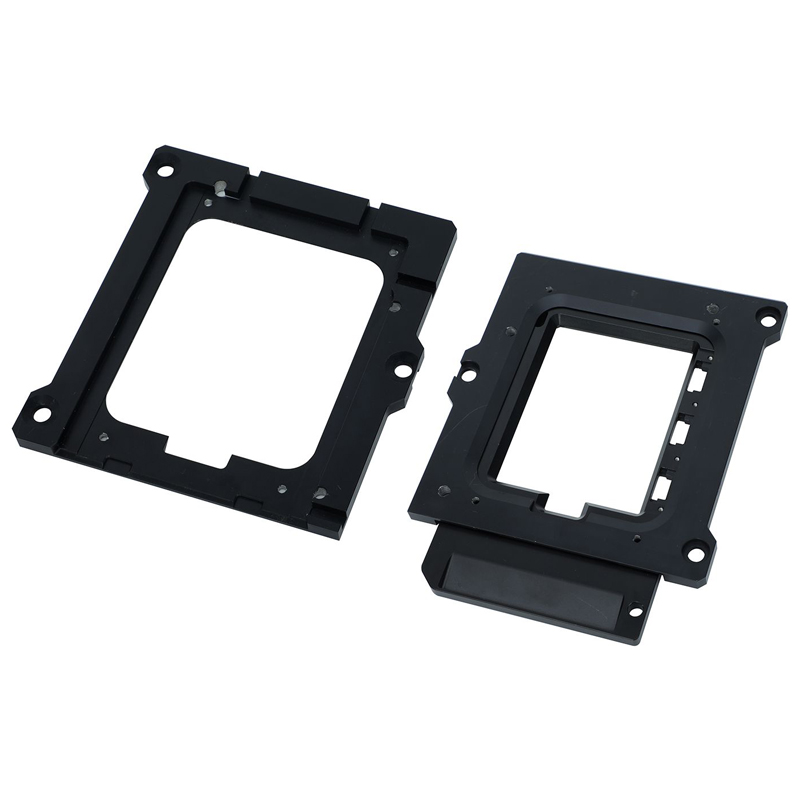
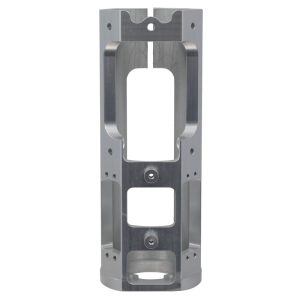
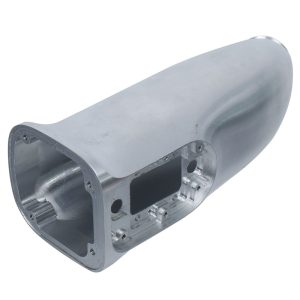
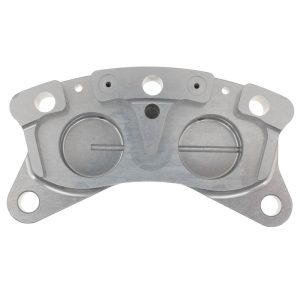
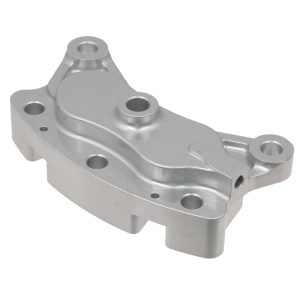
This Two-Piece Sliding Guide Frame Assembly is a custom-designed CNC machined component specifically engineered for linear guided movement and precise positioning in automated industrial environments. Unlike static brackets, this assembly consists of an interlocking upper rail and a lower base plate that operate through a horizontal sliding action.
Machined from high-grade aluminum or steel alloys, this assembly offers exceptional rigidity, smooth sliding performance, and long-term wear resistance. It serves as a critical structural element in production lines, semiconductor equipment, and heavy-duty test fixtures, enabling manufacturers to achieve highly repeatable manual or automated transfers.
CNC Machining Services & Technical Parameters
Tip for SEO: Structuring data in tables helps Google pull “feature snippets,” improving visibility.
| Parameter | Capability & Details |
|---|---|
| Manufacturing Process | Custom CNC Milling, CNC Turning, Drilling, Tapping |
| Material Options | AL6061-T6, AL7075, Stainless Steel (304/316), S45C, POM, Engineering Plastics |
| Surface Finish | Black Anodizing, Clear Anodizing, Powder Coating, Nickel Plating, Bead Blasting |
| Tolerance Capability | ±0.005 mm – ±0.01 mm for critical sliding fits; Standard: ±0.05 mm |
| Sliding Fit Clearance | Typically 0.02 mm – 0.05 mm (depending on thermal expansion and coating thickness) |
| Machining Axis | 3-Axis, 4-Axis, and 5-Axis Simultaneous CNC Machining |
| Maximum Part Size | Depends on machine bed; Up to 1000mm x 800mm (Customizable) |
| MOQ | 1 Piece (Prototype) to Mass Production |
| Inspection Tools | CMM (Coordinate Measuring Machine), Calipers, Micrometers, Plug Gauges |
| Drawing Formats | STEP, IGES, PDF, AutoCAD (DWG) |
Application Scenarios
This sliding frame assembly is widely used in the following sectors:
-
Semiconductor & Electronics: Wafer transport carriers, PCB testing fixtures, and precise sliding trays for pick-and-place machines.
-
Industrial Automation: Linear guide housings, tool changers, and sliding gates on conveyor systems.
-
Packaging Machinery: Adjustable rails that need to slide to accommodate different product sizes.
-
Automotive Manufacturing: Custom tooling brackets and sliding mechanisms for robotic welding arm positioning.
-
Medical Devices: Sliding docking stations for precision medical imaging equipment.
Material Analysis
Choosing the right material is critical for both sliding friction and structural integrity.
-
Aluminum (AL6061-T6 / AL7075): Best for lightweight applications. Offers excellent machinability and good wear properties when hard anodized. AL7075 provides high strength for heavy load-bearing frames.
-
Stainless Steel (304 / 316): Best for harsh environments. Offers superior corrosion resistance and high rigidity, ideal for food processing or chemical plants. However, it requires hard chrome plating or proper lubrication to prevent galling during sliding.
-
Engineering Plastics (POM / Delrin): Best for noise reduction and self-lubrication. Often used as inserts or entirely plastic frames for lighter loads where low friction is required without external grease.
Tolerance Capability
Because this is a sliding assembly, the fit tolerance between the two parts is strictly controlled.
-
General Geometric Tolerances: Flatness ≤ 0.01 mm, Parallelism ≤ 0.02 mm, Positional Accuracy ≤ 0.02 mm.
-
Interlocking Features: The guide rails, slots, and stop pins are machined with an H7/g6 fit (sliding clearance fit) to ensure the two pieces move horizontally with zero “slop” or lateral wobble, preventing jamming or premature wear.
Manufacturing Challenges
Why do clients trust us with this part?
-
Internal Stress Relief: If the material (especially thick aluminum) is not properly stress-relieved before final machining, the frame can warp during the sliding process. We employ strict heat treatment and stress-relief protocols.
-
Burr Control: Fine burrs on the sliding channels can cause scraping. We use specialized deburring tools and tumbling processes to ensure a silky smooth sliding action.
-
Coating Thickness Uniformity: Anodizing or powder coating adds thickness. Our CNC programmers account for this in the pre-coating dimensions to ensure the parts slide perfectly together after the final surface treatment.
-
Tight Slot Machining: Achieving deep, precise slots in a continuous cycle requires rigid tooling and minimal tool deflection, which our 5-axis machines handle flawlessly.
FAQ
Q1: Can you provide samples for testing the sliding function?
A1: Yes, we offer rapid prototyping. We can CNC machine a single set of the two-piece assembly for your functional validation before mass production.
Q2: How do you control the friction between the two sliding pieces?
A2: We ensure precise surface roughness (Ra 0.8 or lower) on contact surfaces. Additionally, we can apply PTFE (Teflon) impregnated anodizing or incorporate self-lubricating plastic guide inserts based on your requirements.
Q3: Is the assembly delivered pre-assembled or as separate pieces?
A3: We usually deliver them as two separate machined pieces with precisely matched serial numbers or markings for easy identification. We can also pre-assemble them with screws and ship them as a complete unit if requested.
Q4: Can you machine this from materials other than aluminum?
A4: Absolutely. Based on your CAD drawings, our engineering team can recommend and machine from steel, stainless steel, brass, or engineering plastics to meet specific load and environmental demands.
Q5: What is your lead time for mass production?
A5: For this type of frame assembly, standard lead time is 15-20 days for mass production after approval of the First Article Inspection (FAI).
Additional information
| material |
|---|
Reviews
There are no reviews yet.