
Precision CNC Machined Aluminum Photoelectric Pod Base | Irregular Airborne Gimbal Mounting Plate
Description
Product Overview
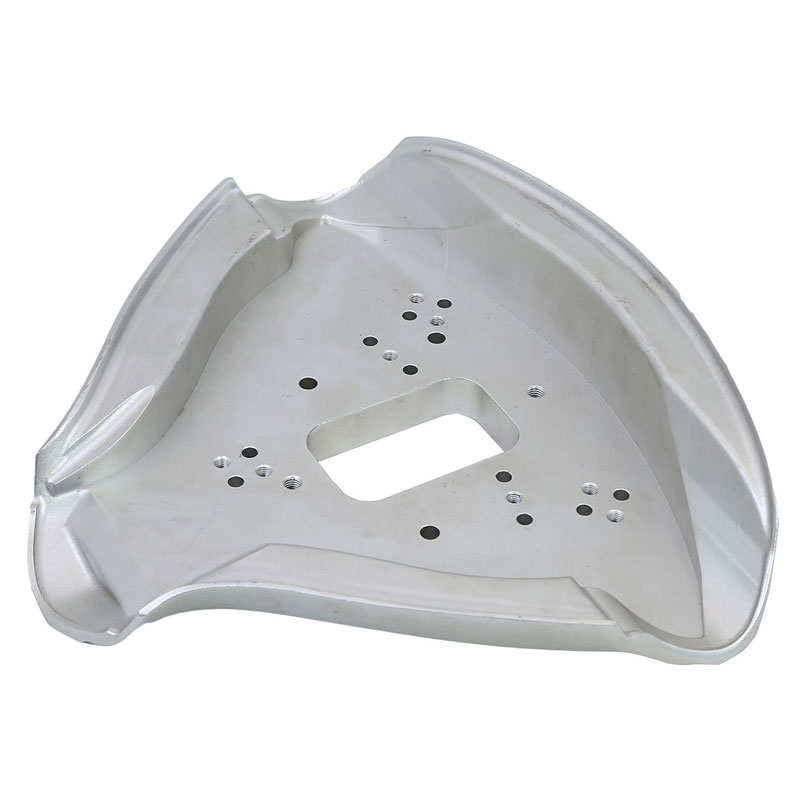
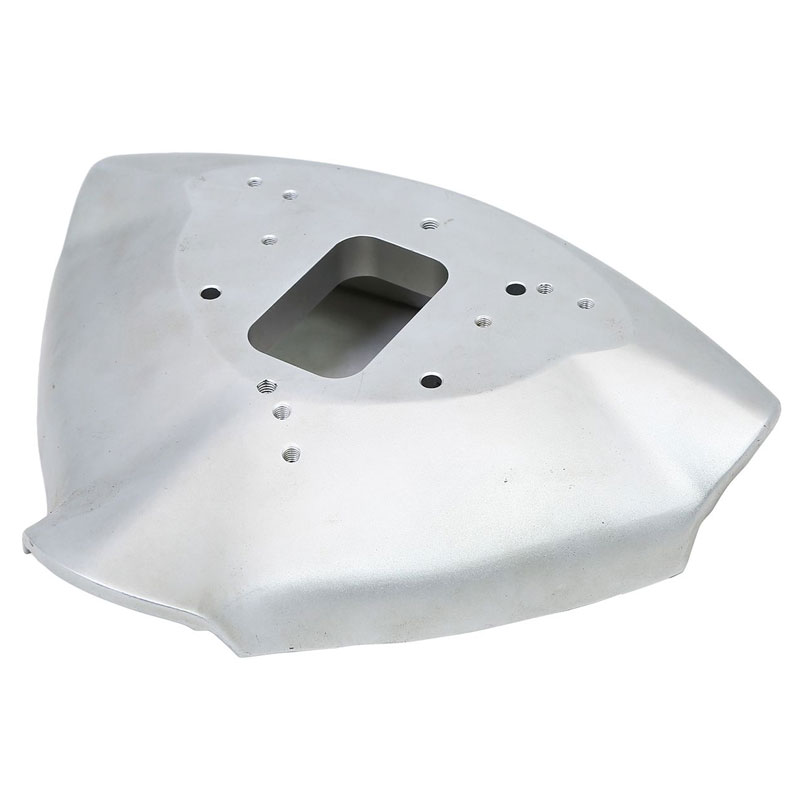
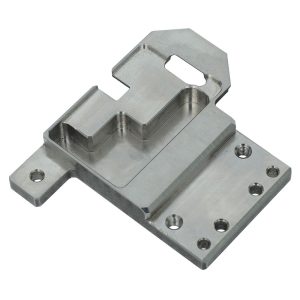
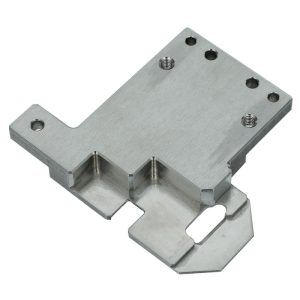
This heavy-duty, irregularly shaped aluminum structural bracket is a cornerstone component for professional optoelectronic systems. Precisely milled via multi-axis CNC machining, this part belongs to our core CNC Plate series; it features a central cable routing slot, reinforced flange edges, and multi-layered hole patterns, making it the ultimate mounting base for airborne EO/IR pods and ruggedized PTZ surveillance platforms.
1. Material Analysis (Aluminum Alloy)
Choosing the right aluminum alloy is critical for airborne and heavy-loaded applications.
| Material Grade | Typical Application | Key Mechanical Properties |
|---|---|---|
| Aluminum 6061-T6 | Standard for this part (optimal cost-performance balance). | Tensile Strength: ≥310 MPa; Yield Strength: ≥276 MPa. Excellent machinability and good weldability. |
| Aluminum 7075-T6 | Recommended for severe airborne/vibration environments. | Tensile Strength: ≥570 MPa; Yield Strength: ≥503 MPa. Higher stress tolerance but higher cost and lower corrosion resistance. |
| Aluminum 5083 | Recommended for maritime/ship-based gimbal systems. | Excellent corrosion resistance and good strength. |
Optimization Note: The CNC machining process starts from solid aluminum blocks (or extruded plates), strictly free from casting porosity, ensuring ultra-high structural integrity. If weight reduction is critical, our CNC service can add customized lightweight pocketing on the blank backside.
2. CNC Machining Services & Process Parameters
We utilize advanced manufacturing equipment to convert raw aluminum stock into this complex geometry.
| Parameter / Feature | Specification / Capability |
|---|---|
| CNC Machining Type | 3-Axis, 4-Axis, and 5-Axis CNC Milling & Drilling (Simultaneous 5-axis used for the outer flange curves). |
| Workpiece Max Size | 800 x 800 x 400 mm (Enables monolithic production without splicing). |
| Surface Finish Options | Clear Anodized (as shown), Sandblasting, Electrophoresis, Hard Anodizing, or Powder Coating. |
| Threading Capability | Standard metric threads (M2-M16), UNC, UNF threads, and custom Helicoil inserts. |
| Hole Positioning Accuracy | ±0.02 mm (CNC drilling and tapping). |
| Surface Roughness (Ra) | Ra 1.6 to 3.2 μm (Standard machined surface); Ra 0.8 μm achievable for sealing contact surfaces. |
| CAD/CAM Software | SolidWorks, AutoCAD, UG/NX, Mastercam, Fusion 360. |
| Inspection Equipment | CMM (Coordinate Measuring Machine), Optical Comparator, Digital Micrometers, 2.5D Vision Measuring System. |
| Lead Time | 5-7 working days for prototypes; 15-20 days for mass production. |
3. Critical Manufacturing Challenges (CNC Milling Difficulties)
Why is this “Irregular Base” considered a high-difficulty CNC part?
-
Large-Span Thin-Wall Flange Milling: The external rolled flange is thin and spans wide arcs across the whole part. During CNC 5-axis milling, the thin walls easily generate tool chatter (vibration) and deformation. We mitigate this through specialized rough-finish toolpath strategies (high-speed trochoidal milling) and optimized clamping fixtures.
-
Stress Relief and Warpage Control: When cutting out the central rectangular window and removing massive material from a solid aluminum block, residual internal stress is released, easily causing “banana” bending. Our proprietary heat treatment and strategic roughing processes (timely stress release before finishing) ensure flatness is maintained.
-
Multi-Angle Holes Alignment: The mounting holes are arranged in three different functional zones. The precise alignment of blind threaded holes at different angles requires strict 5-axis fixture programming to ensure perpendicularity and positional tolerances.
4. Tolerance Capabilities (Precision Control)
We strictly control the following tolerance levels to guarantee seamless assembly with the gimbal system:
-
Linear & Geometric Tolerances: Within ±0.05 mm for standard critical dimensions; can be tightened to ±0.01 mm upon request.
-
True Position of PCD (Pitch Circle Diameter): ≤ 0.05 mm to ensure smooth motor and housing installation.
-
Flatness of Mounting Plane: ≤ 0.05 mm per 100 mm length, ensuring good vibration contact.
-
Thread Fit Grade: 6H/6g for standard metric threads, guaranteeing smooth screwing without jamming.
5. Primary Application Scenarios
Leveraging its high rigidity and multi-layer hole layout, this CNC machined base is widely applicable to:
-
Heavy-duty Photoelectric Pods (EO/IR Systems): Fits perfectly inside the outer shell, acting as the main carrier for gimbals, slip rings, and optical sensors.
-
Large Industrial & Military Drones (UAVs): Used as the center mounting plate for heavy payloads, withstanding powerful thrust and flight vibrations.
-
Rugged Vehicle-Mounted PTZ Cameras: For patrol cars, mining vehicles, and military trucks where high shock resistance is required.
-
Advanced Robotics & Autonomous Systems: Structural mounting plate for sensor arrays, LIDAR, and heavy-load robotic joints.
-
Shipborne / Marine Radar Platforms: Corrosion-resistant treatment ensures long-term durability in salt-spray environments.
6. Frequently Asked Questions (FAQ)
Q1: Are you really machining this entirely from solid aluminum blocks, or is it die-casting?
A: We strictly offer CNC Machining services. We start with high-grade solid aluminum plates or extruded profiles. While the geometry is complex, our 5-axis machines mill them directly to achieve the highest material density and strength required for load-bearing airborne parts.
Q2: The external flange looks thin. Will it deform during CNC milling?
A: This is our core challenge, and we have solved it through custom-designed fixtures and specific multi-step toolpaths (including roughing, semi-finishing, and finishing). We also apply internal stress relief before the final cut, ensuring the final shape remains stable.
Q3: Can you make it lighter?
A: Absolutely. During the CNC milling process, we can apply weight-reducing pockets (hollowing out) on the non-stressed central areas, reducing mass by 15%~30% while maintaining structural rigidity, especially if it’s for lightweight UAVs.
Q4: What kind of anodizing do you provide?
A: We offer type II clear anodizing (as shown in the picture), black anodizing, and hard anodizing. We ensure the threads are masked (protected) during the process to prevent coating buildup affecting the screw pitch.
Q5: Do you accept small batches or prototype orders?
A: Yes. Because we use pure CNC machining instead of mold investment, we are highly flexible for single prototype pieces or small-batch production. No expensive mold fee is required.
Q6: What files do you need for a quotation?
A: 3D modeling files (STEP, IGS, X_T) along with 2D drawings (PDF/DWG) indicating the exact tolerances, surface finishes, and thread specifications.
Additional information
| material |
|---|

Reviews
There are no reviews yet.