
Custom CNC Machined Split Ring Optical Lens Tube Clamp with Mounting Base | Black Anodized Aluminum Precision Optomechanical Bracket
Description
Product Overview
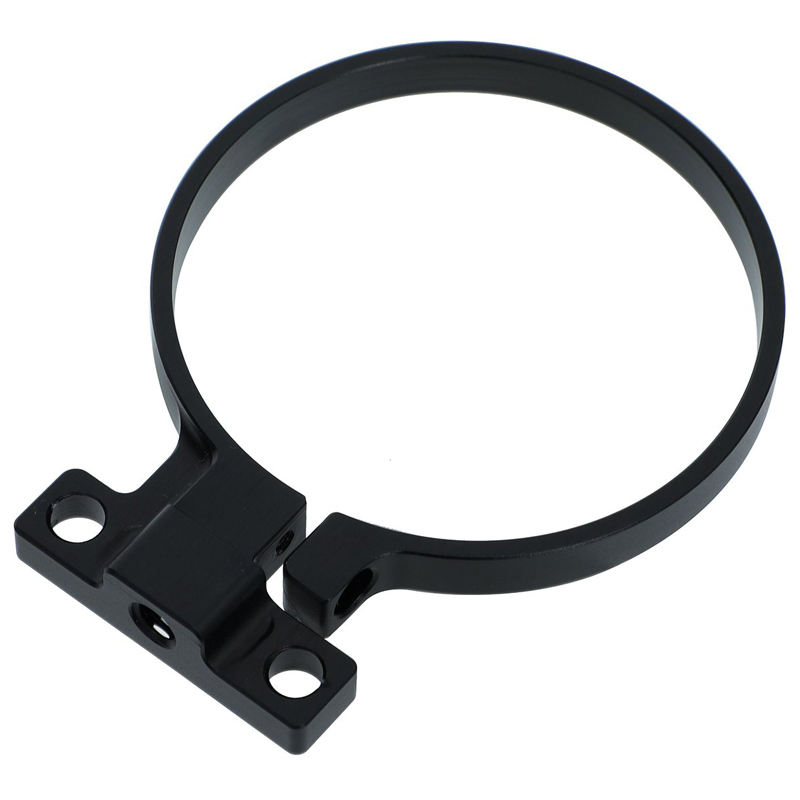
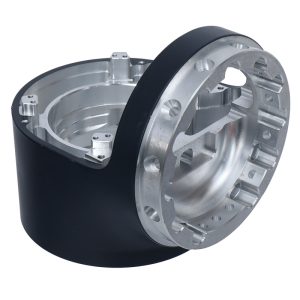
Engineered for precision optomechanical systems, this Custom CNC Machined Split‑Ring Optical Lens tube clamp is the industry‑standard solution for securely mounting cylindrical optical components without introducing distortion or stress. Featuring a robust tube clamp bracket and a precision‑machined split‑ring clamping mechanism, this bracket ensures vibration‑resistant fixation of lens tubes, camera lenses, and laser modules.
As one of our high‑performance adjustable tube clamps, it is crafted as heavy‑duty metal tube clamps from high‑grade Aluminum Alloy (6061/7075). These aluminum tube clamps are finished with a durable Black Anodized coating, combining lightweight construction with exceptional structural rigidity. Our in‑house CNC machining services produce parts with tight tolerances, ensuring a perfect fit for your critical imaging and photonics applications.
Explore more custom‑machined optomechanical components within our Optical Parts collection.
CNC Machining Parameters & Specifications
| Parameter | Specification / Options |
|---|---|
| Product Type | Split Ring Clamp / Optomechanical Mounting Bracket / Custom tube clamp bracket |
| CNC Process | 3‑Axis / 4‑Axis / 5‑Axis CNC Milling & Turning |
| Standard Materials | Aluminum 6061‑T6 (Standard), 7075‑T6, 6082 |
| Optional Materials | Stainless Steel (303/304/316), Brass, Titanium, POM (Delrin) for alternative metal tube clamps |
| Surface Finish | Clear Anodize, Black Anodize (Type II/III), Bead Blasting, Electropolishing, Powder Coating |
| Standard Tolerances | ±0.005 mm (for critical clamping bore); General: ±0.01 mm |
| Bore Diameter Range | Customizable (Typically Ø20mm to Ø150mm) |
| Testing & Inspection | 100% CMM Inspection, Optical Comparator, Thread Gauges |
| MOQ (Minimum Order) | 1 Piece (Prototype) / 100+ Pieces (Mass Production) |
| Lead Time | 3‑5 Days for Samples; 10‑15 Days for Bulk Orders |
| Quality Certificates | ISO 9001:2015, Material Certificates, Inspection Reports |
Application Scenarios
Because of its functional design (integrating a base mount with a split clamp), this tube clamp bracket and our other adjustable tube clamps are widely utilized across precision industries:
- Optical & Photonics: Securing lens tubes, filter wheels, and beam expanders in benchtop optical setups.
- Cinema & Camera Rigging: Used as a Lens Mount Adapter Support for professional cinema cameras (e.g., RED, ARRI) to hold heavy PL/LPL lenses firmly; our aluminum tube clamps deliver lightweight yet rigid support.
- Laser Systems: This custom tube clamp mounts laser diode modules and cylindrical housings in industrial laser marking or cutting equipment.
- Industrial Automation: Our custom‑built metal tube clamps fix cylindrical sensors, linear actuators, and pneumatic tube components in robotic fixtures.
- Medical Devices: Supporting tubular components in diagnostic imaging and surgical equipment where precision and hygiene are paramount.
Material Analysis: Why Aluminum 6061/7075?
We primarily recommend Aluminum 6061‑T6 for this tube clamp bracket, balancing cost and performance. For high‑stress load‑bearing applications, 7075‑T6 is optimal for heavy‑duty metal tube clamps and adjustable tube clamps.
- Aluminum 6061‑T6: Excellent machinability, superior corrosion resistance, and high weldability. It is perfect for anodizing, providing a sleek matte black finish that resists scratches.
- Aluminum 7075‑T6: High‑strength aerospace‑grade alloy. It offers nearly double the strength of 6061, making it ideal for heavy‑duty rigs where the bracket must support large, heavy optics without flexing.
- Why Anodizing? The black anodized layer adds a hard, wear‑resistant surface, prevents galvanic corrosion between the aluminum and the optical tube, and reduces light reflection (important for optical environments).
Tolerance Capabilities
Achieving a perfect “grip” on the tube requires exceptional precision for any high‑quality tube clamp or tube clamp bracket. Our machining capabilities include:
- Critical Bore Diameter: Held to ±0.005 mm to ensure a consistent, friction‑fit clamp force without binding the optical cylinder.
- Concentricity: Maintained within 0.01 mm between the clamping bore and the mounting base to prevent misalignment in optical axes.
- Flatness: Mounting base surfaces are machined to a flatness of 0.002 mm to ensure perfect contact with the mounting plate or camera body.
- Surface Roughness (Ra): Standard 1.6 μm, with Ra 0.4 μm available for the internal clamping bore to prevent scratching the lens tube.
Manufacturing Challenges & Our Solutions
CNC machining a thin‑walled split‑ring tube clamp bracket presents specific engineering hurdles:
- Challenge 1: Distortion during machining. The ring is thin, and clamping forces during CNC milling can warp the part.
- Our Solution: We use soft jaws and custom fixtures to hold the part during cutting, followed by a stress‑relief heat‑treatment process to ensure the ring remains perfectly round after the split is cut.
- Challenge 2: Burr control in the split gap. The narrow slit between the clamp ears is prone to burrs for thin‑wall metal tube clamps.
- Our Solution: The part is completed using deburring tools, followed by tumbling and secondary ultrasonic cleaning to ensure the gap is smooth and won’t scratch the tube surface of your aluminum tube clamps.
- Challenge 3: Anodizing uniformity in tight areas. The hard coat can accumulate unevenly in the split.
- Our Solution: We utilize Type II (Sulfuric) Anodizing with specialized racking designed for split‑ring clamps to ensure a consistent film thickness and dimensional stability inside the bore.
Frequently Asked Questions (FAQ)
Q: Is the split‑ring clamp already cut, or can I adjust the gap? A: The gap is pre‑machined to a specific width. However, it is a functional gap; when you tighten the side screws, the gap closes slightly to apply clamping pressure. We can custom‑machine the gap width based on your exact bolt specifications for your custom tube clamp or tube clamp bracket.
Q: Can you match my exact bore diameter and screw thread size? A: Yes, absolutely. As this is a custom CNC‑machined part, we do not have standard off‑the‑shelf sizes. We manufacture strictly to your provided 2D drawings or 3D CAD files (STEP/IGES formats) for bespoke adjustable tube clamps, metal tube clamps, and aluminum tube clamps.
Q: What is the maximum torque I can apply to the tightening screws? A: This depends on the material chosen (6061 vs. 7075) and the wall thickness. For standard 6061‑T6 with a 0.5 mm wall, we recommend a torque range of 0.5 – 0.8 Nm. We can provide FEA (Finite Element Analysis) suggestions if needed.
Q: Is the black anodized finish conductive? A: No, Type II anodizing acts as an electrical insulator. If you require anodizing for grounding or electrical contact, we offer Masked Anodizing (leaving specific areas un‑anodized) or Chromate Conversion Coating (Alodine) for your tube clamp bracket.
Q: Do you provide free samples for testing? A: We offer a competitive prototype service. For complex parts like this tube clamp, we charge a small machining fee for the sample but deduct the sample cost from your bulk production order.
Additional information
| material |
|---|

Reviews
There are no reviews yet.