
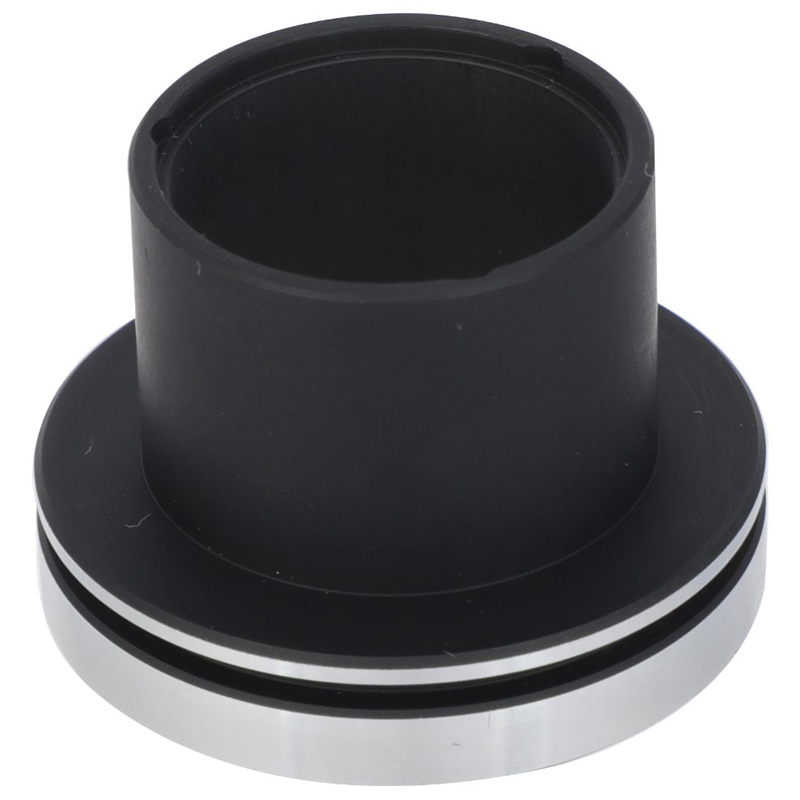
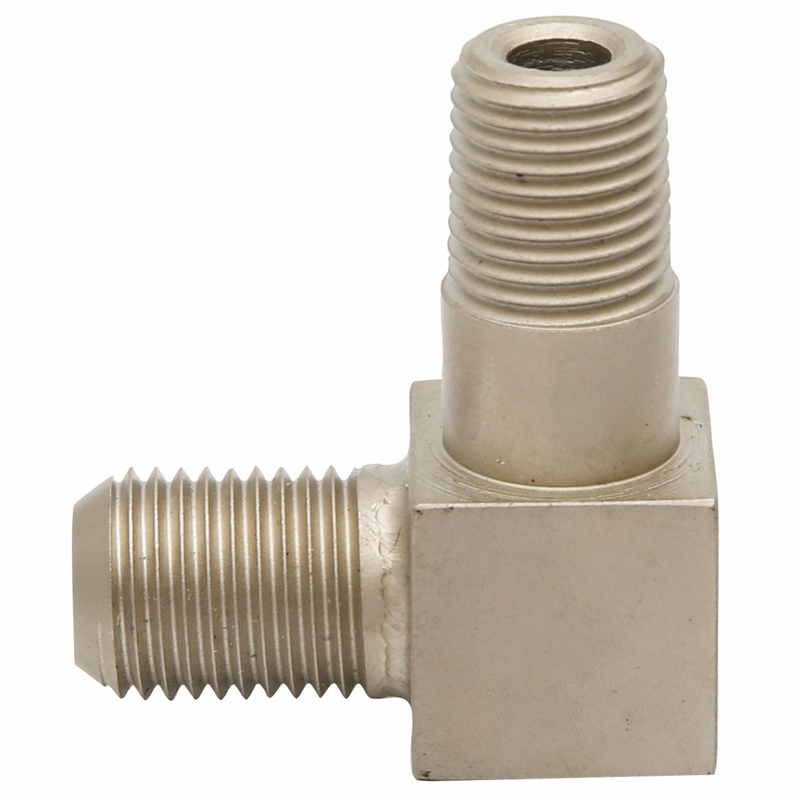
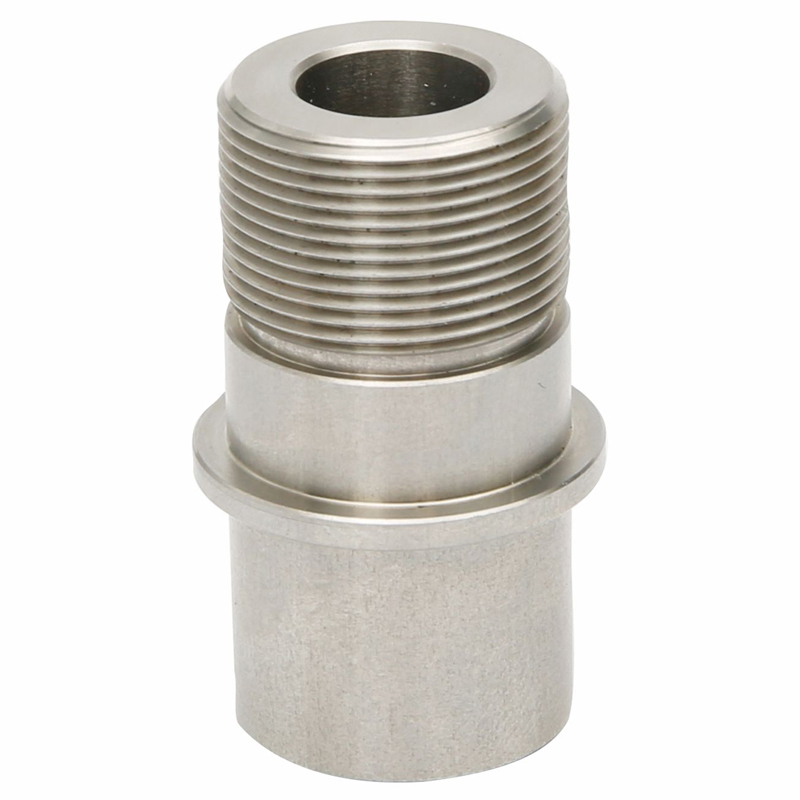
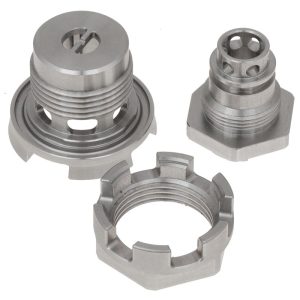
Stainless Steel Flanged Shoulder Bushing CNC Machined Hydraulic Fitting for Automation Equipment
Description
Product Overview
This stainless steel flanged shoulder bushing is a one‑piece CNC machined hydraulic fitting designed for axial positioning, thrust bearing and sealing support inside automation hydraulic systems. The integrated flange shoulder stops over‑insertion, controls axial clearance and maintains concentricity between shafts, manifolds and hydraulic valve blocks. We produce this component via CNC turning + secondary milling / drilling as part of our custom CNC machining services. It supports prototype, small‑batch and volume runs for hydraulic automation, pneumatic and motion control systems. Each bushing is inspected for bore size, flange flatness, coaxiality and surface finish to avoid hydraulic leakage, shaft binding and premature wear.
CNC Machining Service Parameters Table
| Item | Specification |
|---|---|
| Product Name | Stainless Steel Flanged Shoulder Bushing, CNC Machined Hydraulic Fitting |
| Machining Services | CNC Turning, CNC Milling, Drilling, Chamfering, Deburring, Surface Finishing |
| Available Materials | SS304, SS316L, 316, 416 stainless steel (custom alloy on request) |
| Dimension Range | Ø3mm ~ Ø120mm; length up to 150mm |
| Standard Tolerance | ±0.01mm (precision bore / shoulder); ±0.02mm general feature; geometric tolerance IT6–IT7 |
| Surface Finish | Ra 0.8μm / Ra1.6μm / Ra3.2μm; passivation, electropolishing, natural as‑machined |
| Inspection | CMM, micrometer, bore gauge, roughness tester, first article inspection (FAI) |
| Certification | ISO9001:2015 |
| Order Volume | 1pc prototype, small batch, mass production |
| Lead Time | 2–5 days for samples; 7–15 days for bulk orders |
| Drawing Format | STEP, IGES, SolidWorks, PDF, DWG |
| Shipping | DHL, FedEx, UPS, sea freight |
Material Analysis
We mainly offer 304 stainless steel and 316L stainless steel for hydraulic flanged shoulder bushings, the two most common grades for automation hydraulic fittings:
- 304 Stainless Steel: Balanced machinability, moderate corrosion resistance, good tensile strength. Best for indoor hydraulic automation, clean oil circuits, non‑chloride environments. Lower material cost, suitable for general‑purpose automation lines. Austenitic stainless steel, work hardening occurs during cutting, but easier to control than 316L.
- 316L Stainless Steel (urea grade optional): Contains molybdenum, superior chloride, acid and salt corrosion resistance. Low carbon reduces intergranular corrosion after welding / heat. Recommended for outdoor hydraulic stations, food & beverage hydraulics, marine automation, washdown environments and high‑reliability hydraulic manifolds. Tradeoff: 316L is gummy, heavy work‑hardening, higher tool consumption and longer machining cycle time.
- Alternative: 416 free‑machining stainless for high‑volume non‑corrosion‑critical bushings; better chip breaking but lower rust resistance.
Tolerance Capability
For hydraulic flanged shoulder bushings, geometric tolerances are more critical than single dimension tolerance:
- Inner bore diameter: ±0.01 mm, controlled for clearance fit with hydraulic shafts and pins.
- Shoulder step diameter: ±0.015 mm, controls axial locating fit.
- Flange face flatness: ≤0.008 mm, critical for sealing and preventing hydraulic leakage.
- Coaxiality (bore to outer shoulder OD): ≤0.02 mm. Poor concentricity causes shaft binding, uneven wear and pressure fluctuation.
- Perpendicularity (flange face to bore axis): ≤0.02 mm.
- Thread features (if required): ISO metric, UNF, BSPP, NPT thread per standard gauge inspection.
We separate critical hydraulic sealing features from non‑critical stock features in your drawing to avoid unnecessary high cost.
Application Scenarios
This CNC machined flanged shoulder bushing hydraulic fitting is widely adopted in automation hydraulic systems:
- Hydraulic manifold blocks, valve bank assemblies
- Hydraulic cylinder pivot & end cap locating
- Robot gripper hydraulic actuation units
- Automated production line hydraulic power packs
- Pneumatic‑hydraulic hybrid motion modules
- Machine tool hydraulic feed units
- Industrial fixture hydraulic clamping systems
- Offline test bench hydraulic connection assemblies
The flange shoulder design locks axial position, absorbs light thrust load and keeps the bushing from being pushed through the housing under hydraulic pressure.
Manufacturing Difficulties
- Work hardening of austenitic stainless steel: 304 / 316L easily hardens at cutting edges. Incorrect speed / feed creates built‑up edge, poor bore surface finish and dimensional drift. We use coated carbide tools, reduced cutting speed and stable internal coolant.
- Concentricity control between flange and inner bore: Re‑clamping after turning creates runout error. Our preferred process is single‑setup Swiss or 5‑axis secondary operation to finish flange face and bore in one clamping where possible.
- Thin‑wall risk: Many hydraulic shoulder bushings have thin wall sections between bore and shoulder. Clamping pressure and cutting force can squeeze deformation, leading to oval bore after release. Soft jaw fixtures and light finishing passes are mandatory.
- Deburring on hydraulic sealing edges: Tiny burrs on shoulder corners or bore entry will scratch the mating shaft and break oil film, causing leakage. Manual + vibratory deburring followed by visual / magnifying inspection.
- Consistent surface roughness on sealing shoulders: Ra stability directly affects static sealing performance. Tool wear monitoring and regular tool change are required for batch runs.
FAQ
Q1: Can you make custom flanged shoulder bushing from my STEP drawing?
A1: Yes. Our CNC machining services accept custom geometry, non‑standard shoulder heights, flange OD, bore sizes and special thread features. We review the drawing for manufacturability, flag over‑tight tolerance zones and send DFM feedback before quotation.
Q2: What is the difference between 304 and 316L for hydraulic bushing?
A2: 304 is cost‑effective for clean indoor hydraulic oil circuits. 316L provides better resistance to salt spray, diluted chemicals and washdown fluid, preferred for corrosive automation environments. 316L is harder to machine and carries higher unit price.
Q3: Can you achieve Ra 0.8 finish on the inner bore of the shoulder bushing?
A3: Yes. We use fine boring or reaming process for bore Ra 0.8μm. Higher surface finish will increase lead time and cost; we will confirm if Ra requirement is functional or cosmetic.
Q4: Do you provide first article inspection (FAI) reports for hydraulic fittings?
A4: Yes. FAI, dimensional inspection report, CMM report and material certificate (3.1 / 3.2) are available upon request for automation hydraulic projects.
Q5: Can you produce both prototype 1–5 pieces and mass production?
A5: Yes. Our CNC machining service covers prototype sampling, small batch trial run and serial production. Fixture strategy will be adjusted: soft jaw for low volume, dedicated fixture + auto‑loading for large quantity.
Q6: Is this bushing pressure rated?
A6: Pressure rating depends on material, wall thickness and mating design. We machine to your drawing dimension; we can support you with wall‑thickness review for your target working pressure, but we do not supply third‑party pressure certification unless arranged separately.
Q7: What surface treatment do you recommend for stainless steel hydraulic bushings?
A7: Passivation is standard for corrosion resistance. Electropolishing is selected for ultra‑smooth surface and cleaner hydraulic fluid contact. We do not recommend coating on the sealing shoulder / bore surface, as coating thickness will break fit tolerance.
Additional information
| material |
|---|
You must be logged in to post a review.


Reviews
There are no reviews yet.