

Custom CNC Machined Flanged Clamping Sleeve with Precision Bore and Internal Keyway
Description
Product Overview
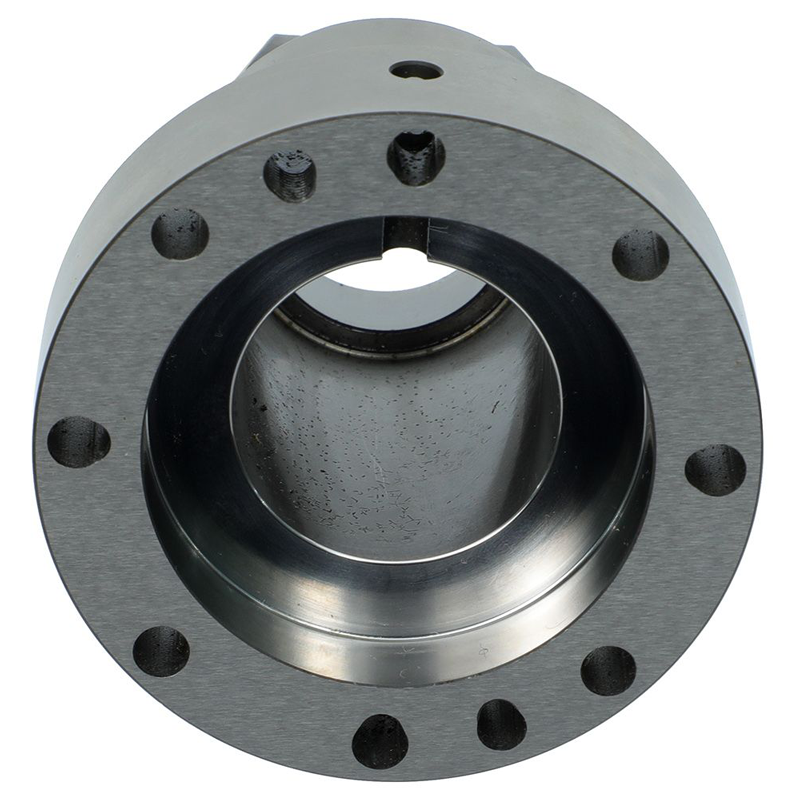
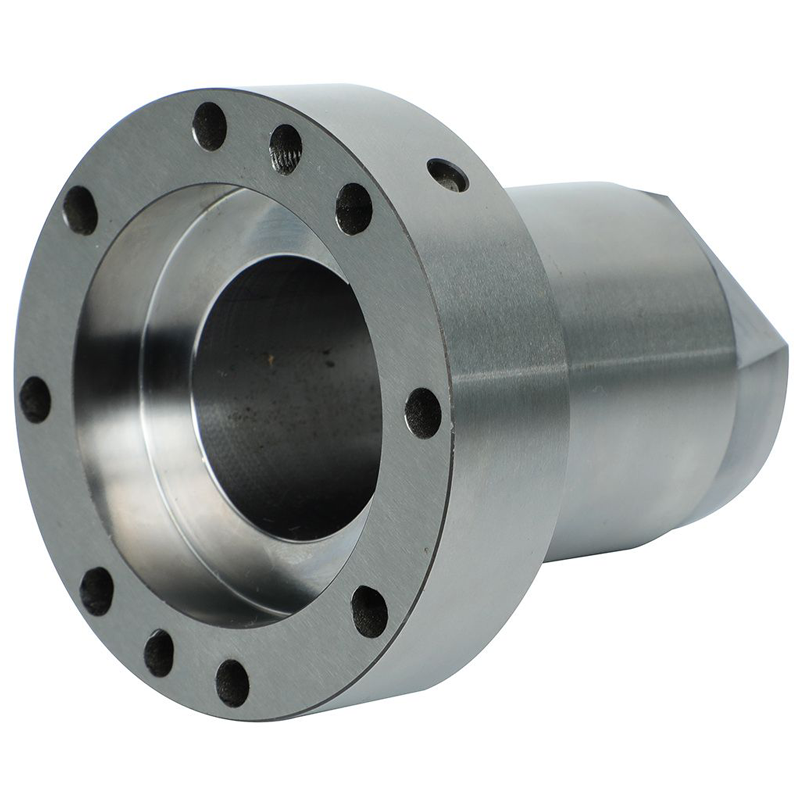
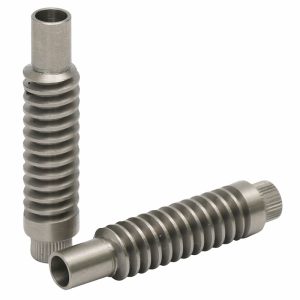
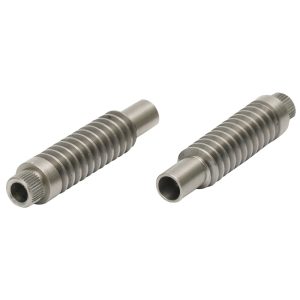
This custom CNC machined flanged clamping sleeve is a precision cylindrical component designed for shaft connection, positioning, torque transmission, and mechanical assembly. The part combines a precision-machined internal bore, internal keyway, stepped cylindrical body, and integrated mounting flange in a single custom-machined component.
Unlike a standard off-the-shelf sleeve, this type of component can be manufactured according to the customer’s drawings, dimensions, shaft fit requirements, keyway specifications, material selection, and surface finish requirements.
The precision bore provides controlled radial positioning for mating shafts or rotating components, while the internal keyway can be designed to provide positive rotational engagement and torque transmission. The integrated flange creates an additional mounting and axial locating interface, allowing the component to be incorporated into machinery, automation equipment, drive assemblies, and custom mechanical systems.
XINQIDA provides custom CNC machining services for precision sleeves, flanged sleeves, keyed shaft sleeves, and other rotational mechanical components. From prototype development to low-volume and batch production, our machining process can be adapted to the functional requirements of each project.
Explore more variants of clamping‑sleeve series: view all clamping sleeve products
CNC Machining Services Parameters
| Parameter | Capability |
|---|---|
| Product Type | Custom CNC Machined Flanged Clamping Sleeve |
| Main Manufacturing Processes | CNC Turning, CNC Milling, Internal Keyway Machining |
| Machining Method | CNC Turning + Secondary Milling / Broaching / Wire EDM as Required |
| Material Options | Aluminum, Carbon Steel, Alloy Steel, Stainless Steel, Brass, Titanium and Engineering Plastics |
| Typical Production Type | Prototype, Low-Volume and Batch Production |
| Maximum Part Size | Customized according to machining process and equipment capability |
| Precision Bore | Custom shaft fits and dimensional requirements available |
| Dimensional Tolerance | Typically ±0.01 mm; tighter tolerances available for critical features |
| Bore Tolerance | H7 and other specified fit classes available where applicable |
| Concentricity | Controlled according to drawing requirements |
| Runout | Controlled according to functional requirements |
| Surface Roughness | Custom machining finish; fine finishing available for precision bearing or shaft contact surfaces |
| Internal Keyway | Custom width, depth and position according to shaft and key specifications |
| Surface Treatment | Anodizing, Black Oxide, Electroless Nickel Plating, Zinc Plating, Passivation and other custom finishes |
| Inspection | Calipers, Micrometers, Bore Gauges, Height Gauges and CMM Inspection as Required |
| Production Quantity | Prototype to Batch Production |
| Drawing Format | PDF, DWG, DXF, STEP, IGES and other common engineering formats |
Note: Final tolerances, materials, surface treatments, inspection requirements and manufacturing processes are determined according to the customer’s engineering drawing and functional requirements.
Key Structural Features
Precision Internal Bore
The internal bore is one of the most important functional features of a flanged clamping sleeve. Depending on the application, the bore may be designed for clearance fit, transition fit, or controlled interference fit with a mating shaft or cylindrical component.
Precision boring and finishing operations help control:
- Bore diameter
- Cylindricity
- Roundness
- Surface finish
- Bore-to-OD concentricity
- Bore-to-flange perpendicularity
For assemblies involving rotating shafts or precision mechanical positioning, controlling the relationship between the internal bore and the external reference surfaces is often more important than simply achieving a small dimensional tolerance.
Internal Keyway for Torque Transmission
The internal keyway provides a positive mechanical connection between the sleeve and a mating shaft.
Depending on the project requirements, the keyway can be produced using different manufacturing methods, including:
- CNC milling
- Broaching
- Slotting
- Wire EDM
- Custom machining processes for non-standard profiles
The keyway width, depth, corner condition, and positional relationship to other features can be manufactured according to customer drawings.
For critical drive components, inspection should consider not only the keyway dimensions but also its position relative to the bore and flange mounting references.
Integrated Mounting Flange
The enlarged flange section provides an additional mechanical interface for mounting and axial positioning.
Depending on the assembly design, the flange may include:
- Mounting holes
- Threaded holes
- Locating diameters
- Precision mounting faces
- Counterbores
- Recesses
- Custom bolt patterns
Combining the sleeve and flange into one machined component can reduce the number of separate parts required in an assembly and simplify alignment between the shaft connection and mounting interface.
Stepped Cylindrical Geometry
The part typically includes multiple outside diameters and precision shoulder surfaces.
These stepped features may serve different purposes within an assembly, including:
- Component positioning
- Axial location
- Housing interface
- Bearing or seal location
- Mounting reference
- Assembly clearance
Because multiple diameters are manufactured around the same center axis, concentricity between functional cylindrical features is an important consideration during machining.
Applications of CNC Machined Flanged Clamping Sleeves
Industrial Automation Equipment
Flanged sleeves can be used in automated machinery where shafts, rotating components, positioning mechanisms, or drive elements need to be accurately connected to a mounting structure.
Typical applications include:
- Automated assembly equipment
- Rotary mechanisms
- Custom automation modules
- Indexing systems
- Material handling equipment
- Robotic auxiliary mechanisms
Motor and Drive Assemblies
The precision bore and internal keyway make this type of component suitable for certain shaft connection and torque transmission applications.
Potential applications include:
- Motor output shaft interfaces
- Gearbox assemblies
- Custom drive mechanisms
- Rotary transmission systems
- Coupling assemblies
The final application depends on the customer’s mechanical design and load requirements.
Machine Tool and Precision Equipment
Custom flanged sleeves may also be used in machinery requiring controlled shaft positioning and repeatable mechanical assembly.
Examples include:
- Precision machine components
- Rotary equipment
- Tooling assemblies
- Custom spindle-related mechanical systems
- Test equipment
- Special-purpose machinery
Robotics and Custom Mechanical Systems
Robotics and automation systems often require custom components that combine several mechanical functions into one part.
A flanged clamping sleeve can potentially integrate:
- Shaft connection
- Torque transmission
- Radial positioning
- Axial location
- Mechanical mounting
This helps reduce the number of separate components and simplifies custom assembly design.
Material Selection for Flanged Clamping Sleeves
Aluminum Alloys
Aluminum alloys are suitable for applications where low weight and good machinability are important.
Common options include:
- 6061-T6 Aluminum
- 7075 Aluminum
Advantages
- Lightweight
- Excellent machinability
- Good corrosion resistance
- Suitable for anodizing
- Efficient CNC production
Typical Applications
- Automation equipment
- Robotics
- Lightweight mechanical assemblies
- Prototype components
For higher-strength applications, 7075 aluminum may be considered where the design conditions support its use.
Carbon Steel and Alloy Steel
Steel materials are often selected when higher mechanical strength, wear resistance, or rigidity is required.
Possible material options include:
- 1018 Steel
- 1045 Steel
- 4140 Alloy Steel
- Other customer-specified engineering steels
Advantages
- High mechanical strength
- Good rigidity
- Suitable for shaft-related components
- Various heat treatment options available
Steel components may also receive surface treatments such as black oxide, zinc plating, nickel plating, or other protective finishes depending on the operating environment.
Stainless Steel
Stainless steel is suitable for applications requiring corrosion resistance.
Common options include:
- Stainless Steel 303
- Stainless Steel 304
- Stainless Steel 316
- Stainless Steel 17-4PH
Material selection depends on factors such as:
- Corrosion environment
- Required strength
- Machinability
- Heat treatment requirements
- Surface finish requirements
303 stainless steel is often selected for machinability, while 304 and 316 are commonly considered when corrosion resistance is a primary requirement. 17-4PH may be considered for applications requiring a combination of corrosion resistance and higher mechanical strength.
Brass and Copper Alloys
Brass may be suitable for specialized applications requiring:
- Good machinability
- Corrosion resistance
- Electrical conductivity
- Non-sparking material characteristics in appropriately designed industrial applications
CNC Machining Tolerance Capability
The tolerance requirement for a flanged clamping sleeve should be determined according to the actual function of each feature.
Not every surface requires the same machining precision.
For example, a general external surface may require a standard machining tolerance, while the internal bore, locating shoulder, flange face, or keyway may require tighter control.
Typical capability may include:
| Feature | Typical Requirement |
|---|---|
| General Dimensions | ±0.01 mm or according to drawing |
| Precision Bore | Custom fit requirement, including H7 where specified |
| Critical OD | According to functional tolerance |
| Concentricity | Controlled according to drawing requirements |
| Runout | Controlled for rotating applications where specified |
| Flatness | Controlled for critical mounting surfaces |
| Perpendicularity | Controlled between bore axis and flange face where required |
| Surface Roughness | Customized according to functional surface requirements |
For highly critical applications, the final inspection method should be defined during the quotation and engineering review stage.
Manufacturing Challenges
Maintaining Bore and Flange Concentricity
One of the main challenges in machining a flanged sleeve is maintaining the geometric relationship between the precision bore and the external cylindrical surfaces.
When the part includes several stepped diameters, the machining process must maintain a common functional reference axis.
A carefully planned turning process helps reduce unnecessary repositioning and improves consistency between concentric features.
Precision Internal Keyway Machining
An internal keyway can be more challenging than an external slot because the machining tool must operate inside a restricted bore.
The manufacturing method depends on:
- Bore diameter
- Keyway dimensions
- Keyway length
- Material
- Production quantity
- Required tolerance
For different projects, CNC milling, broaching, slotting, or Wire EDM may be considered.
Controlling the Bore-to-Flange Relationship
For many applications, the relationship between the internal bore and the flange face is critical.
If the flange face is not properly controlled relative to the bore axis, assembly alignment may be affected.
Machining considerations may include:
- Bore axis control
- Flange face perpendicularity
- Face runout
- Axial positioning
Multiple Machining Processes
A custom flanged sleeve may require more than one manufacturing process.
A typical manufacturing route may include:
- Raw material preparation
- CNC turning of the main cylindrical profile
- Precision boring of the internal diameter
- Machining of stepped features
- Flange machining
- Internal keyway machining
- Deburring
- Surface treatment if required
- Dimensional inspection
- Final cleaning and packaging
The exact process route depends on the geometry and technical requirements of the component.
Quality Control and Inspection
Precision mechanical components require inspection based on functional dimensions rather than appearance alone.
Typical inspection items may include:
- Overall dimensions
- Internal bore diameter
- Outside diameters
- Keyway dimensions
- Flange thickness
- Hole position
- Thread specification
- Concentricity
- Runout
- Surface finish
Inspection equipment may include:
- Vernier calipers
- Outside micrometers
- Bore gauges
- Thread gauges
- Height gauges
- Dial indicators
- Coordinate Measuring Machines (CMM)
For critical projects, inspection reports can be provided according to agreed customer requirements.
Actual Manufacturing Case
Custom Steel Flanged Sleeve for a Shaft Drive Assembly
In one custom manufacturing project, a customer required a steel sleeve component combining a precision internal bore, internal keyway, stepped outer diameter, and mounting flange.
The main engineering challenge was maintaining the functional relationship between the internal bore and multiple external reference diameters while also machining the internal keyway accurately.
The manufacturing process was planned around the main rotational axis.
The primary cylindrical features were first machined using CNC turning to establish the main reference geometry. The precision bore was then machined under controlled conditions to achieve the required shaft fit.
The internal keyway was produced as a secondary operation based on the customer’s dimensional requirements.
Final inspection focused on the critical functional features rather than applying unnecessary tight tolerances to every surface.
Manufacturing Lessons
This project demonstrated several important principles for custom CNC machining:
- Establish the main functional datum early in the machining process.
- Control the relationship between the bore and external locating surfaces.
- Select the internal keyway process according to geometry and production quantity.
- Apply tight tolerances only where they affect assembly or performance.
- Review shaft fit and keyway requirements before production begins.
For custom components, early engineering review can help reduce unnecessary machining operations and avoid tolerance specifications that increase manufacturing cost without improving product performance.
Why Choose Custom CNC Machining for Flanged Sleeves?
Off-the-shelf sleeves are usually produced in standard sizes and standard configurations.
Custom CNC machining allows the component to be designed around the actual assembly requirements.
Customization options include:
- Custom bore diameter
- Custom shaft fit
- Internal keyway dimensions
- Flange diameter
- Mounting hole pattern
- Threaded holes
- Stepped outside diameters
- Material selection
- Surface treatment
- Precision tolerance
- Prototype or batch production quantity
This makes CNC machining particularly suitable for OEM machinery, industrial automation equipment, robotics, custom drive systems, and specialized mechanical assemblies.
FAQ
What is a flanged clamping sleeve?
A flanged clamping sleeve is a cylindrical mechanical component that combines a sleeve-type shaft interface with an enlarged flange for mounting or axial positioning.
The exact function depends on the engineering design. A custom sleeve may include a precision bore, keyway, mounting holes, threaded holes, or other functional features.
Can you manufacture a custom internal keyway?
Yes. Internal keyways can be manufactured according to customer drawings.
Depending on the geometry, material, tolerance, and production quantity, suitable processes may include CNC milling, broaching, slotting, or Wire EDM.
Can the precision bore be manufactured with an H7 tolerance?
Yes, precision bore tolerances such as H7 can be manufactured when specified in the engineering drawing.
The appropriate machining and inspection method will depend on the bore size, material, tolerance, and surface finish requirements.
What materials can be used?
Common materials include:
- 6061-T6 Aluminum
- 7075 Aluminum
- 1018 Steel
- 1045 Steel
- 4140 Alloy Steel
- Stainless Steel 303
- Stainless Steel 304
- Stainless Steel 316
- Stainless Steel 17-4PH
- Brass
- Other customer-specified materials
Material selection should be based on mechanical strength, corrosion resistance, weight, wear requirements, and the operating environment.
What surface treatments are available?
Depending on the material, available surface treatments may include:
- Anodizing
- Black Oxide
- Zinc Plating
- Nickel Plating
- Electroless Nickel Plating
- Passivation
- Bead Blasting
- Custom finishing processes
Can you produce prototypes before batch production?
Yes. CNC machining is suitable for prototype production and low-volume manufacturing because production can begin directly from engineering drawings or 3D models without requiring dedicated tooling for every part.
Prototype production can also help verify:
- Shaft fit
- Keyway compatibility
- Assembly clearance
- Mounting alignment
- Functional performance
before larger production quantities are manufactured.
What information is required for a quotation?
For an accurate quotation, customers should ideally provide:
- 2D drawing
- 3D CAD file
- Material requirement
- Surface treatment requirement
- Required quantity
- Critical tolerances
- Inspection requirements
- Special packaging requirements
If certain technical details are still under development, our engineering team can review the available design information and discuss manufacturability.
Request a Quote for Custom CNC Machined Flanged Clamping Sleeves
Looking for a reliable manufacturer for custom CNC machined flanged clamping sleeves, precision shaft sleeves, keyed sleeves, or other custom rotational components?
XINQIDA provides custom CNC machining services for complex precision parts manufactured from aluminum, steel, stainless steel, brass, titanium, and other engineering materials.
Send us your drawings or CAD files to discuss:
- Material selection
- CNC machining process
- Tolerance requirements
- Internal keyway manufacturing
- Surface treatment
- Prototype production
- Low-volume manufacturing
- Batch production
Our engineering team can review your part requirements and provide a manufacturing solution based on the actual geometry and functional requirements of your project.
Additional information
| material |
|---|
Reviews
There are no reviews yet.