
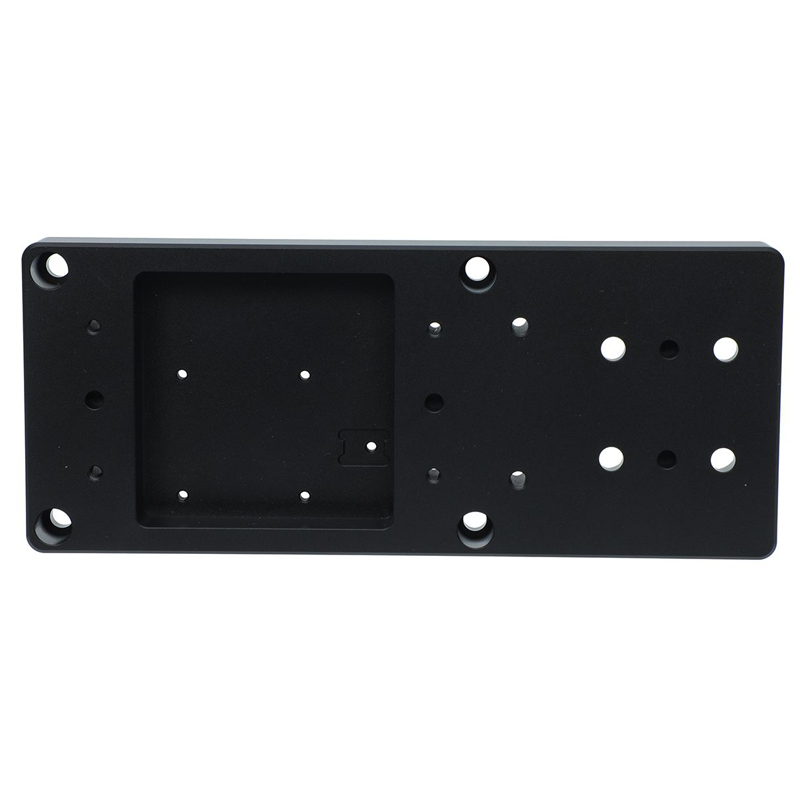
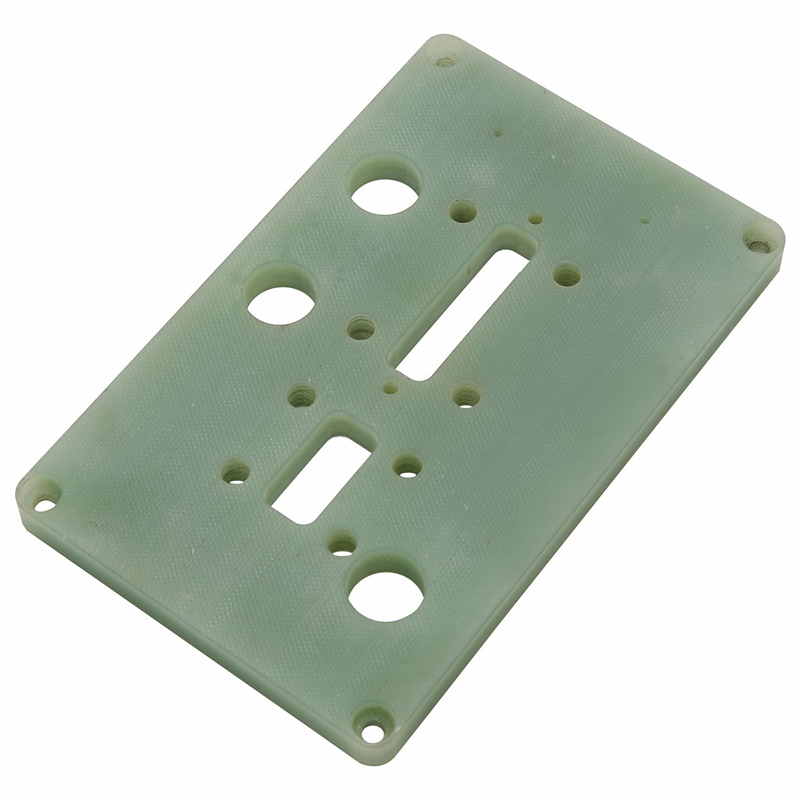
Custom CNC Machined Stainless Steel Precision Fixture Plate for Ultrasonic Cutting Equipment | Heavy-Duty Modular Tooling Base
Description
1. Product Overview & Core Value
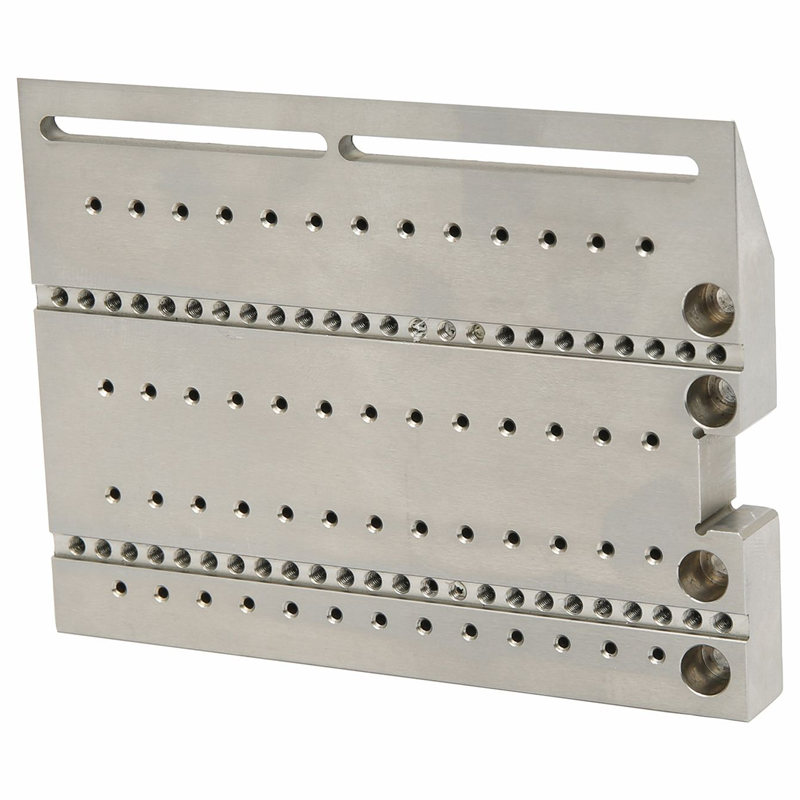
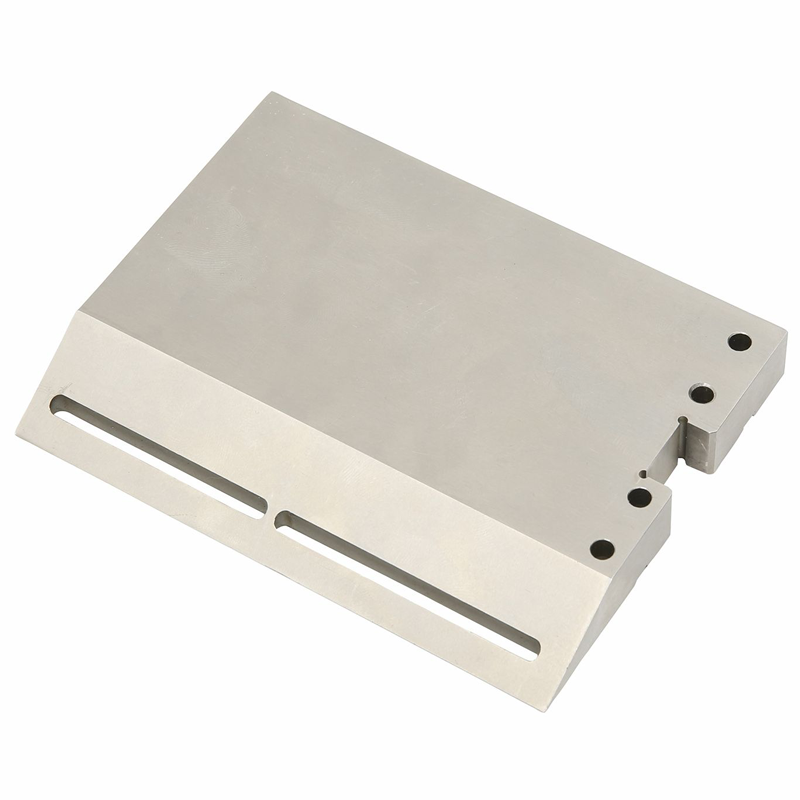
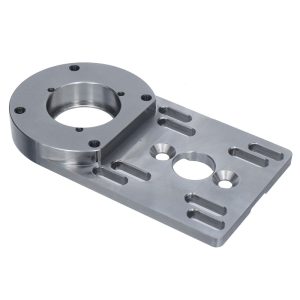
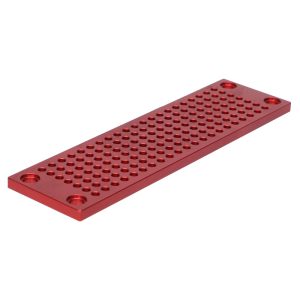
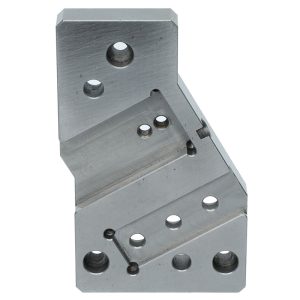
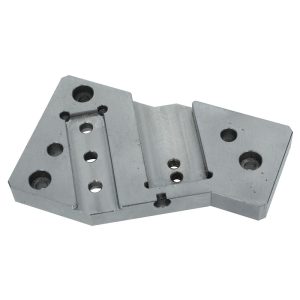
This Custom CNC Machined Stainless Steel Precision Fixture Plate is engineered specifically for high-frequency industrial ultrasonic cutting machines. Unlike standard aluminum base plates which can suffer from harmonic resonance and surface wear during high-speed cutting, our heavy-duty 304/316 Stainless Steel construction provides unmatched rigidity, vibration damping, and thermal stability. Designed with a modular multi-hole grid, X/Y axis slotted adjustment holes, and an anti-rotation locating notch, this fixture plate ensures the precise alignment of ultrasonic transducers, blades, and clamping modules. It is the ultimate solution for OEMs and automation integrators requiring zero-deflection accuracy in demanding production environments (such as food slicing and rubber trimming). Explore our full range of precision base components on our CNC Plate category page.
2. Material Analysis
| Material Option | Key Properties | Why It’s Ideal for This Part |
|---|---|---|
| Stainless Steel 304 / 316 (Standard) | High tensile strength, excellent corrosion resistance, non-magnetic. | Anti-Resonance: High density dampens the 20kHz-40kHz ultrasonic vibration, preventing cracking. Food-Grade: Perfect for hygienic food cutting environments. |
| Carbon Steel / Alloy Steel (Custom) | High hardness, wear-resistant, cost-effective for heavy machinery. | Suitable for harsh industrial rubber/plastic cutting where surface abrasion is a major concern (can be black-oxidized for rust protection). |
| Aluminum 6061/7075 (As a reference) | Lightweight, low cost, easy to machine. | Not Recommended: Lightweight leads to greater displacement under heavy loads; softer surface threads easily strip during repeated tool changes. |
Suggested Finish: Passivation (Stainless) for anti-corrosion, or Black Oxide (Carbon Steel) for a sleek, anti-glare look.
3. Precision & Tolerance Capabilities
We treat this plate as a high-precision structural component, not just a simple base. We guarantee the following tight tolerances:
| Feature | Standard Precision | Our Capability (High-End) |
|---|---|---|
| Flatness of Top Surface | ±0.05 mm | ±0.01 mm (0.0004″) – Ensures the cutting blade is perfectly parallel to the workpiece. |
| Hole PCD (Center Distance) | ±0.1 mm | ±0.02 mm – Guarantees perfect modular interchangeability of clamp blocks. |
| Threaded Hole Depth | ±0.3 mm | ±0.1 mm – Prevents tap breakage and ensures consistent screw locking torque. |
| Locating Notch Width (Keyway) | ±0.05 mm | ±0.01 mm – Critical for the anti-rotation, fool-proof mounting on the machine slide. |
| Surface Roughness (Ra) | Ra 3.2 μm | Ra 1.6 μm – Reduces friction and prevents food residue sticking to the plate surface. |
4. Manufacturing Difficulties
Manufacturing this specific Steel Fixture Plate presents several CNC machining challenges that only a factory with advanced equipment and experience can overcome:
-
Workholding Deformation: The Challenge: A large, heavy steel plate with a thin cross-section tends to “spring back” or warp during the first rough milling pass. Our Solution: We utilize vise jaws with reference locating stops and perform stress-relieving roughing passes, leaving a 0.5mm stock allowance before the final finish cut to release internal stress.
-
Precision Thread Tapping in Stainless: The Challenge: Stainless steel is work-hardening. Tapping the high-density grid of 50+ M4/M5 holes without breaking the tap is extremely difficult. Our Solution: We use rigid tapping with through-spindle coolant and high-quality cobalt or HSS-E taps, monitored by torque sensors to detect dull tools instantly.
-
Multi-Side Accuracy: The Challenge: The front face (grid holes), top slotted holes, and the side locating notch all must be perfectly perpendicular. Our Solution: We use 5-axis CNC machines or precise 4th-axis rotation to complete all critical faces in a single setup, eliminating cumulative errors from multiple manual clamps.
5. Application Scenarios
Where can this heavy-duty steel fixture plate be applied?
-
Automatic Food Slicing Machines: For ultra-sonic cutting of bread, cakes, cheese, and pastry with precise, clean edges.
-
Rubber & Plastics Industry: Trimming and cutting thick rubber gaskets, foam materials, and non-woven fabrics where high structural force is required.
-
Semiconductor & PCB Handling: As a stable locating bed for pick-and-place modules (when machined from non-magnetic Stainless Steel).
-
Robotic End-of-Arm Tooling (EOAT): Serving as a solid backbone interface for integrating multiple pneumatic grippers or suction cups.
6. FAQ
Q1: What is the difference between a fixture plate and a mounting plate?
A: A mounting plate is simply a bridge connecting two components. A fixture plate, like this steel one, serves as the structural base that holds, positions, and aligns multiple functional tools (like ultrasonic blades or test probes) in a specific, repeated array. Our plate includes locating notches and slotted adjustments to ensure this precise repeatability.
Q2: Why use stainless steel instead of aluminum for this CNC plate?
A: While aluminum is cheaper, stainless steel offers 3x the modulus of elasticity, meaning it will not bend or deflect under the high-frequency oscillation of an ultrasonic cutter. Furthermore, steel provides superior vibration dampening, ensuring cleaner cut edges. For food-grade applications, Stainless Steel 316 is also NSF/3-A hygienic standard compliant.
Q3: Can you customize the hole patterns and the side notch?
A: Absolutely. While we have standard modular grid options (e.g., 50x50mm or 25x25mm), this is a fully custom CNC machining service. We accept 2D/3D CAD files (STEP, IGS, SolidWorks) and can tailor the back locating notch geometry, the width of the adjustment slots, and the exact thread size (M3 to M12) to your specific machine slide.
Q4: What is your standard lead time for a prototype steel plate?
A: For a precision steel fixture plate requiring 3 to 4 axis CNC milling, our standard prototype lead time is 7–10 business days. For mass production runs (50+ pieces), we offer a lead time of 15–20 business days with strict PPAP (Production Part Approval Process) documentation.
7. Technical Specification Table
| Specification Category | Detailed Parameters |
|---|---|
| Product Name | Custom CNC Steel Precision Fixture Plate / Locating Mounting Base |
| CNC Machining Type | 3-Axis / 4-Axis / 5-Axis CNC Milling & Drilling |
| Max Workpiece Size | Up to 600mm (L) x 400mm (W) x 150mm (H) |
| Main Material Options | Stainless Steel (304, 316L), Carbon Steel (S45C, 1018), Alloy Steel (P20, 4140) |
| Secondary Operations | Passivation, Brushing, Powder Coating, Black Oxide, Nickel Plating |
| Standard Hole Grid | 25mm x 25mm / 50mm x 50mm / Customizable (any PCD) |
| Hole Thread Type | M3, M4, M5, M6, M8, M10 / UNC, UNF / Custom |
| Slot Machining | Standard through-slots, blind slots, T-slots for heavy clamping |
| Tolerance Standard | DIN ISO 2768-m (Standard), DIN ISO 2768-f (Precision) |
| Surface Roughness | Ra 1.6 μm to 3.2 μm (Standard) |
| Inspection Equipment | CMM (Coordinate Measuring Machine), Micrometer, Height Gauge, Go/No-Go Thread Gauges |
| File Formats Accepted | .STEP, .IGES, .STL, .DWG, .PDF |
| Minimum Order Quantity (MOQ) | 1 Piece (Accept Rapid Prototyping & Mass Production) |
| Delivery Terms | FOB, CIF, DAP, EXW (DHL/FedEx/UPS for small batches) |
Additional information
| material |
|---|

Reviews
There are no reviews yet.