
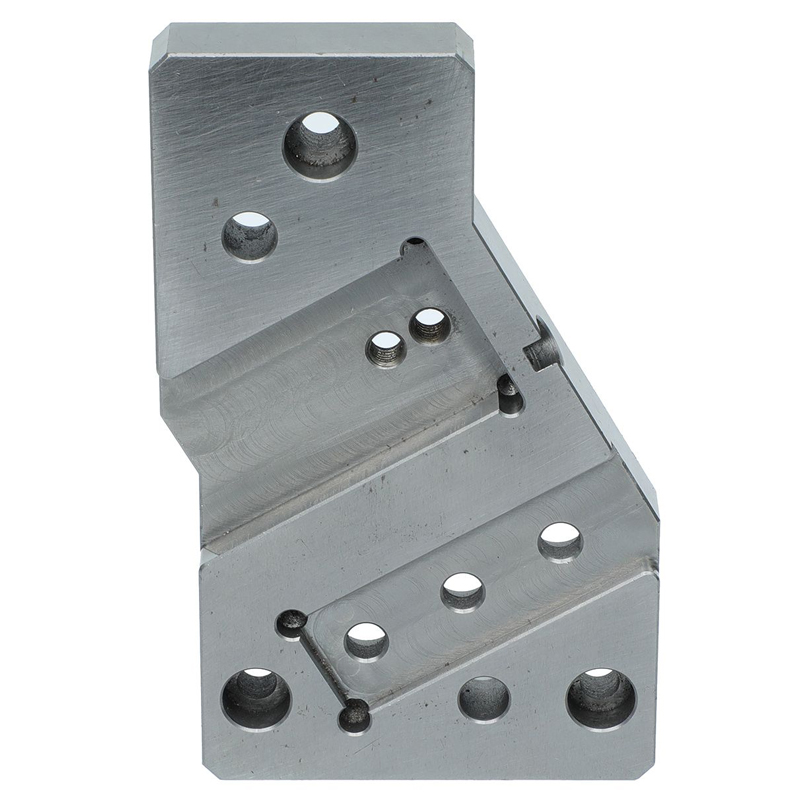


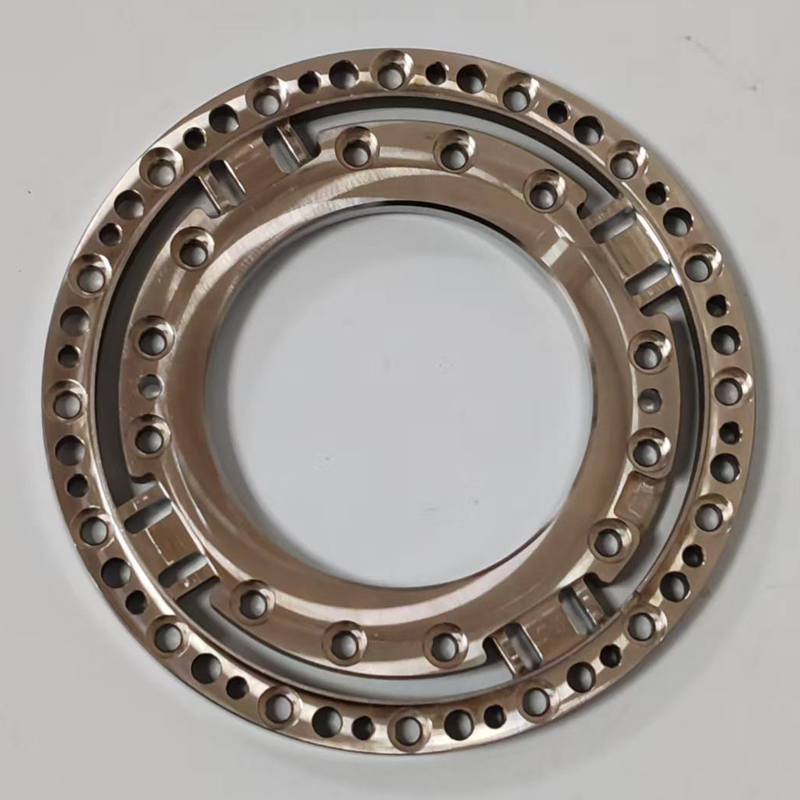
Custom CNC Machining Parts for Humanoid Robot Joint Actuator – Rotary Flange & Bearing Support Ring
Description
Product Overview
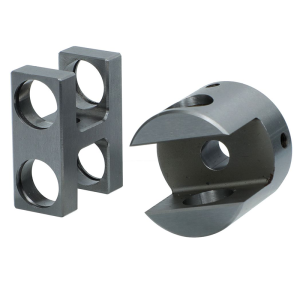
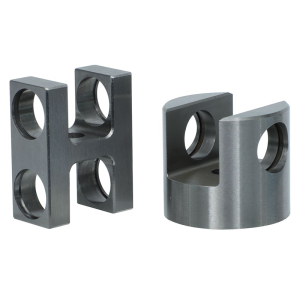
The rotary flange and bearing support ring are critical precision components within humanoid robot joint actuators. These parts serve as the mechanical interface between the actuator output and the robotic joint structure, transmitting torque, supporting bearing alignment, and ensuring smooth rotational motion–. In humanoid robotics, where joints must replicate human-like dexterity while maintaining structural integrity under dynamic loads, the quality of these components directly determines actuator performance, positional accuracy, and service life.
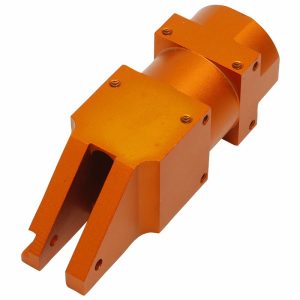
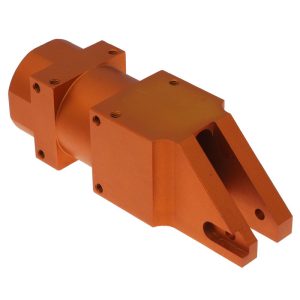
XINQIDA specializes in custom CNC machining of made-to-drawing actuator components, including rotary flanges, bearing seats, support rings, joint shafts, and torque sensor mounts–. Every part is precision-engineered to meet the stringent geometric and surface finish requirements of advanced humanoid robot actuation systems.
CNC Machining Service Parameters
| Parameter | Specification / Capability |
|---|---|
| Machining Processes | CNC milling, CNC turning, Swiss-type turning, 5-axis machining– |
| Workpiece Materials | Aluminum alloys (6061-T6, 7075), Titanium (Ti-6Al-4V), Stainless steel, Engineered alloys– |
| Maximum Part Size | Custom per drawing; typical robotics components range from 20mm to 300mm diameter |
| Dimensional Tolerance (Standard) | ±0.025 mm to ±0.05 mm– |
| Dimensional Tolerance (Precision) | ±0.005 mm to ±0.01 mm– |
| Surface Roughness (Standard) | Ra 1.6 – 3.2 μm |
| Surface Roughness (Precision) | Ra 0.4 – 0.8 μm (with grinding) |
| Concentricity / Runout | ≤ 0.005 mm on bearing interfaces– |
| Flatness (per 300mm) | 0.05 – 0.15 mm (with grinding)– |
| Inspection Equipment | CMM (Coordinate Measuring Machine), optical comparators, surface roughness testers– |
| Surface Treatments | Anodizing (clear, hardcoat, color), passivation, electroless nickel plating, black oxide, powder coating |
| Quality Standard | ISO 9001:2015 compliant; full inspection reports available |
| Lead Time | 7–15 business days for prototypes; 15–25 business days for production runs (volume dependent) |
| File Formats Accepted | STEP, IGES, SolidWorks, AutoCAD, PDF drawings |
Application Scenarios
Humanoid Robot Joint Actuators
The rotary flange and bearing support ring are integral to the actuator assemblies found at every major joint of a humanoid robot—shoulders, elbows, wrists, hips, knees, and ankles–. These components support harmonic drive systems, crossed-roller bearings, and output flanges that translate motor torque into precise joint motion–.
Collaborative Robots (Cobots)
In lightweight collaborative robotic arms, these parts enable smooth, backdriveable motion while maintaining the positional accuracy required for tasks such as assembly, pick-and-place, and human-interactive operations.
Surgical and Medical Robotics
For applications demanding ultra-high precision and reliability, the bearing support ring ensures consistent bearing alignment and minimal runout—critical for the sub-millimeter accuracy required in robotic surgery.
Industrial Automation
Beyond humanoid platforms, these components are used in robotic positioning equipment, automated guided vehicles (AGVs), and precision motion control systems where bearing seats and mounting faces must be perfectly concentric and orthogonal–.
Material Analysis
6061-T6 Aluminum Alloy
-
Properties: Excellent machinability, good corrosion resistance, moderate strength-to-weight ratio
-
Applications: Ideal for flanges and support rings in weight-sensitive robotic joints–
-
Benefits: Readily anodized for surface hardness and wear resistance; cost-effective for production volumes–
7075 Aluminum Alloy
-
Properties: High strength-to-weight ratio, superior to 6061-T6, good fatigue resistance
-
Applications: Structural flanges and high-load bearing support rings–
-
Benefits: Maintains rigidity under dynamic loads while keeping component weight low—essential for energy-efficient humanoid locomotion
Ti-6Al-4V Titanium Alloy
-
Properties: Exceptional strength-to-weight ratio, excellent corrosion resistance, biocompatible
-
Applications: High-stress shafts and critical load-bearing interfaces–
-
Benefits: Ideal for aerospace-grade reliability; however, requires specialized tooling and slower machining speeds
Stainless Steel (304 / 17-4PH)
-
Properties: High strength, excellent wear resistance, good corrosion resistance
-
Applications: Bearing races and high-wear interfaces
-
Benefits: Provides durability in high-cycle applications; 17-4PH can be heat-treated for additional hardness
Tolerance Capability
XINQIDA achieves industry-leading precision on rotary flange and bearing support ring components:
| Feature Type | Typical Tolerance | Measurement Method |
|---|---|---|
| Bearing bore diameter | H6 / H7 (ISO fit)– | CMM / Bore gauge |
| Flange outer diameter | ±0.010 mm | CMM |
| Concentricity (bearing bore to flange OD) | ≤ 0.005 mm | CMM / Runout gauge |
| Face runout (mounting surface) | ≤ 0.008 mm | Dial indicator / CMM |
| Hole positions (bolt circle) | ±0.025 mm | CMM |
| Surface flatness (mounting face) | 0.01 mm per 100mm | Surface plate / CMM |
| Threaded holes | 6H (internal) / 6g (external) | Thread gauges |
For critical bearing interfaces, precision grinding is employed to achieve surface finishes below Ra 0.4 μm and dimensional tolerances as tight as ±0.005 mm–. All critical dimensions are verified with CMM inspection, and full dimensional reports are provided with every shipment–.
Manufacturing Challenges
1. Concentricity and Runout Control
Bearing bores and flange outer diameters must maintain exceptional concentricity to prevent joint jitter and ensure smooth rotation–. Achieving ≤0.005 mm runout requires single-setup 5-axis machining to eliminate repositioning errors–.
2. Thin-Wall Machining for Weight Reduction
Humanoid robots demand lightweight components to minimize energy consumption. Machining thin-walled flanges and support rings without inducing distortion or vibration requires specialized fixturing, optimized cutting parameters, and high-speed machining strategies–.
3. Thermal Expansion Management
Interference fits between bearings and support rings are sensitive to thermal expansion during operation–. Maintaining precise dimensional control across the operating temperature range demands careful material selection and tight manufacturing tolerances.
4. Surface Finish on Bearing Interfaces
Bearing mating surfaces require exceptionally low surface roughness to minimize friction and wear. Achieving Ra 0.4 μm or better often necessitates secondary operations such as precision grinding or honing–.
5. Complex Geometry Integration
Modern actuator designs integrate multiple features—mounting flanges, bearing seats, sensor mounts, and cable routing channels—into single components–. Machining these complex geometries while maintaining all critical tolerances requires advanced multi-axis CNC capabilities and thorough process planning.
FAQ
Q1: What is the typical lead time for prototype quantities?
Prototype quantities (1–10 pieces) are typically delivered in 7–15 business days, depending on material availability and geometry complexity.
Q2: Do you provide material certifications?
Yes, full material test reports (MTRs) with chemical composition and mechanical properties are provided with every order.
Q3: Can you machine parts from customer-provided material?
Yes, we can machine components from customer-supplied materials, provided they meet our machinability requirements.
Q4: What inspection documentation is included?
Every shipment includes a full dimensional inspection report (CMM) with all critical features measured. Additional certifications (e.g., material certs, surface finish reports) are available upon request.
Q5: Do you offer surface treatment services?
Yes, we offer a comprehensive range of surface treatments including anodizing (clear, hardcoat, color), passivation, electroless nickel plating, black oxide, and powder coating.
Q6: What is the minimum order quantity (MOQ)?
There is no minimum order quantity for custom CNC machining. We support both single-piece prototypes and high-volume production runs.
Q7: How do you ensure concentricity between the bearing bore and flange OD?
All critical features are machined in a single setup using 5-axis CNC equipment, eliminating repositioning errors. Finished parts are verified with CMM inspection to ensure concentricity within ≤0.005 mm.
Q8: What file formats do you accept for quotes?
We accept STEP, IGES, SolidWorks, AutoCAD, and PDF drawings. For best results, please provide a 3D model along with a 2D drawing specifying critical dimensions and tolerances.
Q9: Can you machine titanium and other difficult-to-machine materials?
Yes, we have extensive experience machining titanium (Ti-6Al-4V), stainless steels, and other high-strength alloys using specialized tooling and optimized cutting parameters.
Q10: Do you provide design for manufacturability (DFM) feedback?
Absolutely. Our engineering team reviews every design and provides DFM recommendations to optimize manufacturability, reduce costs, and improve part performance.
For a custom quote or to discuss your humanoid robot joint actuator component requirements, please contact our expert team with your drawings and specifications.
Rotary flanges and bearing support rings are just one category within our robotics‑focused manufacturing portfolio. To learn more about our full‑range capabilities for actuators, housings, structural components and end‑of‑arm tooling, visit our custom robot parts manufacturerpage.
Additional information
| material |
|---|
Reviews
There are no reviews yet.