
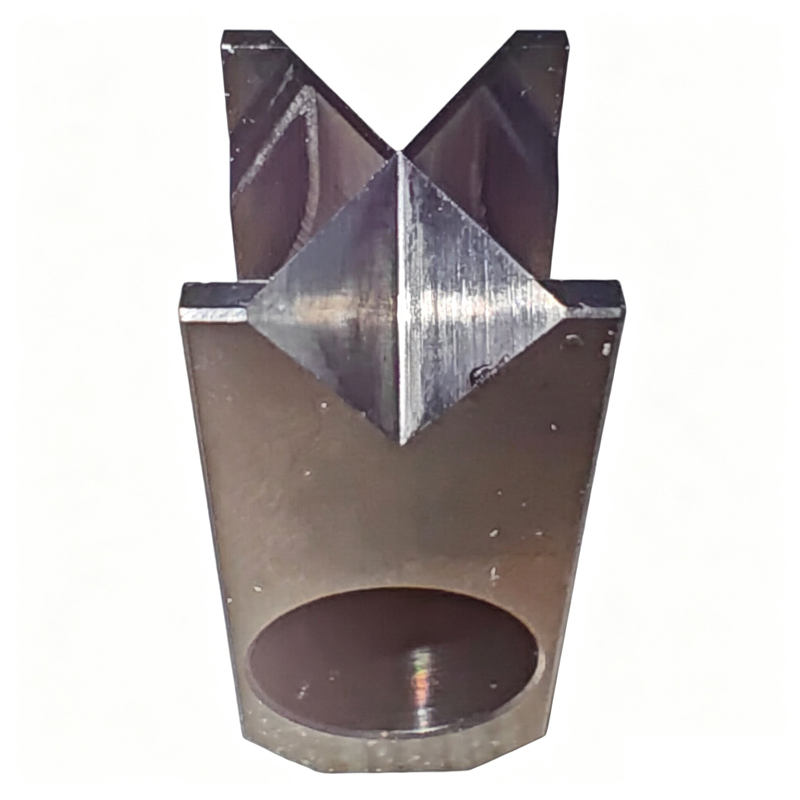
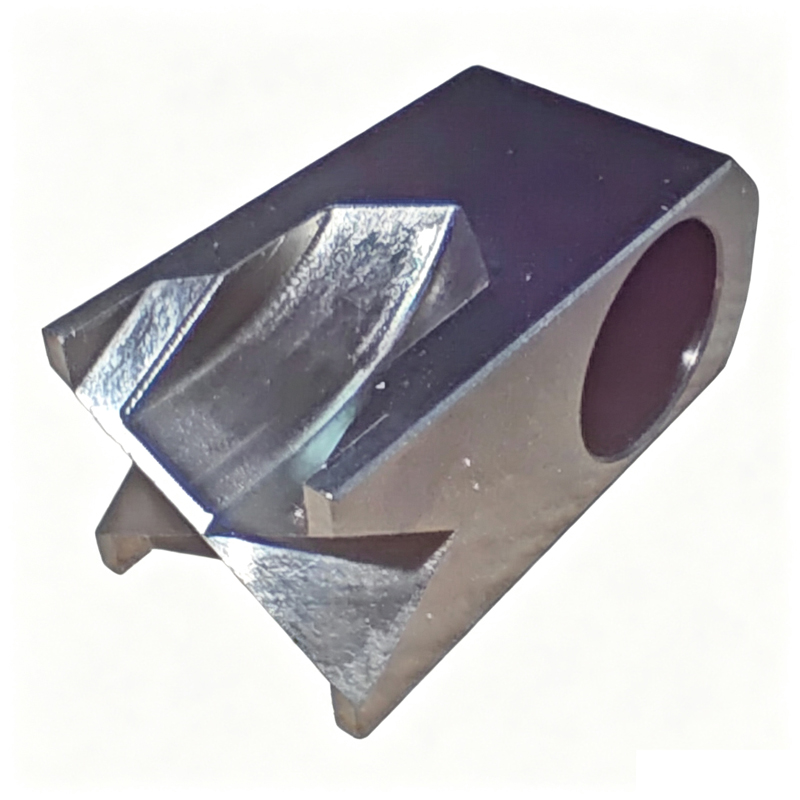
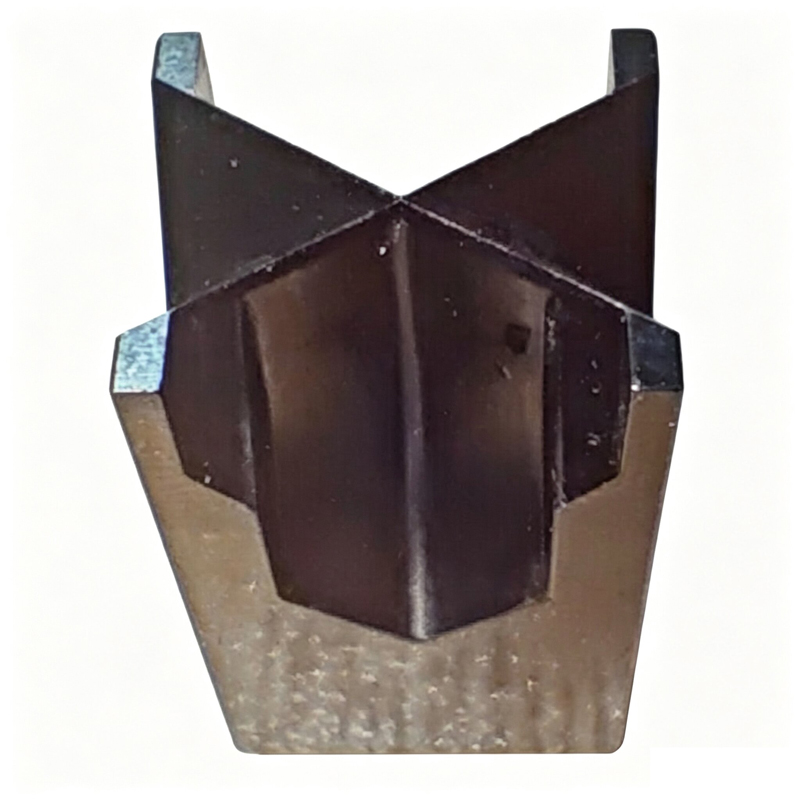
CNC Machined Cross V Wire Stripping Blade with Bumper Stop
Description
Product Overview
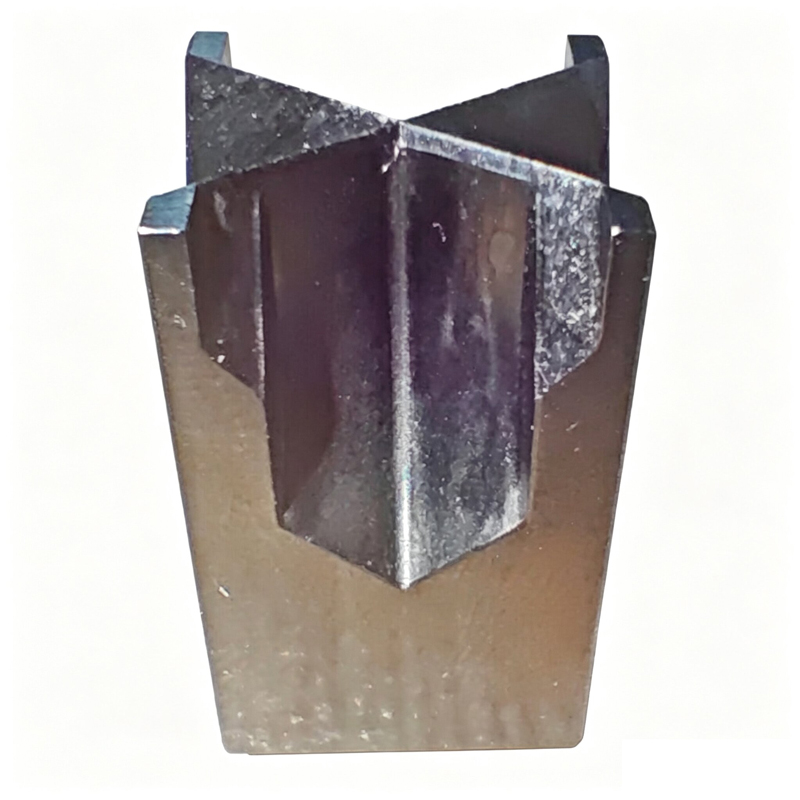
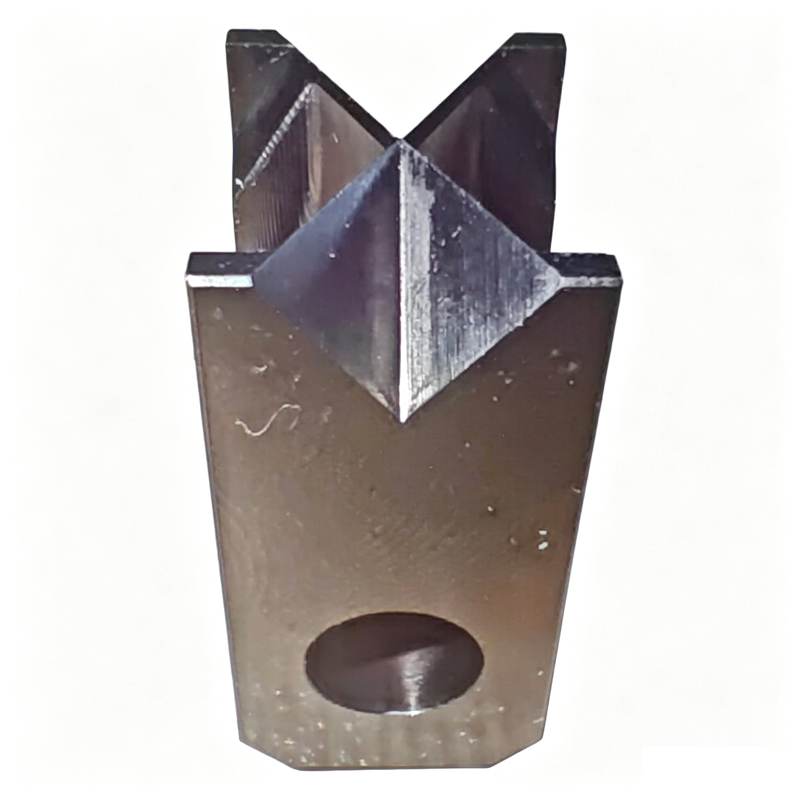
Our cross V wire stripping blade is a custom precision CNC machined cutting component built for automatic wire stripping, terminal crimping and cable processing equipment. The unique cross V geometry delivers self-centering positioning when feeding wires, the sharp intersecting V cutting edges score insulation evenly while protecting the inner copper core. This part is fully produced under our CNC machining service workflow: 3/5-axis milling, heat treatment, precision edge grinding, surface finishing and quality inspection. It is widely used as a replacement wear blade for custom wire harness automation equipment. We support fully custom drawings, dimensions, material and coating requirements for your wire processing machinery.
CNC Machining Parameter Table
| Item | Specification |
|---|---|
| Product Name | Cross V Wire Stripping Blade |
| Machining Process | 5-axis CNC milling → Heat treatment → Precision surface grinding → Cutting edge sharpening → Deburr & inspection |
| Custom Size | Custom per drawing, min feature 0.15mm |
| Standard Tolerance | ±0.005mm for V-angle & cutting edge; ±0.01mm for mounting hole & overall dimension |
| Surface Roughness | Ra 0.2~0.8 μm (cutting edge area Ra ≤0.2 μm) |
| Surface Treatment | Black oxide / TiN coating / DLC coating / polishing |
| Inspection Method | 2.5D projector, micrometer, hardness tester, visual edge inspection |
| MOQ | 5 pcs for prototype; 50 pcs for mass production |
| Lead Time | 3–7 days for prototype; 10–18 days for bulk order |
Material Analysis
| Material Option | Hardness | Pros | Cons | Best Application |
|---|---|---|---|---|
| SKD11 / D2 Tool Steel | HRC 58–62 | Balanced wear resistance & impact toughness, easy to re-sharpen, low cost | Lower service life than carbide | General PVC, PE, XLPE wire insulation, most standard wire harness stripping |
| High Speed Steel (HSS M2) | HRC 62–66 | Good edge sharpness, fine grinding performance, less chipping on thin insulation | Faster wear under high-volume continuous production | Fine wire, multi-core thin cable, low to medium speed stripping machines |
| Tungsten Carbide | HRA 88–92 | Ultra wear resistance, long cycle life, stable edge retention | Brittle, high cost, not easy to regrind | High speed automatic stripping line, large batch mass production, tough insulation like Teflon / FEP |
Application Scenarios
- Automatic wire stripping machine spare blade, computer wire cut & strip equipment
- Terminal crimping machine, harness processing automation in automotive wiring, electronics assembly
- Multi-core cable, shielded wire, single core wire, PVC / Teflon insulated cable stripping
- Custom wire processing special-purpose machines, non-standard wire harness production lines
- Cable recycling equipment, insulation peeling for electrical cable rework
Tolerance Capability
We maintain strict geometric tolerances critical for cross V stripping performance:
- Cross V included angle tolerance: ±0.03° (Symmetry of dual V cutting edges is the core of uniform stripping depth)
- Mounting bore position tolerance: ±0.01mm, ensures interchangeability when replacing old blades
- Cutting edge runout & flatness: ≤0.003mm, prevents inconsistent cutting depth and copper nicking
- Parallelism & perpendicularity of reference surfaces: ≤0.008mm All tolerance targets are verified by 2.5D optical inspection before shipment. We can follow ISO 2768 or your custom drawing tolerance notes.
Manufacturing Difficulties
- Symmetry control of cross V profile: The intersecting double V cutting edges must be perfectly symmetrical. Any offset will cause uneven cutting depth and scratch the conductor. Requires 5-axis synchronized milling and fixture alignment.
- Edge grinding without micro-chipping: The sharp cross junction apex is fragile. Improper grinding feed or wheel selection creates tiny chips that ruin stripping quality. Low-stress fine grinding is required.
- Heat treatment distortion control: After hardening, thin blade features easily warp. We use stress relief before finish grinding to keep flatness and angle stable.
- Consistent edge sharpness inspection: Sharpness cannot be judged only by dimension. Every blade needs microscopic check to remove burrs and micro-defects on the cutting apex.
- Balance of hardness and toughness: Too hard → edge chipping when feeding thick wires; too soft → fast dulling. Material grade and heat treatment recipe must match your insulation type.
FAQ
Q1: Can you make this cross V stripping blade according to my sample or PDF drawing?
A: Yes. We accept custom manufacturing from CAD drawings, STEP files or physical samples. Our engineering team will review DFM, tolerance and material suggestions before production.
Q2: What is the main difference between cross V stripping blade and normal V stripping blade?
A: Cross V design features two intersecting V cutting edges, providing self-centering for round wires. It adapts to a wider wire diameter range and reduces wire offset during stripping, compared to single V blades.
Q3: My blades keep scratching copper conductors. Can you optimize the geometry?
A: We can adjust the V opening angle, edge land width and cutting edge relief angle based on your wire AWG and insulation material. Many copper damage issues come from poor edge symmetry or incorrect relief geometry.
Q4: Do you offer coating to extend blade service life?
A: Yes. TiN and DLC coating reduce friction and improve wear resistance. DLC coating is highly recommended for sticky insulation such as TPU and Teflon.
Q5: What if I only need a small quantity for prototype testing?
A: We support low MOQ CNC machining service for prototype validation. Small batch orders will go through the same grinding and inspection standard as mass production.
Q6: Can you provide material certification and hardness test report?
A: Material certificates, heat treatment reports and hardness inspection records can be supplied upon request for each batch.
You must be logged in to post a review.
Reviews
There are no reviews yet.