
Custom CNC Machined Robot Pelvis Bracket for Humanoid Robotics Hip Support
Description
Product Introduction
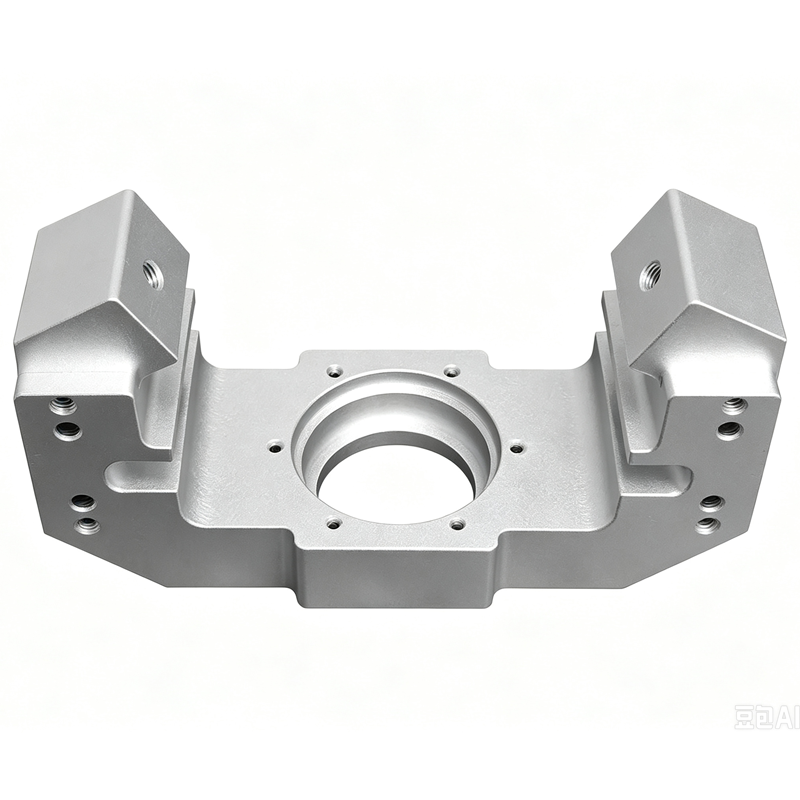
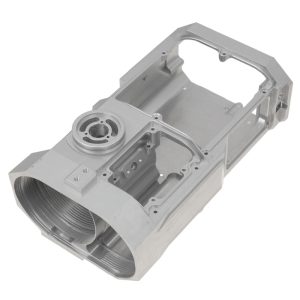
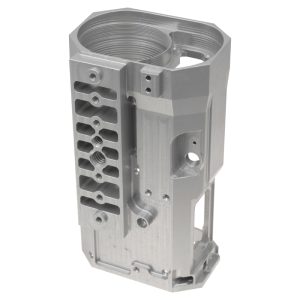
This custom CNC machined robot pelvis bracket is a precision structural component designed for the hip and lower-body assembly of humanoid robots. The bracket provides a rigid mounting interface between the robot’s pelvis structure, hip actuator, bearing system, or adjacent structural components.
Manufactured from customer-supplied drawings or 3D CAD models, the part can be produced using 3-axis, 4-axis, or 5-axis CNC machining, depending on its geometry and tolerance requirements. CNC machining allows critical mounting faces, threaded holes, bearing seats, locating features, and mating surfaces to be manufactured with controlled dimensional accuracy.
For humanoid robotics applications, the pelvis area is an important structural interface because it transfers loads between the torso and both leg assemblies. Therefore, the bracket must balance structural rigidity, dimensional accuracy, weight, and repeatable assembly alignment.
As a custom CNC machining supplier, XINQIDA can manufacture robot pelvis brackets and related humanoid robot structural parts, hip support components, actuator mounts, bearing supports, and precision mounting brackets according to engineering drawings.
CNC Machining Parameters
| Parameter | Typical Capability / Option |
|---|---|
| Manufacturing Process | CNC Milling / Multi-Axis CNC Machining |
| CNC Machine | 3-Axis, 4-Axis, 5-Axis CNC |
| Part Type | Robot Pelvis Bracket / Hip Support Bracket |
| Application | Humanoid Robots / Robotic Systems |
| Materials | Aluminum, Stainless Steel, Alloy Steel, Titanium |
| Typical Aluminum Grade | 6061-T6 / 7075-T6 |
| Stainless Steel Options | 304 / 316 / 17-4 PH |
| General Machining Tolerance | ±0.01 mm |
| Precision Features | Up to ±0.005 mm, depending on geometry and drawing requirements |
| Surface Roughness | Typically Ra 1.6–3.2 μm; finer finishes available |
| Surface Finishes | Anodizing, Hard Anodizing, Bead Blasting, Brushing, Passivation, Electropolishing, etc. |
| Thread Features | Metric / Imperial Threads |
| Inspection | Dimensional Inspection / CMM Inspection when required |
| Production Volume | Prototype, Small Batch, Low-Volume Production |
| Drawing Formats | STEP, STP, IGES, X_T, DWG, DXF, PDF |
| Manufacturing Basis | Customer Drawing / 3D CAD Model |
Note: Actual tolerances, surface finish, material, and inspection requirements should be specified according to the customer’s engineering drawing. The values above represent typical CNC machining capabilities rather than guaranteed values for every feature.
Applications
Humanoid Robot Hip Assemblies
The pelvis bracket can serve as a structural mounting interface around the robot’s hip mechanism, connecting the central pelvis structure with the left and right leg assemblies.
Hip Actuator Mounting
The bracket can be designed to accommodate servo motors, harmonic drives, planetary gearboxes, bearings, torque sensors, or other hip actuator components, depending on the robot architecture.
Robotic Leg Structures
In humanoid robots, the pelvis transfers mechanical loads from the upper body into the legs. A precisely machined bracket helps maintain the alignment between the hip mechanism and the surrounding structural components.
Robotic Research & Development
The component is suitable for prototype and small-batch production used by:
- Humanoid robot developers
- Robotics research laboratories
- Industrial automation companies
- Robotic actuator manufacturers
- University robotics projects
- Custom robotic system integrators
Other Robotic Structures
With modifications to the drawing, similar CNC-machined bracket designs can be used for robot joints, actuator mounts, bearing supports, motor brackets, structural connectors, and robotic arm assemblies.
Material Analysis
6061-T6 Aluminum
6061-T6 aluminum is a practical choice for many robot pelvis brackets because it provides a good balance of machinability, strength, corrosion resistance, and weight.
Its relatively low density is particularly useful for robotic structures where reducing moving mass can help improve actuator efficiency and overall system dynamics.
It is suitable when the bracket requires:
- Low weight
- Good machinability
- Good corrosion resistance
- Moderate structural strength
- Anodized surface protection
7075-T6 Aluminum
For applications requiring higher strength-to-weight performance, 7075-T6 aluminum can be considered.
It is particularly useful when the pelvis or hip bracket experiences relatively high mechanical loads while weight reduction remains important.
Stainless Steel
Stainless steel can be selected when the component requires higher strength, wear resistance, corrosion resistance, or greater structural rigidity.
For example, 17-4 PH stainless steel can be considered for highly loaded structural interfaces where aluminum may not provide sufficient mechanical performance.
Titanium
For demanding lightweight applications, titanium alloys such as Ti-6Al-4V may be considered.
Titanium offers high strength-to-weight performance and excellent corrosion resistance, although it requires more demanding CNC machining conditions and generally has a higher manufacturing cost.
Tolerance Capability
The dimensional requirements of a humanoid robot pelvis bracket depend heavily on how the component interfaces with the hip actuator, bearing, shaft, sensor, or neighboring structural parts.
Critical features may include:
- Bearing bores
- Motor mounting holes
- Precision locating holes
- Datum surfaces
- Shaft interfaces
- Parallel mounting faces
- Threaded holes
- Bolt-circle patterns
For suitable features and machining conditions, XINQIDA can support precision CNC machining tolerances down to approximately ±0.005 mm.
However, it is important not to apply ±0.005 mm to every dimension unnecessarily. For a production drawing, tolerances should be assigned according to the functional requirements of each feature.
For example:
Critical bearing bore: tighter tolerance
Locating hole: controlled positional tolerance
Structural exterior surface: standard machining tolerance
Non-functional clearance: looser tolerance
This approach can help maintain assembly performance while avoiding unnecessary machining cost.
Manufacturing Challenges
1. Maintaining Hip Assembly Alignment
The pelvis bracket may connect several components at the same time. Small errors in the relative position of mounting holes, bearing bores, and datum surfaces can accumulate during assembly.
Our solution: establish machining datums from the functional interfaces and control critical hole positions and mating surfaces during CNC machining and inspection.
2. Machining Multiple Angled Features
Humanoid robot brackets frequently contain angled surfaces, pockets, mounting interfaces, and features on multiple faces.
Our solution: multi-axis CNC machining can reduce the number of setups and improve positional consistency between related features.
3. Controlling Thin-Wall Deformation
Weight-optimized robot structures may contain thin walls or lightweight pockets. Excessive cutting forces can cause deformation during machining.
Our solution: select appropriate workholding methods, cutting parameters, toolpaths, and machining sequences to control deformation.
4. Maintaining Precision Hole Patterns
Motor, bearing, and actuator mounting holes often need to align with mating components.
Our solution: CNC positioning combined with appropriate inspection methods can control hole location, diameter, and positional accuracy according to the engineering drawing.
5. Balancing Weight and Structural Rigidity
A humanoid robot pelvis bracket should not simply be made as heavy as possible. Excess material increases the mass of the moving system.
Our solution: CNC machining allows pockets, ribs, bosses, and other structural features to be incorporated into the design while maintaining the required mechanical interfaces.
Why CNC Machining for Humanoid Robot Pelvis Brackets?
CNC machining is particularly suitable for custom humanoid robot structural parts because robot developers often require low-volume production, rapid design iterations, complex geometries, and drawing-specific tolerances.
Compared with a standardized bracket, a custom robot pelvis bracket may require:
- Complex 3D geometry
- Multiple mounting interfaces
- Precision bores
- Tight hole positioning
- Lightweight pockets
- Integrated locating features
- Different materials and surface finishes
For prototype and small-batch humanoid robot development, CNC machining also allows the design to be revised without creating dedicated production tooling.
Inspection & Quality Control
For precision robotic components, inspection focuses on the features that directly affect assembly and mechanical performance.
Depending on the drawing requirements, inspection may include:
- Overall dimensions
- Critical bore diameters
- Hole positions
- Thread inspection
- Flatness
- Parallelism
- Perpendicularity
- Surface roughness
- Visual inspection
- CMM measurement
For critical components, inspection reports can be provided according to the customer’s quality requirements.
Custom Manufacturing Options
Every humanoid robot platform has different mechanical architecture. Therefore, this pelvis bracket can be customized according to your 2D engineering drawing, 3D CAD model, or prototype requirements.
Customization can include:
- Material selection
- Overall dimensions
- Mounting-hole patterns
- Bearing seats
- Actuator interfaces
- Weight-reduction pockets
- Thread specifications
- Surface treatment
- Dimensional tolerances
- Inspection requirements
Send your drawing or 3D CAD file to discuss material, machining process, tolerance requirements, and production quantity.
FAQ
What is a robot pelvis bracket?
A robot pelvis bracket is a structural mounting component used around the pelvis or hip area of a robot. In humanoid robots, it can connect the central body structure with hip actuators, bearings, leg assemblies, or other mechanical components.
What material is best for a humanoid robot pelvis bracket?
There is no single material that is suitable for every design. 6061-T6 aluminum is commonly suitable when low weight and good machinability are important. 7075-T6 aluminum can be considered when higher strength-to-weight performance is required, while stainless steel or titanium may be selected for specific high-load or demanding applications.
Can you CNC machine robot pelvis brackets from 6061-T6 aluminum?
Yes. 6061-T6 aluminum is well suited to CNC milling and is commonly used for lightweight robotic structural components. It can also receive finishes such as anodizing and bead blasting.
What CNC tolerance can you achieve for robot brackets?
Typical CNC machining tolerance may be around ±0.01 mm, while selected critical features can be manufactured to approximately ±0.005 mm, depending on part geometry, material, machine setup, feature size, and inspection requirements.
Can this bracket be made for a specific humanoid robot design?
Yes. Custom robot pelvis brackets are normally manufactured according to the customer’s engineering drawing or 3D CAD model. Mounting holes, actuator interfaces, bearing seats, dimensions, materials, and tolerances can all be customized.
Can you manufacture prototype and small-batch robot parts?
Yes. CNC machining is suitable for robot prototypes, R&D components, engineering samples, and small-batch production, making it practical for robotics development where designs may change during development.
What files are needed for a CNC machining quotation?
A STEP/STP or other 3D CAD file is preferred for geometry evaluation. A 2D engineering drawing is recommended when the part has critical dimensions, tolerances, threads, surface finishes, material specifications, or inspection requirements.
Additional information
| material |
|---|
Reviews
There are no reviews yet.