
Custom CNC Machined Aluminum Automation Mounting Bracket & Modular Support Base for Industrial Equipment
Description
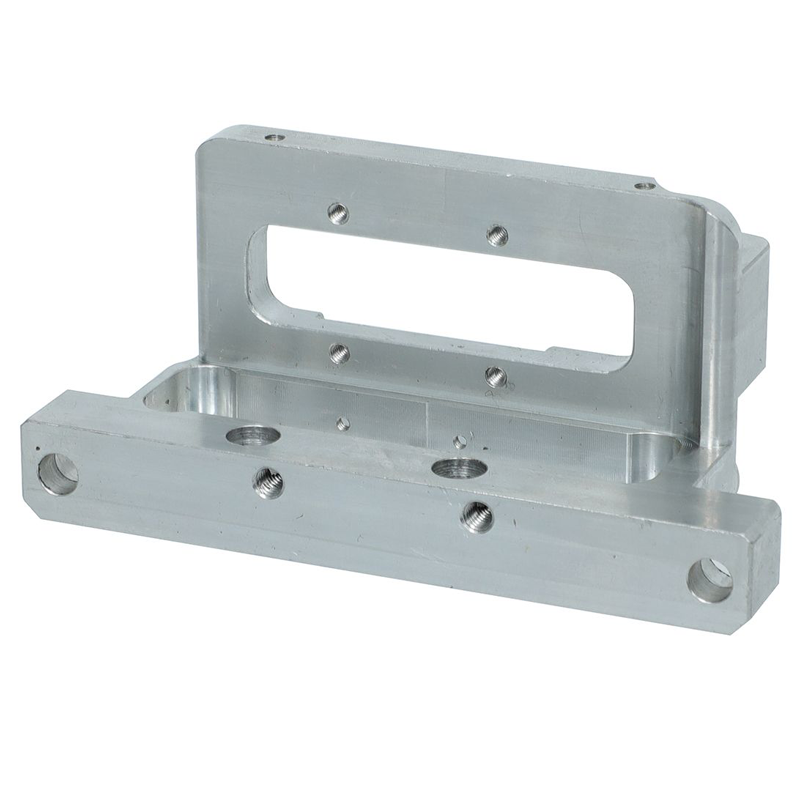
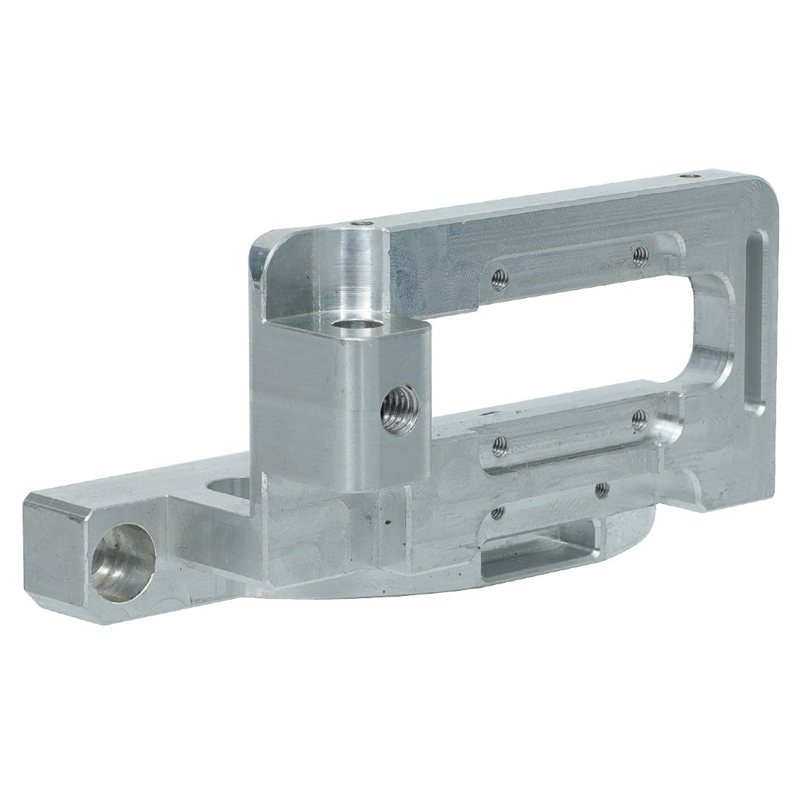
This custom CNC machined aluminum mounting bracket is specifically engineered as a modular support base for complex industrial automation systems. Unlike standard flat CNC plates, this component features a sophisticated three-dimensional profile with an integrated clearance cut-out (lightweight hollow frame), allowing moving components (such as pneumatic rods, belts, or optical sensors) to pass through or mount directly within the structure.
Manufactured using state-of-the-art multi-axis CNC milling services, this bracket provides a robust, lightweight solution for connecting actuators, linear motion rails, vision camera modules, and sensor arrays to heavy-duty machine frames. It ensures high rigidity while significantly reducing the moving mass in high-speed production lines.
Application Scenarios
This structural bracket is widely utilized in the following industries and equipment:
-
Automated Assembly Lines: As a mounting base for pneumatic grippers and pick-and-place modules.
-
Machine Vision Systems: As a heavy-duty camera mount bracket, offering large interior space for lens and lighting assembly.
-
Robotic End-of-Arm Tooling (EOAT): As a structural adapter connecting robot arms to specific functional tools.
-
Inspection & Testing Equipment: As a stable holding platform for precision sensors and measurement instruments.
-
Special Purpose Machinery: As a component interface bridge for motor-driven linear actuators.
Material Analysis
To optimize the balance between weight, strength, and machinability, we primarily utilize:
-
6061-T6 Aluminum Alloy: The industry standard for automation parts. It offers excellent strength-to-weight ratios, great corrosion resistance, and produces very clean, precise milled surfaces.
-
7075-T6 Aluminum Alloy (Optional): Recommended if the bracket will bear heavy loads or significant cantilever forces. It provides higher tensile strength, similar to mild steel, but keeps the lightweight aluminum advantage.
-
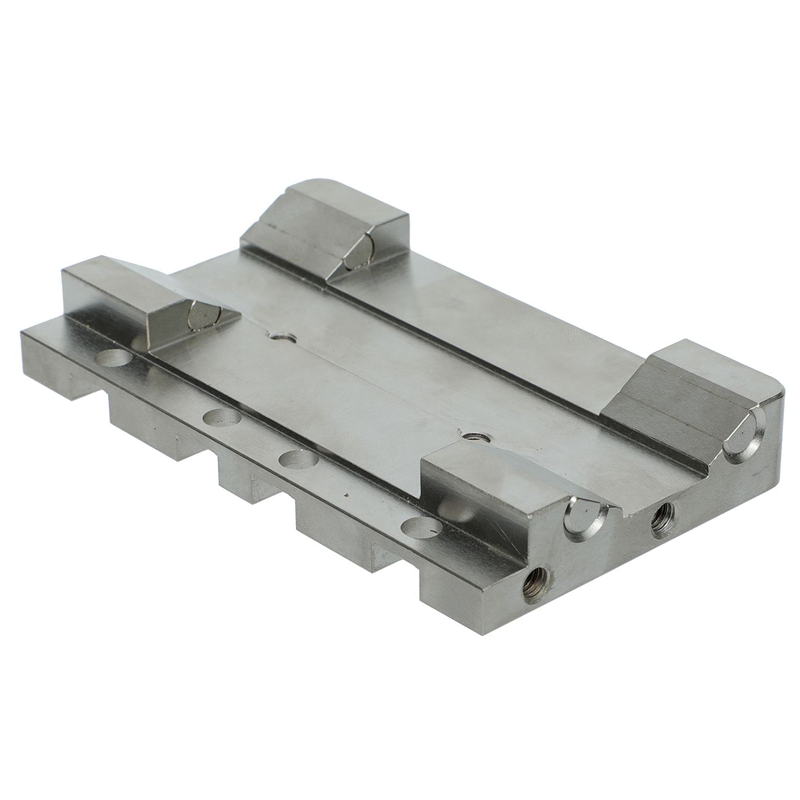
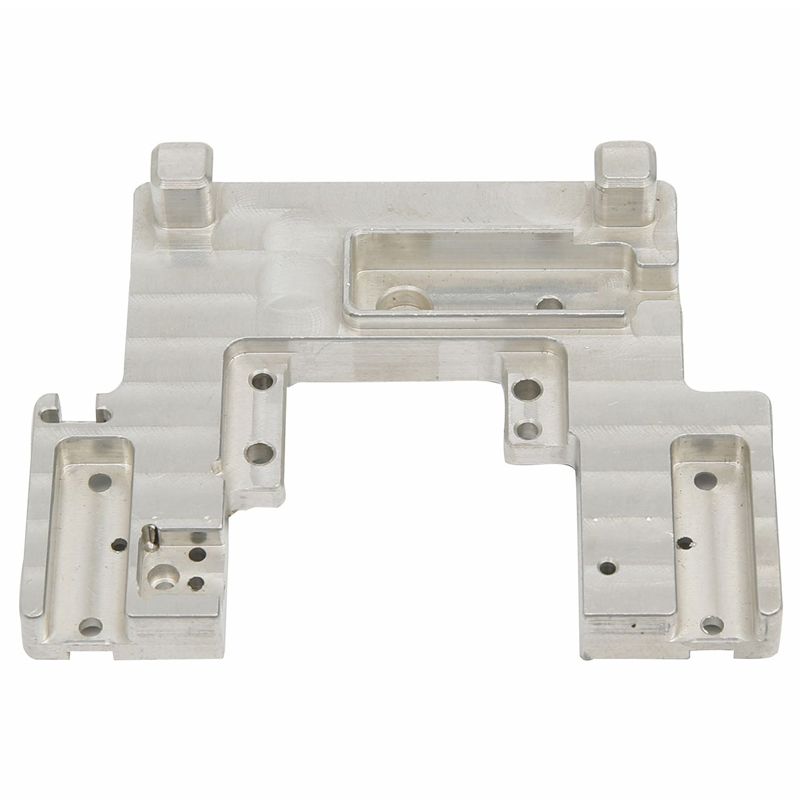
Surface Finish: As standard, we offer Clear/Black Hard Anodizing to increase surface hardness and wear resistance, or Natural Milled Finish (as shown in the images) to save cost for internal assemblies.
Tolerance Capabilities
Leveraging our precision CNC turning and milling services, we strictly adhere to the following standards to guarantee seamless integration with your motion modules:
| Inspection Parameter | Standard Industrial Tolerance | High-Precision Capability |
|---|---|---|
| Linear Dimensions | ±0.05 mm (0.002″) | ±0.01 mm (0.0004″) |
| Bore & Hole Diameters | H7 / +0.02 mm | H6 / +0.005 mm |
| True Position (Threaded Holes) | ±0.1 mm | ±0.025 mm |
| Flatness & Parallelism | 0.05 mm (per 100mm) | 0.02 mm (per 100mm) |
| Surface Roughness (Ra) | 1.6 μm (Milled) | 0.8 μm (Post-Finish Milling) |
| Concentricity (Shafts/Bores) | ±0.02 mm | ±0.005 mm |
Manufacturing Difficulties & Solutions
Automation brackets like these are not simple blocks; they require advanced machining strategies to manufacture cost-effectively.
-
Difficulty: The Large Internal Clearance Cut-out & Thin Walls
-
Challenge: Milling the large rectangular window creates thin structural ribs, which are prone to vibration (chattering) during roughing, leading to out-of-tolerance parts.
-
Our Solution: We utilize dynamic milling toolpaths (trochoidal milling) and custom high-rigidity fixturing to minimize vibration, ensuring perfectly flat and straight walls.
-
-
Difficulty: Multi-Directional Threaded Holes & Axial Alignment
-
Challenge: The part has small threaded holes on the top face, bottom base, and also on the side protruding block (Figure 2). Maintaining exact positional accuracy between these different faces requires highly precise machine setups.
-
Our Solution: Our 5-axis CNC machining centers process the top, bottom, and side faces in a single setup, eliminating cumulative errors caused by re-clamping.
-
-
Difficulty: Stress Relief & Post-Machining Deformation
-
Challenge: Milling away 40% of the raw aluminum block (for the window) releases internal material stress, which can cause the flat bottom to warp slightly after unclamping.
-
Our Solution: We strictly perform a stress-relief treatment on the aluminum bar stock prior to machining, and use a “roughing pause” strategy: rough mill, let the part settle, then perform finishing cuts to guarantee absolute flatness.
-
FAQs
Q1: Why do you call it a “Mounting Bracket” instead of a “CNC Plate”?
A: While it has a base, a standard “plate” is flat. This component belongs to our CNC Machined Bracket Parts series, featuring a modular 3D architecture with clearance openings and side mounting flanges. It acts as a structural frame (bracket) that positions and supports various automated components, rather than just being a flat base.
Q2: Can you reduce the weight further by adding more cut-outs?
A: Yes, we can optimize the weight via custom cut-outs, but we must perform an FEA (Finite Element Analysis) to ensure the structural rigidity is not compromised for your specific load requirements. We recommend sending us your expected load (weight in Newton) for a free structural review.
Q3: What is the typical lead time for prototypes and mass production?
A: For a standard automation bracket like this, the prototype lead time is usually 5–7 business days (including DHL/FedEx shipping). Mass production (100–500 pcs) generally takes 15–20 business days, depending on the surface finishing requirements.
Q4: Do you provide 3D drawings after confirming orders?
A: Yes. To protect your IP, we sign an NDA (Non-Disclosure Agreement) with every client. We provide a Step/IGES final model check, and we typically manufacture only based on your original 2D PDF drawings and 3D CAD files.
Q5: Can you machine this from stainless steel instead of aluminum?
A: Absolutely. If your environment involves high temperatures or requires extreme corrosion resistance (like in food-grade automation), we can switch to Stainless Steel 304 or 316. However, due to higher density and hardness, the weight and machining cost will increase significantly.
Additional information
| material |
|---|

Reviews
There are no reviews yet.