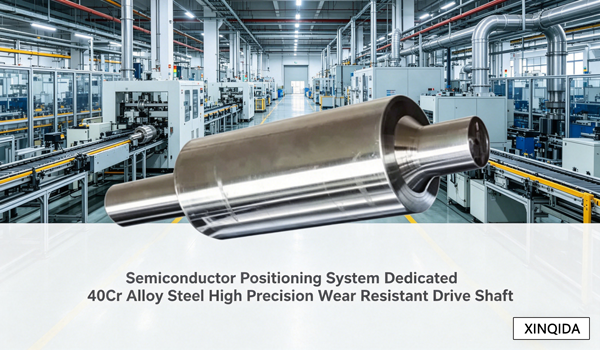
In semiconductor manufacturing equipment, the stability of the positioning system directly determines wafer processing accuracy and chip yield. As semiconductor processes continue to advance toward sub-micron and nanometer-level precision, every motion component inside the equipment must meet extremely strict requirements for accuracy, wear resistance, and long-term stability.
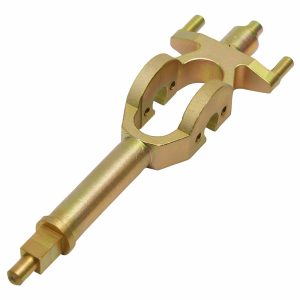
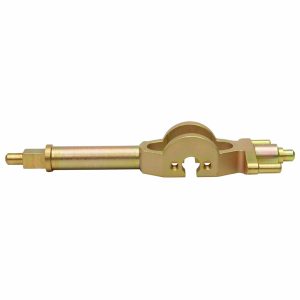
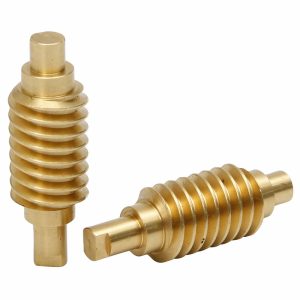
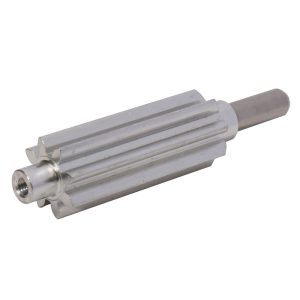
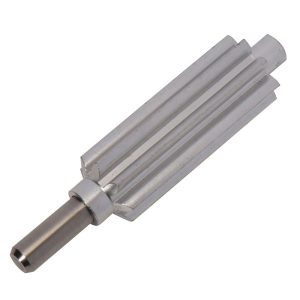
Among various material options, the 40Cr alloy steel precision shaft has become one of the most widely used core components in semiconductor positioning modules, especially in wafer handling systems, precision alignment platforms, and automated packaging equipment.
Table of Contents
Toggle1. Why Semiconductor Equipment Requires High-Performance Positioning Shafts
Semiconductor positioning shafts typically operate under extreme working conditions:
- High-frequency reciprocating motion (tens of thousands of cycles per day)
- Micro-level or sub-micron positioning accuracy
- 24/7 continuous operation
- Cleanroom environment (ISO Class 5–8)
- Zero contamination and zero particle generation requirements
Therefore, the shaft material must simultaneously provide high wear resistance, excellent dimensional stability, and high rigidity with fatigue resistance.
Conventional materials such as 45# carbon steel or standard stainless steel cannot meet all these requirements simultaneously.
2. Why 40Cr Alloy Steel Is an Ideal Material Choice
40Cr is a medium-carbon alloy structural steel widely used in precision mechanical components. It offers a balanced combination of strength, toughness, and machinability.
2.1 High Strength with Good Toughness Balance
After quenching and tempering treatment:
- Tensile strength: ≥ 980 MPa
- Yield strength: ≥ 785 MPa
- Elongation: ≥ 9%
This ensures structural stability under continuous dynamic loading without deformation or fracture.
2.2 Excellent Wear Resistance
Through surface hardening processes:
- Induction hardening: 52–60 HRC
- Nitriding treatment: up to 800+ HV surface hardness
This significantly improves wear resistance and extends service life in high-frequency motion systems.
2.3 Outstanding Dimensional Stability
With controlled heat treatment:
- Heat distortion controlled within ≤ 2–3 μm
- Roundness tolerance: ≤ 1–2 μm after precision grinding
This meets semiconductor-grade repeat positioning requirements.
2.4 Excellent Machinability for Precision Manufacturing
In annealed or tempered condition, 40Cr allows stable precision machining:
- CNC turning
- External cylindrical grinding
- Centerless grinding
- Ultra-precision polishing
Surface roughness can reach Ra 0.2–0.8 μm, suitable for cleanroom applications.
3. Precision Manufacturing Process for Semiconductor-Grade 40Cr Shafts
To meet semiconductor industry requirements, the shaft is manufactured through a fully controlled precision process.
3.1 Quenching and Tempering
- Quenching at 850°C ±10°C with oil cooling
- Tempering at 520°C ±10°C
- Formation of tempered sorbite structure with stable mechanical properties
3.2 CNC Precision Machining
- Rough CNC turning
- Multi-axis precision machining
- Controlled machining allowance for grinding
3.3 Ultra-Precision Grinding
- External cylindrical grinding
- Centerless grinding
Achievable accuracy:
- Dimensional tolerance: ±2–5 μm
- Roundness: ≤1 μm
- Straightness: ≤1 μm
3.4 Surface Hardening Treatment
Depending on application:
- Induction hardening for high-frequency motion systems
- Ion nitriding for cleanroom long-term operation
Service life can be extended by 2–3 times compared to standard shafts.
3.5 Cleanroom-Compatible Surface Treatment
- Degreasing and cleaning
- Deburring and particle removal
- Anti-corrosion treatment
- No residual contamination
Fully compatible with ISO Class 5–8 cleanroom environments.
4. Typical Application Areas in Semiconductor Equipment
40Cr precision shafts are widely used in semiconductor equipment modules:
Wafer handling systems including robot arm drive shafts and vacuum transfer systems
Optical and inspection equipment including precision XY positioning shafts and alignment systems
Packaging equipment including die bonding and wire bonding systems
Automation fixtures including guide shafts and positioning components
5. Material Comparison for Engineering Selection
| Material | Wear Resistance | Dimensional Stability | Machinability | Cost | Semiconductor Suitability |
|---|---|---|---|---|---|
| 45# Steel | Low | Low | High | Low | Not recommended |
| 304 Stainless Steel | Medium | Medium | Medium | Medium | Limited |
| 40Cr Alloy Steel | High | High | High | Medium | Recommended |
| 42CrMo | Very High | Very High | Medium | High | High-end applications |
Conclusion
40Cr offers the best overall balance between performance, cost, and manufacturability.
6. Custom Manufacturing Capabilities
As a professional CNC precision machining manufacturer, we provide:
Custom non-standard production according to drawings or 3D models
Flexible diameter and length customization
Micron-level precision control with ±2–5 μm tolerance capability
Full process integration from material selection to final inspection
Batch production with high consistency
Quality inspection system includes coordinate measuring machine, roundness testing, hardness testing, and surface roughness measurement.
7. Why Choose Us
We specialize in high-precision CNC machining of shaft components, serving industries including semiconductor equipment, automation systems, precision instrumentation, and industrial robotics.
Our core strengths include stable micron-level machining capability, experience in high-precision shaft manufacturing, semiconductor-grade quality control systems, and fast engineering response with reliable delivery.
8. Request a Quote / Technical Support
If you are looking for semiconductor-grade positioning shafts, high-wear-resistant 40Cr precision shafts, or custom CNC-machined alloy steel shafts, please send us your drawings or samples.
We can provide quotation within 24–48 hours, manufacturability analysis, and design optimization suggestions.