In 2026, humanoid robots are accelerating toward large-scale commercialization, while the rapid rise of the low-altitude economy is driving explosive growth in the drone industry. As competition intensifies, the focus is shifting from simply comparing performance parameters to achieving breakthroughs in lightweight design and high-precision core components.
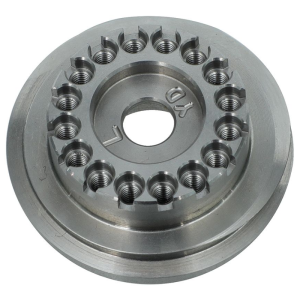
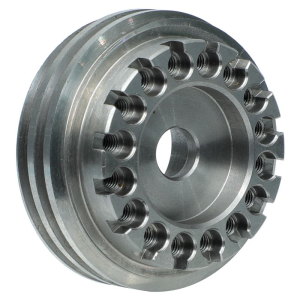
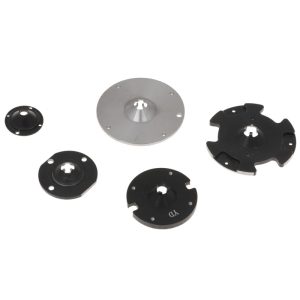
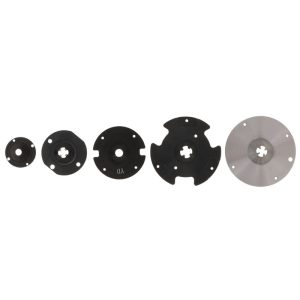
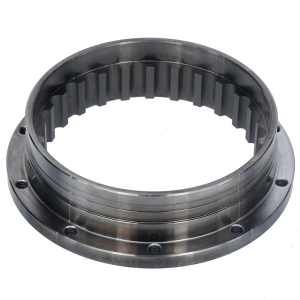
Among these, lightweight CNC machined flanges—used in joint connections, power transmission, and structural assembly—are emerging as critical yet often overlooked components. Their performance directly impacts endurance, payload capacity, motion stability, and overall system efficiency.
Table of Contents
Toggle1. Industry Shift: Lightweight Design Is No Longer Optional
For both humanoid robots and drones, weight is a decisive factor:
- Humanoid robots: Every additional 1 kg can reduce battery life by 10–15% and increase motion energy consumption by over 20%.
- Drones: Limited by battery energy density, reducing weight directly translates into longer flight time and higher payload capacity.
This creates a clear industry consensus:
“Reduce weight = increase performance.”
As a result, traditional heavy steel components are rapidly being replaced by lightweight, high-strength precision parts.
2. Why Flanges Become a Critical Breakthrough Point
Flanges may seem like simple mechanical connectors, but in high-performance systems, they function as:
- Structural connection hubs (motors, gearboxes, frames)
- Precision alignment interfaces (ensuring assembly accuracy)
- Load distribution components (reducing vibration and stress concentration)
They are widely used in:
- Robot joint reducers, servo motors, robotic arms
- Drone motor mounts, gimbals, and airframe structures
However, traditional solutions fall short:
- Steel flanges → too heavy, high inertia
- Cast flanges → low precision, poor consistency
This is where lightweight CNC flanges become the optimal solution.
3. Core Advantages of Lightweight CNC Flanges
3.1 Lightweight Materials: Strength Without the Weight
Advanced materials replace conventional carbon steel:
- Aluminum 6061-T6
- ~1/3 the weight of steel
- Tensile strength up to 310 MPa
- Ideal for mid-sized robots and consumer drones
- Weight reduction: 40%+
- Aluminum 7075 (Aerospace Grade)
- Strength close to steel, lower density
- Perfect for high-load lightweight structures
- Titanium Alloy (TC4)
- High strength, corrosion resistance
- Weight reduction: ~35%
- Suitable for high-end robotics and industrial UAVs
3.2 Micron-Level Precision: Ensuring Perfect Fit
High-performance systems demand extreme precision:
- Dimensional tolerance: ±0.01 mm
- Flatness: ≤0.02 mm
- Coaxiality / perpendicularity: ≤0.005 mm
With 5-axis CNC machining + stress-relief processes, deformation is minimized, ensuring:
- Smooth robotic joint movement
- Reduced vibration in high-speed drone motors
- Long-term stability over millions of cycles
3.3 Structural Optimization: Designed for Integration
Modern systems require compact, multifunctional components:
- Integrated flange designs reduce part count
- Optimized hole patterns improve load distribution
- Hollow structures enable internal wiring and weight reduction
- Custom geometry adapts to complex assemblies
Result: lighter, stronger, more compact systems
4. Application Scenarios: The “Invisible Backbone” of Performance
4.1 Humanoid Robots: The Core of Motion Systems
Lightweight CNC flanges are critical in:
- Joint modules
- Connect reducers, bearings, and motors
- Reduce inertia → faster response (up to 25% improvement)
- Robotic arms
- Enable high-speed rotation
- Reduce energy loss by up to 40%
- Servo systems
- Ensure shaft alignment
- Minimize vibration and noise
They act as the “connection heart” of robotic motion.
4.2 Drones: The Load-Bearing Structural Hub
In UAV systems, flanges are widely used in:
- Motor mounts
- Reduce structural weight
- Extend flight endurance (up to +1.2 hours in optimized cases)
- Gimbal systems
- Lower inertia for smoother stabilization
- Improve imaging precision
- Airframe structures
- Connect carbon fiber tubes
- Enhance rigidity and impact resistance
They function as the “stability anchor” of drone systems.
5. Why Precision CNC Manufacturing Matters
Compared with casting or traditional machining:
- Higher accuracy and repeatability
- Better surface finish for tight assembly
- Faster prototyping and iteration
- Flexible customization for complex designs
This perfectly matches the fast development cycles of robotics and drone industries.
6. Manufacturing Capability Matters More Than Ever
As demand grows, choosing the right CNC machining partner becomes critical.
A reliable manufacturer should provide:
- Multi-material capability (aluminum, titanium, stainless steel)
- 5-axis CNC machining for complex geometries
- Strict tolerance control (±0.01 mm or better)
- Integrated services: design → machining → surface treatment
This ensures not only part quality but also system-level performance improvement.
7. Market Outlook: A High-Growth Opportunity
With continuous advancements in AI, automation, and low-altitude economy policies:
- Humanoid robots are entering real-world applications
- Drones are expanding across logistics, agriculture, inspection, and defense
Demand for lightweight, high-precision CNC components will continue to surge.
Lightweight CNC flanges, as foundational structural elements, will play a key role in enabling next-generation intelligent systems.
Conclusion: Small Component, Massive Impact
In the era of robotics and drones, performance gains no longer come solely from software or electronics—but from precision-engineered mechanical components.
Lightweight CNC flanges may be small, but they are essential to achieving:
- Longer endurance
- Higher payload capacity
- Greater motion stability
For companies aiming to stay competitive, investing in high-quality, lightweight CNC flange solutions is not just an option—it is a necessity.