
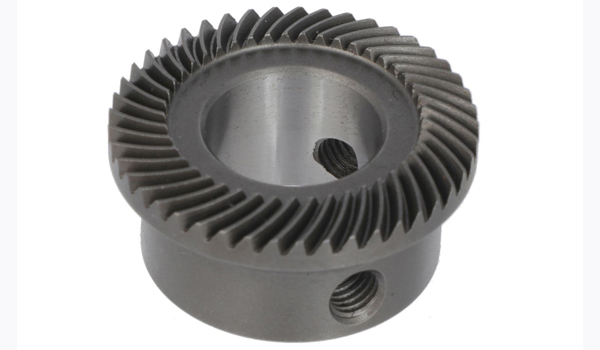
In precision transmission systems, gears play a critical role in determining performance, efficiency, and service life.
Especially in prototyping and low-volume production, every 10% increase in scrap rate can significantly erode your profit margin.
However, in real-world CNC machining, design issues—such as poor geometry, unrealistic tolerances, or improper material selection—often lead to scrap rates as high as 10%–30%.
This is where DFM (Design for Manufacturability) becomes essential: optimizing your design upfront to ensure it can be manufactured efficiently, consistently, and cost-effectively.
Table of Contents
Toggle1. What Is DFM Optimization in Gear CNC Machining?
DFM is not just about “modifying drawings.”
It is a proactive approach where manufacturing constraints—such as machining processes, material behavior, and tolerance capability—are considered during the design stage.
For CNC-machined gears, the key objectives of DFM include:
- Eliminating features that are difficult or impossible to machine
- Simplifying toolpaths to reduce machining time and tool wear
- Improving fixturing stability to minimize deformation
- Anticipating heat treatment and surface finishing distortions
- Ensuring compatibility with 3-axis and 5-axis machining capabilities
2. Common Causes of Scrap in Gear CNC Machining & DFM Solutions
2.1 Gear Geometry Issues (Primary Cause of Scrap)
Common Problems:
- Root fillet too small → tool interference, risk of tool breakage
- Overly tight tolerances (e.g., ±0.005 mm) beyond machine capability
- Improper helix angle → excessive cutting forces and deformation
DFM Recommendations:
- Match root fillet radius to module
Typically 0.25m–0.4m (m = module) to ensure tool accessibility and reduce stress concentration - Select appropriate gear accuracy grades (international standards)
- General industrial use: ISO 8–9
- Medium-high precision (servo systems): ISO 6–7
- High precision (robotics/aerospace): ISO 5 or better
- Optimize helix angle
Usually within 15°–30° (commonly 20°–25°) to balance performance and machining stability
2.2 Fixturing & Structural Design Issues (Deformation Scrap)
Common Problems:
- Thin walls deform during clamping
- Lack of datum features leads to accumulated positioning errors
- Tight runout requirements difficult to achieve in multiple setups
DFM Recommendations:
- Add machining datums
Include locating holes or bosses instead of clamping on functional gear surfaces - Reinforce thin structures
Add ribs or leave stock for stress relief (rough → stress relieve → finish machining) - Minimize setups
Design parts so that critical features can be completed in 1–2 setups
2.3 Material & Post-Treatment Issues (Performance Scrap)
Common Problems:
- No allowance for heat treatment distortion
- Poorly defined hardening zones causing cracks
- Conflict between injection molding and CNC finishing (plastic gears)
DFM Recommendations:
- Allow for heat treatment distortion (varies by process)
- Quenching & tempering: 0.01%–0.05%
- Induction hardening: 0.02%–0.1%
- Carburizing: 0.1%–0.3%
- Define hardening zones clearly
Avoid excessive hardening at the tooth root - Differentiate plastic gear processes
- Injection molded gears: draft angle ≥ 1.5°
- Fully CNC-machined plastic gears: no draft required, but ensure tool accessibility
2.4 Tolerancing & Drawing Issues (Inspection Scrap)
Common Problems:
- Missing or unclear key parameters (module, tooth count, pitch)
- Overly tight tolerances on non-critical features
- Lack of GD&T leading to assembly failures
DFM Recommendations:
- Use GD&T (Geometric Dimensioning & Tolerancing) for critical features
- Distinguish between functional and non-functional dimensions
- Align machining and inspection datums
3. Real-World Results: Before vs After DFM Optimization
A case study from a helical gear prototyping project:
(Material: 20CrMnTi, Module: m=2, Batch size: 200 pcs)
| Metric | Before | After | Improvement |
|---|---|---|---|
| Machining time | 45 min | 32 min | -28.9% |
| Scrap rate | 18% | 4% | -77.8% |
| Tooling cost | $0.32/pc | $0.15/pc | -52.2% |
| Lead time | 7 days | 4 days | -42.9% |
Where the cost savings come from:
- ~30% improvement in machining efficiency
- ~78% reduction in scrap
- ~50% increase in tool life
Result: ~32% total cost reduction per part, with significantly improved quality consistency.
4. Practical DFM Workflow for Gear CNC Machining
- Design Review
Verify module, tolerances, material, and manufacturability - CAM Simulation
Evaluate toolpaths, fixturing, and cutting parameters - Risk Assessment
Identify potential deformation, interference, or tool failure risks - Design Optimization
Adjust geometry without affecting functionality - Prototype Validation
Run small batch production and finalize process parameters
5. Conclusion
In gear CNC machining, DFM optimization is a high-impact, low-cost strategy.
It not only reduces scrap and manufacturing costs but also improves lead time and production consistency.
In today’s competitive manufacturing environment,
cost efficiency is largely determined at the design stage—not on the shop floor.
Get a Free DFM Review for Your Gear Project
If you are developing a gear component, conducting a DFM review early can help you avoid costly redesigns, delays, and production risks.
We offer free DFM analysis and machining recommendations, including:
- Design feasibility evaluation
- Cost reduction suggestions
- Machining strategy optimization
Send us your drawings today and get expert feedback before you move into production.


