
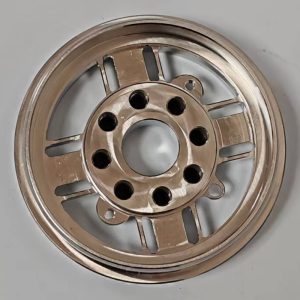
The key design considerations for humanoid robot joint housing mainly include 8 core aspects, detailed below. Humanoid robot joint housings are far more demanding than industrial robot joints—they must mimic human joint movement (e.g., elbow, knee, shoulder), balance structural strength, weight, flexibility, and human-machine interaction safety, while withstanding complex dynamic loads during walking, grasping, and posture adjustment. Their design directly determines the humanoid robot’s motion agility, energy efficiency, durability, and safety in human-centric environments. Below are the critical design considerations tailored to humanoid robot scenarios.
Table of Contents
Toggle
1. Human-Like Motion Flexibility & Kinematic Adaptability
Humanoid robot joints (e.g., hip, elbow, ankle) need to replicate the range and flexibility of human joints—such as 180° elbow flexion, 360° shoulder rotation, and stable knee extension. The housing must not restrict this natural motion or cause mechanical interference. A common question: How to design a housing that matches human joint motion range? Compact, ergonomic geometry and precise clearance design are key.
Design focuses on ultra-compact profiles to fit the robot’s human-like body structure, avoiding bulky shapes that break the humanoid form. Additionally, the housing must accommodate compound motions (e.g., shoulder abduction + rotation) without binding, and integrate flexible seals that protect internal components while not adding friction. For example, ankle joint housings need to allow slight lateral rotation to mimic human walking balance, requiring a curved housing design that supports multi-directional movement.
2. Structural Integrity & Dynamic Load Resistance
Humanoid robots face complex dynamic loads during operation: impact from walking (heel strike), torsional stress from limb movement, and alternating loads from repeated posture adjustments. The joint housing must withstand these cyclic loads without deformation or failure. A frequent query: How to enhance structural strength while keeping the housing lightweight? High-strength composite materials and optimized reinforcement structures are essential.
Engineers prioritize materials with excellent fatigue resistance—such as carbon fiber-reinforced polymers (CFRP) and high-strength aluminum alloys—to resist long-term cyclic wear. Finite Element Analysis (FEA) is used to simulate dynamic stress during walking, running, or grasping, optimizing housing geometry (e.g., adding curved ribs, thickening stress-concentrated areas) to distribute loads evenly. The housing must also be impact-resistant to avoid damage from accidental collisions with humans or objects.
3. Weight Optimization & Energy Efficiency
Weight is critical for humanoid robots—excessive joint housing weight increases energy consumption, reduces battery life, and impairs motion agility (e.g., slow walking, unstable balance). However, lightweight designs must not compromise structural strength. A common question: What materials balance weight and strength for humanoid robot joints? Lightweight, high-strength composites are the optimal choice.
Weight optimization strategies include using CFRP, magnesium alloys, or titanium alloys—materials that are 30-50% lighter than traditional steel while maintaining equivalent strength. Topology optimization is applied to remove material from non-critical areas (e.g., internal cavities) and integrate functions (e.g., housing + cable routing + mounting brackets) to reduce component count. For example, shoulder joint housings integrate motor mounting and cable management to minimize weight and space occupation.
4. Thermal Management for Compact Spaces
Humanoid robot joints are compact (matching human joint size), leaving limited space for internal components (motors, gearboxes, sensors). These components generate heat during continuous motion, and poor heat dissipation can cause overheating, reducing performance or damaging components. A common concern: How to implement effective thermal management in compact joint housings?
Design solutions include using thermally conductive materials (e.g., aluminum alloy housings) to transfer heat to the environment, integrating micro heat sinks or thin cooling fins into the housing’s inner surface, and designing micro air channels for passive convection. For high-load joints (e.g., knee, hip), lightweight liquid cooling tubes are embedded in the housing to enhance heat dissipation without increasing volume. Additionally, the housing is designed to isolate heat from sensitive components (e.g., position sensors) to ensure measurement accuracy.
5. Human-Machine Interaction Safety
Humanoid robots operate in human-centric environments (e.g., homes, offices), so joint housings must prioritize safety to avoid injuring humans during contact. A frequent question: How to design a safe joint housing for human-robot interaction? Smooth surfaces, impact absorption, and anti-pinch structures are key.
Safety design includes: rounded edges and smooth surfaces to prevent scratches; shock-absorbing materials (e.g., soft rubber coatings) on the housing surface to reduce impact force during collision; and anti-pinch gaps between moving parts to avoid pinching human fingers. Additionally, the housing must be flame-retardant and non-toxic to ensure safety in daily interaction scenarios.
6. Environmental Adaptability
Humanoid robots may operate in diverse indoor environments (homes, offices, hospitals) with dust, moisture, or occasional spills. The joint housing must protect internal components from these hazards while maintaining humanoid aesthetics. A common query: How to balance environmental protection and human-like appearance?
Design considerations include IP54 or higher sealed enclosures to prevent dust and water ingress, without adding excessive volume. Corrosion-resistant materials (e.g., anodized aluminum, stainless steel) are used for critical areas, and thin, aesthetically pleasing protective coatings are applied to match the robot’s human-like skin texture. For medical or home robots, the housing is designed to be easy to clean and sterilize.
7. Manufacturability & Cost-Effectiveness
Humanoid robot joint housings have complex, human-like geometries (e.g., curved surfaces matching human limbs) that require high-precision manufacturing. However, manufacturability and cost must be balanced to enable mass production. A common question: Which manufacturing process is suitable for complex humanoid joint housings?
Optimal processes include 3D printing (for low-volume, complex curved designs) and precision die casting (for high-volume, moderately complex components). The design simplifies overly complex features (e.g., avoiding internal undercuts) to reduce manufacturing difficulty and cost. Additionally, modular design is adopted—standardizing common joint housing parts (e.g., bearing mounting interfaces) to lower production and maintenance costs.
8. Assembly, Maintenance & Component Compatibility
Humanoid robot joints are compact and difficult to access, so the housing must facilitate assembly and maintenance. A frequent concern: How to design a housing that allows easy maintenance of internal components?
Key design points include removable side panels or end caps for quick access to motors and gears, standardized mounting interfaces for easy component replacement, and integrated cable routing channels to avoid tangling during maintenance. The housing must also be compatible with compact internal components (e.g., miniaturized motors, precision sensors) to ensure seamless integration without compromising motion flexibility.
Conclusion
Designing humanoid robot joint housing requires balancing human-like motion, structural strength, weight, safety, and practicality—factors that are more demanding than industrial robot joints. By prioritizing the 8 considerations above, engineers can develop joint housings that enable humanoid robots to move naturally, operate safely, and adapt to human-centric environments. As humanoid robot technology advances, joint housing designs will evolve with new materials (e.g., flexible composites) and processes (e.g., precision 3D printing), further narrowing the gap between robot and human motion.


