
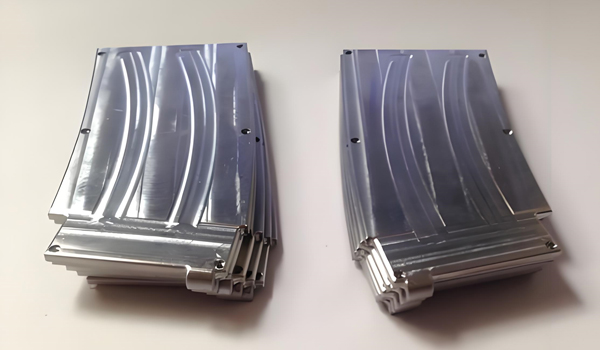
In the field of precision machining, CNC processing of stainless steel is widely recognized as a challenging task—with deformation during machining being the most critical hurdle. Valued for its exceptional corrosion resistance, high strength, and superior toughness, stainless steel is extensively used in medical devices, food processing machinery, chemical equipment, and other industries. However, these same advantageous properties pose significant challenges to CNC machining. Compared to conventional steel, stainless steel is more prone to deformation during CNC operations, which not only compromises machining accuracy but also risks workpiece scrappage and increased production costs. So, why does stainless steel deform easily during CNC machining, and what effective measures can prevent or resolve this issue?
Table of Contents
ToggleI. Key Causes of Stainless Steel Deformation in CNC Machining
1. Material Properties (Primary Internal Factor)
Stainless steel contains high proportions of alloying elements such as chromium and nickel. While these elements enhance the material’s performance, they also result in a high thermal expansion coefficient and low thermal conductivity. During cutting, localized high temperatures cause uneven thermal expansion of the material, followed by contraction deformation upon cooling. This effect is particularly pronounced in austenitic stainless steels (e.g., 304, 316), whose thermal conductivity is only about 1/3 that of ordinary carbon steel—leading to significant heat accumulation in the cutting zone.
2. Machining Stress
Stainless steel’s high strength and toughness require greater cutting forces during machining, which induce substantial residual stress within the material. After machining, the redistribution of this residual stress causes the workpiece to deform. This issue is more severe for thin-walled or complex-structured components, where stress relief can result in noticeable shape changes.
3. Improper Tool Selection
Stainless steel is highly abrasive to cutting tools. Using standard tools or worn tools not only increases cutting forces but also generates excessive heat, creating a vicious cycle. Dull tools exacerbate machining resistance and thermal buildup, further promoting deformation.
4. Inappropriate workholding methods
Inappropriate workholding methods can lead to uneven stress distribution during machining, especially for thin-walled parts with low rigidity. Excessive clamping force or inadequate support often results in direct deformation of the workpiece.
II. Effective Measures to Prevent Deformation
1. Optimize Machining Processes
Adopting a “multiple light cuts” strategy—increasing the number of tool passes while reducing the depth of cut per pass—effectively minimizes cutting forces and heat generation. For highly deformation-prone parts, rough machining should be performed first to release residual stress, followed by finish machining. Rational selection of cutting parameters is also critical: generally, lower cutting speeds and moderate feed rates help reduce heat accumulation.
2. Select Tools Scientifically
Prioritize wear-resistant carbide tools or coated tools (e.g., TiAlN-coated end mills) for stainless steel machining. Tool geometry should be specifically designed: a larger rake angle reduces cutting resistance, while a sharp cutting edge minimizes work hardening. Regular tool inspection and replacement are essential to maintain cutting efficiency and avoid excessive force/heat generation.
3. Rational Workholding
For thin-walled components, use vacuum chucks or custom fixtures to avoid deformation caused by excessive clamping force. Auxiliary supports can be added to enhance workpiece rigidity when necessary. Additionally, optimize tool paths during programming to ensure uniform cutting force distribution and avoid localized stress concentration. Symmetrical machining strategies and balanced cutting allowance allocation also help mitigate deformation.
4. Incorporate Heat Treatment
For precision parts, stress-relief annealing after rough machining releases most residual stress before finish machining. In some cases, cryogenic treatment can stabilize the material structure and reduce subsequent deformation.
III. Remedial Measures for Deformed Workpieces & Conclusion
Even with preventive measures, minor deformation may still occur in stainless steel parts post-machining. Two common correction methods are:
- Mechanical Straightening: Suitable for small deformation amounts—using a press for cold straightening is a simple and effective approach.
- Thermal Straightening: Ideal for workpieces with larger deformation or simple shapes, involving localized heating and cooling to adjust the shape.
It is crucial to emphasize that full-process control is the fundamental solution to stainless steel machining deformation. Every stage—from material selection and process design to machining execution—must account for deformation risks. For example:
- Avoid extreme wall thickness differences and sharp internal angles during part design.
- Assess the original stress state of raw materials during procurement.
- Implement strict temperature control and stress monitoring during machining.
While CNC machining of stainless steel presents deformation challenges, thorough understanding of deformation mechanisms, scientific process planning, and strict adherence to technical protocols can effectively control deformation within acceptable limits. With advancements in tool technology, machine tool performance, and machining methods, deformation issues in precision stainless steel processing are continuously being improved. For manufacturers, accumulating experience with different stainless steel grades, building a comprehensive process database, and enhancing technical team expertise are the long-term strategies to address this industry-wide challenge.


