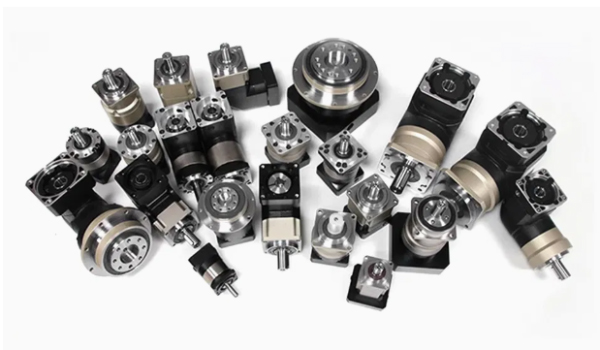
As compact automation (such as small collaborative robots, mini assembly lines, and portable industrial equipment) becomes increasingly prevalent in modern workshops, the demand for “small yet high-precision gear reducers” has surged. These micro-components serve as the “power core” of compact systems—and the machining precision of gear reducer boxes and key internal gear reducer parts directly determines the overall performance of gear reducers. Even a deviation of 0.01 mm in gear tooth profile, input shaft, lower bushing, or planetary gear can lead to jamming, shortened service life, or even complete equipment failure.
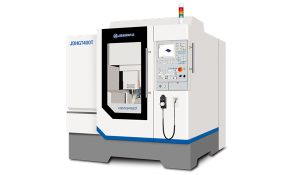
Traditional 3-axis CNC machining often struggles with the processing of such precision gear reducer parts: multiple setups introduce cumulative errors, and rigid axis movement cannot handle the complex contours of planetary gear tooth profiles, multi-step input shaft structures, or thin-walled lower bushing features. 5-axis CNC machining solutions effectively address this challenge, reconciling the seemingly conflicting requirements of “compact size” and “ultra-precision” in custom gear reducer manufacturing—particularly excelling in the integrated machining of gear reducer boxes and core components.
Table of Contents
ToggleWhy Compact Automation Demands Higher Gear Reducer Precision
Compact automation systems must maximize functionality within minimal space: a gear reducer with a diameter of 60 mm may need to transmit 50 N·m of torque while maintaining a backlash of <0.02°. For such applications:
- Loose meshing between the planetary gear and input shaft causes motion lag, a critical flaw for precision pick-and-place robots;
- Uneven tooth surface contact due to machining errors accelerates wear under high-cycle operating conditions;
- Insufficient dimensional precision of the gear reducer box cavity leads to excessive assembly clearance of the lower bushing, causing vibration and noise;
- Bulky “over-designed” gear reducers completely contradict the core requirement of “compactness.”
5-axis CNC machining directly addresses these pain points—achieving performance improvements without compromising on size through the integrated high-precision machining of key components such as gear reducer boxes, input shafts, planetary gears, and lower bushings.
Three Core Ways 5-Axis CNC Machining Enhances Custom Gear Reducer Precision
1. Single-Setup Machining: Eliminating Assembly Errors from Multiple Setups
Traditional 3-axis machining requires multiple setups to process the gear reducer box cavity, input shaft steps, planetary gear tooth profiles, and lower bushing end faces—each setup introducing an error of 0.008–0.015 mm, which ultimately results in coaxiality deviations after part assembly. With 5-axis CNC machining, integrated processing of multiple key gear reducer parts can be completed in a single setup:
For a 40 mm planetary gear reducer used in a portable sorting robot, the planetary gear, input shaft, lower bushing, and gear reducer box locating surface were machined in a single setup—controlling the total error within ±0.005 mm;
Result: The meshing backlash between the planetary gear and input shaft was maintained at <0.01°, no loosening occurred after the lower bushing assembly, and the operating noise of the gear reducer was 20% lower than that of similar products processed by 3-axis machining, with a 30% extension in service life.
2. Multi-Axis Contouring: Mastering Complex Part Structures for Critical Feature Precision
Gear reducer parts for compact systems often adopt special designs: planetary gears typically have small module teeth (module ≤0.8) or modified tooth profiles, input shafts feature multiple precision steps and keyways, and lower bushings have thin-walled structures with extremely high inner hole roundness requirements. The synchronized axis movement of 5-axis CNC machining enables:
- Machining of curved tooth profiles on planetary gears that are inaccessible to 3-axis tools (to achieve better load distribution) while ensuring uniform tooth spacing;
- One-time completion of coaxial machining for multi-step input shafts, keyways, and shaft shoulders, avoiding eccentricity errors from secondary setups;
- Precise control of the thin-walled thickness and inner hole roundness of lower bushings, preventing gaps or jamming after assembly.
For a medical automation client, 5-axis contouring was used to produce a custom harmonic gear reducer with a diameter of 55 mm and modified cycloidal teeth. The coaxiality between the input shaft and lower bushing was controlled within 0.003 mm, ultimately reducing transmission error by 35% compared to standard machined versions.
3. Precision + Material Flexibility: Adapting to Lightweight Compact Designs
Compact systems prefer lightweight materials (such as aluminum alloys and titanium alloys) to reduce overall weight—but these materials are prone to machining deformation, especially for thin-walled or complex structural parts like lower bushings and planetary gears. 5-axis CNC machining achieves a balance between precision and material properties through targeted process optimization:
- Adoption of low-vibration cutting strategies (with cutting parameters adjusted via in-house CAM software) to avoid warping of thin-walled lower bushings during machining;
- Real-time tool compensation (monitored via in-machine probes) to maintain planetary gear tooth surface roughness and input shaft step tolerances;
- Application of high-speed cutting technology for aluminum alloy gear reducer box housings to ensure cavity dimensional precision while improving surface finish and reducing frictional wear after assembly.
Recently, 200 custom aluminum alloy gear reducers were delivered for a mini conveyor system: the gear reducer box, input shaft, planetary gear, and lower bushing of each unit were all processed via integrated 5-axis machining. Each unit weighs only 120 grams (30% lighter than steel alternatives) while meeting IP65 protection rating and 10,000-hour service life requirements.
Gear Reducer Parts List: The Precision Cornerstone for Custom Machining
In the customization of gear reducers for compact automation, a detailed and optimized Gear Reducer Parts List is a core prerequisite for ensuring machining precision, assembly efficiency, and final performance. With extensive experience in CNC precision machining, we recognize that the parameters, materials, and process requirements of each part directly impact the overall operational effectiveness of the gear reducer. Therefore, we offer full-process parts list optimization services from part selection to process adaptation.
A standard Gear Reducer Parts List covers the core components of compact gear reducers, including but not limited to:
- Power Transmission Core: Input Shaft, Planetary Gear, Sun Gear, Ring Gear;
- Positioning and Protection Components: Lower Bushing, Upper Bushing, Bearing, Gear Reducer Box Housing;
- Auxiliary Function Parts: Oil Seal, Lock Nut, Locating Pin, Gasket, etc.
For custom compact automation requirements, the parts list can be targeted optimized based on the process advantages of 5-axis CNC machining: for example, integrating some parts through DFM (Design for Manufacturability) analysis (such as integrating the planet carrier with the positioning structure) to reduce assembly steps and errors; marking precise part tolerances (e.g., input shaft coaxiality ≤0.003 mm, planetary gear tooth profile tolerance ≤0.005 mm) and suitable materials (such as 6061-T6 aluminum alloy, 304 stainless steel, titanium alloy) based on equipment torque and speed requirements; meanwhile, specifying 5-axis machining process key points for each part in the list (such as high-speed cutting parameters for the gear reducer box cavity, thin-walled machining solutions for the lower bushing) to ensure accurate implementation in production.
Whether optimizing an initial parts list provided by the client or creating a new one based on requirements, this Gear Reducer Parts List serves as a unified standard for communication, production, and quality inspection—it not only avoids machining deviations caused by vague part parameters but also enables clients to clearly understand the manufacturing logic of each component, truly achieving seamless connection between “customization” and “high precision.”
5-Axis CNC Custom Gear Reducer Services: From Single Parts to Turnkey Solutions
In the field of CNC machined parts, we not only focus on the precision machining of individual gear reducer parts but also provide full-process services from design optimization and parts list development to complete gear reducer customization:
- DFM Support and Parts List Optimization: Engineers optimize the Gear Reducer Parts List prior to machining, adjusting the structure of key components such as gear reducer boxes, input shafts, planetary gears, and lower bushings for manufacturability to maximize 5-axis machining efficiency;
- Integrated Full-Part Machining: Capable of undertaking custom machining of individual parts (such as gear reducer boxes, input shafts, planetary gears, lower bushings) or complete gear reducers, supporting small-batch, multi-variety orders from 10 to 5,000 units, suitable for prototype testing or niche compact automation applications;
- Full-Process Quality Verification: Each gear reducer part undergoes in-machine probing and dimensional inspection (such as input shaft coaxiality, planetary gear tooth profile precision, lower bushing inner hole roundness), and the entire gear reducer is subject to backlash testing and torque load testing—accompanied by a detailed inspection report to ensure delivery quality.
If your compact automation project requires custom gear reducers that balance micro-size and ultra-high precision—whether for the machining of individual gear reducer parts (such as input shafts, planetary gears, lower bushings) or the customization of complete gear reducer boxes—5-axis CNC machining solutions can meet the relevant needs. Information on customized Gear Reducer Parts List templates or custom machining is available for reference or consultation on details.