Amid the wave of industrial automation, Automated Guided Vehicles (AGVs) serve as the core carriers of intelligent material handling. Their operational stability, load-bearing capacity, and trajectory accuracy directly depend on the machining quality of core transmission and structural components. As a professional CNC machining parts manufacturer, we specialize in machining core transmission and structural components for AGVs, covering key parts such as AGV gearboxes (including harmonic gearboxes and wheel hub gearboxes), input shafts, lower bushings, planetary gears, and steering gear housings. We have established a full-process machining solution encompassing material selection, process planning, precision control, and customization adaptation. Leveraging advanced material machining technologies such as 7075 aluminum alloy (T6 heat treatment), ISO 1328-1:2013 Grade 7 gear precision standards, and a high-rigidity machining system, we precisely meet the rigorous requirements of AGV equipment for core components in various scenarios such as warehousing, heavy-duty, and new energy applications.
Table of Contents
ToggleI. Focus on Core AGV Components: Precisely Overcoming Machining Technical Challenges
In the core transmission chain of AGV equipment, each component is required to achieve efficient power transmission, stable load bearing, and precise angle control, which places extremely high demands on the precision, rigidity, and process adaptability of CNC machining. We customize exclusive machining solutions based on the structural characteristics and functional requirements of each key component:
1. Core Transmission Components: Laying the Foundation for Power Transmission with Grade 7 Precision
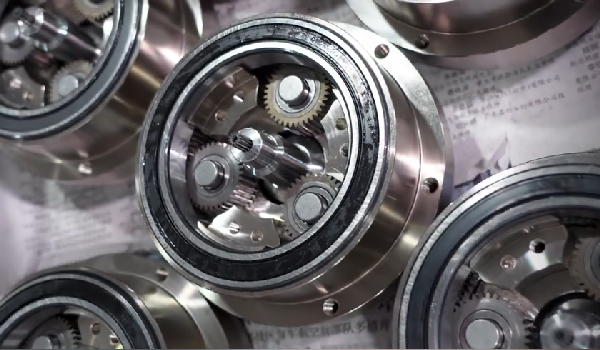
As the core transmission element of AGV gearboxes (including harmonic gearboxes and wheel hub gearboxes), planetary gears’ tooth profile precision and meshing clearance directly determine transmission efficiency, operational noise, and service life. Aligning with the core needs of AGV systems for components, we prioritize 7075 aluminum alloy for machining planetary gears in heavy-duty or precision AGVs. In the T6 heat-treated state, this material not only achieves a hardness of HRC38-42 but also boasts ultra-high strength (tensile strength of 524-700MPa, yield strength of 455-503MPa), approaching the level of medium carbon steel while having a density of only 2.8g/cm³ (about 1/3 that of steel). This effectively reduces AGV dead weight to enhance battery life. Meanwhile, the high rigidity derived from its elastic modulus of 71GPa ensures the stability of the transmission structure during high-speed operation or heavy loading of AGVs, minimizing vibration and deformation. However, the machining hardening tendency of 7075 aluminum alloy poses higher requirements for processes. To address this, we adopt an integrated machining process of “precision CNC hobbing → shaving → grinding,” strictly adhering to the ISO 1328-1:2013 Grade 7 standard (equivalent to GB/T 10095.1-2021 Grade 7). Through optimized tooth profile topology design and high-precision grinding, we control the cumulative pitch error within ≤0.02mm and the total tooth profile deviation within ≤0.01mm, ensuring smooth meshing with sun gears and ring gears. Additionally, we specially optimize tool parameters (using PCD-coated tools with a cutting speed of 1200-1500m/min, feed rate of 0.1-0.15mm/r) and cutting fluid ratio (5% extreme pressure emulsion) to achieve high-precision machining with a surface roughness of Ra≤0.8μm without compromising material mechanical properties, perfectly adapting to the high-frequency start-stop and low-noise (≤65dB) operational requirements of AGV equipment. It should be noted that 7075 aluminum alloy is more suitable for scenarios requiring high strength, lightweight design, and rigidity, and is not a universal choice for planetary gears in all AGVs.
As the “key bridge” for power transmission, AGV input shafts must simultaneously meet requirements for high rigidity, high coaxiality, wear resistance, and fatigue resistance. The characteristics of 7075 aluminum alloy fully demonstrate advantages in this component. Its high rigidity (elastic modulus of approximately 71GPa) ensures the input shaft does not easily deform during high-speed rotation (maximum speed of 3000rpm), and its fatigue resistance perfectly adapts to the high-frequency start-stop working characteristics of AGVs, effectively extending service life under dynamic loads. Moreover, its lightweight advantage (density of 2.8g/cm³) further reduces the load on the AGV drive system and improves battery life. We utilize DMG MORI turning-milling compound CNC machining centers to implement a “one-clamping full-process completion” process for 7075 aluminum alloy input shafts, sequentially completing shaft turning, keyway/spline milling, and shaft end chamfering. This effectively avoids coaxiality errors caused by multiple clampings, strictly controlling the coaxiality of key parts within ≤0.02mm. For the mating surfaces of the shaft, we subsequently adopt precision cylindrical grinding (using corundum grinding wheels with a grinding speed of 30m/s) to further improve surface precision to Ra≤0.4μm. Meanwhile, high-frequency quenching (hardness of HRC55-60) is applied to enhance wear resistance, ensuring stable torque transmission and efficient linkage with AGV drive motors and gearboxes. Similarly, such 7075 aluminum alloy input shafts are more suitable for heavy-duty or precision AGVs, while lightweight and simple AGVs can use other suitable materials based on cost requirements.
2. Support and Protection Components: Adapting to Stable Operation Under Complex Working Conditions
As the supporting and buffering components of core AGV parts, lower bushings are responsible for reducing friction between shafts and housings, absorbing operational vibrations, and limiting axial movement. Based on the characteristics of 7075 aluminum alloy, we clarify its applicable scenarios: 7075 aluminum alloy (T6 heat treatment) is used for machining lower bushings in lightweight warehousing AGVs, leveraging its lightweight advantage (density of 2.8g/cm³) to reduce overall AGV dead weight and improve battery life. Meanwhile, its high rigidity and fatigue resistance in the T6 state can meet the high-frequency shuttling and start-stop working requirements of warehousing AGVs. In terms of machining, CNC boring + internal cylindrical grinding processes are adopted to ensure the inner diameter cylindricity is ≤0.01mm. For heavy-duty industrial AGVs that need to bear greater radial loads, although 7075 aluminum alloy has excellent strength, its wear resistance is inferior to that of copper alloys. Therefore, tin bronze (ZCuSn10Pb5) is selected, and centrifugal casting + precision boring processes are used to enhance wear resistance and load-bearing capacity. All lower bushings strictly control the fit tolerance with shaft diameters (adopting H7/f7 clearance fit) to ensure flexible rotation and reasonable clearance (clearance value of 0.015-0.03mm), effectively avoiding early wear of shaft components caused by dry friction or vibration and extending the service life of the entire machine.
As the core executive unit for AGV steering and driving, the machining precision of structural components such as steering gear housings and connecting flanges directly determines the steering positioning accuracy (usually requiring ≤0.1°). We adopt high-rigidity 5-axis CNC machining centers (spindle rigidity ≥250N/μm) and implement “multi-station integrated machining” for the complex multi-surface and multi-hole structure of steering gear components. Real-time tool precision calibration is performed using the machine’s built-in laser tool setter, ensuring the perpendicularity and parallelism errors of each mounting surface are controlled within ±0.01mm, and the positional tolerance of threaded holes is ≤0.02mm, providing a stable structural foundation for the precise transmission of the steering gear mechanism.
3. Special Gearbox Components: Targeted Solutions for Working Condition Adaptation
To address the core requirement of AGV wheel hub gearboxes to bear long-term radial loads (up to 5-10t for heavy-duty AGVs), we enhance rigidity from both structural design and machining process perspectives. In terms of housing machining, high-strength ductile iron (QT600-3) is used for one-piece molding, and key surfaces are processed by CNC gantry milling to ensure the uniformity of housing wall thickness (error ≤0.5mm) and improve deformation resistance. In the machining of internal transmission components, key parts such as planetary shafts and bearing seats undergo “grinding + aging treatment” (artificial aging at 200℃/4h) to eliminate machining internal stress. Strict control is imposed on component fit precision (adopting H7/k6 transition fit between planetary shafts and planetary carriers), ensuring the radial runout of the wheel hub gearbox is ≤0.03mm during heavy-load operation, avoiding transmission jamming or early fatigue wear of components.
In response to customers’ customized needs for “adapting wheel hub gearboxes to hydraulic drive methods,” we possess mature process adaptation capabilities. By optimizing the design of the output end connection structure of the wheel hub gearbox, we use CNC milling to process the hydraulic motor mounting flange (flange flatness ≤0.01mm) and precisely machine hydraulic oil passage holes (hole diameter tolerance H8, surface roughness Ra1.6μm). Installation precision calibration is performed using special tooling (coaxiality ≤0.02mm) to ensure accurate docking between the hydraulic drive unit and the wheel hub gearbox. Meanwhile, the original high-rigidity design of components is retained, and the housing wall thickness and bearing selection are enhanced to ensure stable transmission performance after adapting to hydraulic drive, enabling flexible switching of AGV drive methods (motor drive/hydraulic drive).
As the core transmission component of high-end AGVs (such as precision assembly AGVs), harmonic gearboxes have extremely high machining difficulty due to the special structure of key parts such as wave generators, flexsplines, and circular splines (flexsplines are thin-walled cup-shaped structures with a wall thickness of only 1.5-3mm). We adopt 5-axis linkage CNC machining centers (positional accuracy ±0.003mm) combined with precision grinding and electrochemical polishing processes to achieve complex surface machining of core components of harmonic gearboxes: the flexspline machining adopts a process of “rough turning → aging treatment → finish turning → hobbing → grinding” to avoid machining deformation of the thin-walled structure; the wave generator is made of Cr12MoV material, which undergoes quenching (HRC60-62) + grinding to ensure the cam profile tolerance is ≤0.005mm. By strictly controlling the geometric tolerance and surface precision of parts, the transmission accuracy of the harmonic gearbox is ≤1arcmin, and the backlash is ≤3arcsec, perfectly adapting to the millimeter-level precise positioning requirements of high-end AGV equipment.
II. Core Machining Advantages: Guaranteeing Product Quality with Technical Strength
1. High-Rigidity Machining System: Adapting to High-Precision and Heavy-Load Machining Needs
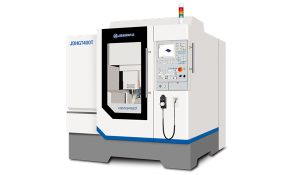
We are equipped with high-end equipment such as high-rigidity CNC machining centers (e.g., DMG MORI DMC 850V), turning-milling compound machines (e.g., Mazak INTEGREX i-500), and precision grinders (e.g., Okamoto CG630). The machine spindles adopt ceramic bearings with a rigidity of 280N/μm and high operational stability (spindle radial runout ≤0.002mm), which can effectively handle high-precision machining of various materials such as 7075 aluminum alloy, tin bronze, ductile iron, and alloy steel. To meet the rigorous rigidity requirements in the machining of core AGV components, we optimize clamping solutions through finite element analysis (using hydraulic fixtures to reduce clamping deformation) and adjust machine parameters (reducing cutting speed and increasing feed rate to avoid chattering), minimizing vibration and deformation during cutting and ensuring the dimensional and geometric precision of machined parts is stable and reliable (dimensional tolerance fluctuation ≤±0.005mm).
2. Precise Material and Tool Management: Enhancing Machining Efficiency and Quality
For common materials used in AGV components, we have established a strict material procurement and full-process inspection system. As the core material for heavy-duty/precision AGVs, 7075 aluminum alloy is procured exclusively from leading domestic manufacturers such as Southwest Aluminum. Upon entry, spectral analyzers are used to accurately detect component purity (ensuring Zn content is controlled within 5.1-6.1%, a key component index for achieving ultra-high strength), and ultrasonic flaw detectors are used to inspect for internal defects (no pores or inclusions ≥φ2mm), ensuring basic material performance. Meanwhile, customized tool solutions are developed based on the machining characteristics of different materials: when machining 7075 aluminum alloy, due to its machining hardening tendency, PCD-coated tools are used to avoid tool sticking, and tool parameters are optimized through a tool life management system (e.g., for external turning, cutting speed of 1200m/min, feed rate of 0.12mm/r, depth of cut of 0.5mm); for ductile iron machining, CBN-coated tools are selected to enhance wear resistance. Ultimately, a balance between efficient cutting and precision machining is achieved, increasing the machining efficiency of 7075 aluminum alloy components by over 30% and reducing tool wear by 25%.
3. Comprehensive Precision Inspection System: Adhering to Grade 7 Precision Standards
We have established a “three-level precision inspection system” covering the entire machining process, equipped with high-precision inspection equipment such as coordinate measuring machines (Zeiss CONTURA G2, measurement accuracy ±0.002mm), gear testers (Klingelnberg P26, inspection accuracy up to ISO Grade 1), and roundness testers (Tokyo Seimitsu RA-2200): ① Incoming material inspection: focusing on material composition, hardness, and internal defects; ② In-process inspection: 10% of parts are sampled per batch to inspect key dimensions (e.g., shaft diameter, tooth profile) and geometric tolerances; ③ Final outgoing inspection: 100% full-dimensional inspection of all parts, with additional inspection of tooth profile, tooth direction, and cumulative pitch error for gear parts, ensuring compliance with ISO 1328-1:2013 Grade 7 and relevant precision standards. A test data traceability system is also established, with each batch of products accompanied by an inspection report to ensure the precision of delivered products is traceable and meets customer requirements.
III. Customization Services: Adapting to Full-Scenario Machining Needs of AGVs
Different types of AGV equipment have significantly different requirements for the specifications and performance of core components, which also determines the adaptation boundary of 7075 aluminum alloy: Warehousing AGVs prioritize lightweight design (component weight reduction of over 15%) and low noise, making 7075 aluminum alloy the preferred choice due to its lightweight advantage (density of only 2.8g/cm³); Heavy-duty AGVs (≥5t) focus on high rigidity and impact resistance, which 7075 aluminum alloy can precisely match with its elastic modulus of 71GPa and tensile strength of 524-700MPa in the T6 state; Precision AGVs (such as assembly AGVs) emphasize operational stability, and their high rigidity and fatigue resistance reduce vibration and deformation to ensure positioning accuracy. In contrast, lightweight and simple AGVs (such as workshop short-distance transfer AGVs) have lower requirements for strength and precision and can use more cost-effective materials such as 6061 aluminum alloy or ordinary steel. We possess strong customized machining capabilities and can provide targeted 7075 aluminum alloy component machining solutions based on customer AGV types and working conditions: ① Non-standard size customization: supporting non-standard 7075 aluminum alloy part machining with a minimum batch size of 1 piece, with a delivery cycle shortened to 7-15 days; ② Material replacement adaptation: if 7075 aluminum alloy does not meet customer cost or working condition requirements, it can be replaced with materials such as 6061 aluminum alloy or stainless steel; ③ Drive method adaptation: such as machining of 7075 aluminum alloy flanges for hydraulically driven wheel hubs and customization of 7075 aluminum alloy shafts for servo motor direct-connected gearboxes; ④ Special working condition optimization: for high-temperature and high-humidity scenarios, anodizing treatment is applied to 7075 aluminum alloy components to enhance corrosion resistance. We have a professional technical team (including 3 engineers with over 10 years of experience in AGV component machining) that can provide full-process technical support from 7075 aluminum alloy adaptability evaluation, scheme design, and process planning to prototype trial production, meeting customers’ diverse needs.
IV. Conclusion: Empowering AGV Industry Upgrading with Precision Machining
As a professional CNC machining parts manufacturer, we have always focused on the field of machining core AGV components. With ISO 1328-1:2013 Grade 7 gear precision standards, a high-rigidity machining system, and precision machining technologies for advanced materials such as 7075 aluminum alloy as our core competitiveness, we continuously optimize machining processes (e.g., introducing AI tool life prediction systems) and enhance customization service capabilities. We have provided core component machining services for many leading domestic and foreign AGV manufacturers, with products widely used in various fields such as warehousing and logistics, automotive manufacturing, and lithium battery production. We deeply understand that the machining quality of core AGV components is the cornerstone of the stable operation of intelligent material handling systems. In the future, we will continue to focus on technological research and development, focusing on breaking through key technologies such as harmonic gearbox flexspline machining and impact-resistant machining of heavy-duty wheel hub gearboxes. We will provide more precise, stable, and adaptable precision machining components for global AGV manufacturers, helping the AGV industry achieve higher-quality intelligent upgrading.