
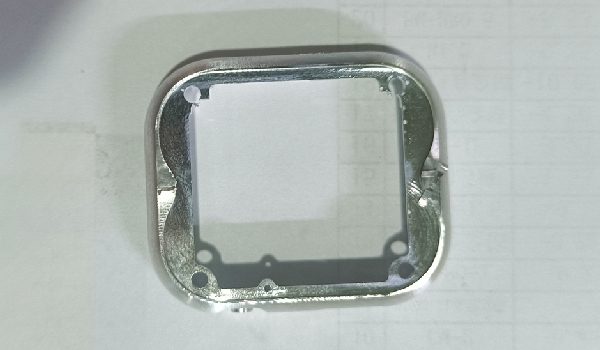
As a core component of a watch, the watch case not only defines the timepiece’s aesthetic style but also directly impacts its water resistance, durability, and wearing comfort. In the industrial production of watch cases, CNC machining technology has become the mainstream process due to its exceptional precision advantages. Meanwhile, aspects such as material selection involve numerous professional intricacies. This article comprehensively explains the core knowledge of watch case manufacturing from the perspectives of material classification, processing technology, surface treatment, and common technical questions.
Table of Contents
ToggleI. Analysis of Core Watch Case Materials: Characteristics and Application Scenarios
The selection of watch case materials must balance practicality and design requirements. Different materials vary significantly in hardness, weight, and corrosion resistance, making them suitable for different types of watches. Currently, the mainstream metal watch case materials mainly include three categories: stainless steel, aluminum alloy, and titanium alloy.
1. Stainless Steel Watch Cases (Including 316L Grade)
Stainless steel is the most widely used basic material in watch case manufacturing. Among them, 316L stainless steel has become a common choice for mid-to-high-end watches due to its excellent corrosion resistance. This material offers outstanding impact resistance and seawater tolerance, making it particularly suitable for entry-level sports watches and professional diving watches. In terms of structural design, stainless steel watch cases are usually prefabricated with integrated sealing grooves to ensure water resistance. For 316L stainless steel cases specifically designed for diving watches, their material standards fully meet the stringent requirements of diving equipment, enabling them to maintain stable performance in underwater environments for long periods.
2. Aluminum Alloy Watch Cases
Aluminum alloy watch cases mainly use grades AL6061-T6 and 6063, with core advantages of light weight and cost-effectiveness, making them ideal for casual watches and smartwatches. The density of aluminum alloy is much lower than that of stainless steel and titanium alloy, which can effectively reduce the overall weight of the watch and improve wearing comfort. Through precision anodizing, aluminum alloy watch cases can achieve a variety of color customizations, such as gunmetal, matte black, and metallic silver, while enhancing corrosion resistance. In mid-to-low-end watch product lines that balance quality and cost, aluminum alloy watch cases occupy an important position due to their excellent comprehensive performance.
3. Titanium Alloy Watch Cases
Titanium alloy watch cases mainly use alloy materials such as TA1, TA2/GR2, and TC4, focusing on light weight, hypoallergenicity, and high durability, specifically designed for professional sports watches and luxury outdoor watches. Titanium alloy itself has the problem of easy deformation during processing. The industry usually adopts a dual-spindle simultaneous machining process to solve this issue, which can control the deformation within 0.002mm. This material is perfectly suitable for high-intensity sports scenarios such as mountaineering and cross-country running. It not only does not add wearing burden due to weight but also extends the service life of the watch with its excellent wear resistance. At the same time, its hypoallergenic feature makes it suitable for people with sensitive skin.
II. CNC Machining: The Core Guarantee of Watch Case Precision
CNC (Computer Numerical Control) machining is the core process in metal watch case manufacturing. With micron-level machining precision, it realizes the precise forming of the main watch case and its components. Whether it is the processing of the entire case or the production of detailed parts, CNC technology can ensure the perfect fit between various components.
1. Core Forming Machining: Pursuing Ultimate Structural Precision
The CNC forming process of watch cases requires a multi-axis machining workflow to achieve flawless structural precision. Key links include: burr-free drilling of blind holes for strap installation, with tolerance strictly controlled within ±0.01mm; mirror-finish grinding of Tp inner rings, with surface roughness reaching Ra 0.1, completely eliminating machining marks and ensuring seamless assembly with straps and bezels. For luxury watches, precision milling of diamond-setting grooves is also provided, with strict control over groove curvature and edges to meet the technical requirements of high-end jewelry inlay.
2. Integrated Component Machining: Ensuring Overall Fit
The performance of a watch case depends not only on the main structure but also on the precision of supporting components such as sealing rings, bezel connectors, and internal mounting brackets. In the processing of professional diving watches, the machining gap tolerance of the sealing groove between the case and the bezel must be controlled within 0.005mm. Combined with customized components, it can meet professional high-pressure water resistance standards. For smartwatches, the processing of lightweight hollow components reduces the overall weight of the device without compromising strength.
III. Watch Case Surface Treatment Technology: Balancing Aesthetics and Durability
Surface treatment is an important link in watch case manufacturing. It not only improves the aesthetic texture but also enhances practical performance such as corrosion resistance and wear resistance. Different watch case materials are suitable for different surface treatment processes. Common processes are mainly divided into two categories: basic treatment and protective decorative coating.
1. Basic Treatment Processes
Before special coating treatment, all metal watch cases undergo grinding and chemical polishing to form a mirror-like base finish. For sports-style 316L stainless steel cases and titanium alloy cases, sandblasting is usually an additional step to create a low-key matte texture, which can hide minor wear marks in daily use and is more in line with the design style of outdoor watches.
2. Protective and Decorative Coating Processes
Different watch case materials need to be matched with exclusive coating processes to achieve the best protective effect and appearance performance:
- Anodizing: Exclusive to aluminum alloy watch cases, this process can significantly enhance corrosion resistance and enable color customization, ranging from bold hues to subtle metallic tones.
- Electroplating: Mainly applied to stainless steel and titanium alloy watch cases, electroplating creates luxurious surface effects such as rose gold and black chrome while improving rust resistance. Some high-end products also adopt a composite process of “sandblasting-anodizing-electroplating” to create a layered visual effect.
- High-End Wear-Resistant Coatings: PVD (Physical Vapor Deposition) coating is commonly used for daily-worn watch cases, which can significantly improve surface scratch resistance; DLC (Diamond-Like Carbon) coating is mainly applied to outdoor sports titanium alloy watch cases. Without affecting the appearance, it greatly enhances impact resistance and extends service life.
IV. Answers to Common Technical Questions About Watch Case Manufacturing
1. Will the watch case fade over time?
The fading of a watch case has nothing to do with the CNC machining process itself. The core causes are insufficient material purity or substandard surface treatment processes. High-quality metal watch cases use high-purity alloy raw materials, combined with standardized surface treatment processes, and pass strict tests such as salt spray testing to ensure that stainless steel, titanium alloy, aluminum alloy, and other material watch cases can resist oxidation for a long time and avoid fading.
2. How to avoid processing deformation of titanium alloy watch cases?
Titanium alloy itself has the characteristic of easy deformation during processing. The industry mainly uses the “dual-spindle simultaneous machining process” to solve this problem. Combined with special fixtures and optimized cutting parameters, the deformation can be controlled within 0.002mm. During production, at least 3 full-size inspections are conducted to correct processing deviations in a timely manner, ensuring the precision of each titanium alloy watch case meets the standard.
3. What are the key factors affecting the cost of custom watch cases?
The cost of custom watch cases mainly depends on three core factors: first, material selection, where titanium alloy watch cases are much more expensive than aluminum alloy ones; second, design complexity, where watch cases with special designs such as diamond-setting grooves and hollow structures require more processing steps, increasing the cost; third, production volume, where mass production can spread the processing cost and reduce the unit price.
Conclusion
Watch case manufacturing is a comprehensive discipline integrating material science, precision processing technology, and surface treatment processes. From the corrosion resistance of 316L stainless steel to the light weight advantage of titanium alloy, and from the micron-level precision of CNC machining to the characteristic application of various coating processes, the technical details of each link directly affect the quality and experience of the watch. Understanding these core knowledge points not only helps us better understand watch products but also allows us to deeply appreciate the technical charm of the precision manufacturing industry.


