
Wire EDM Service Machining In China
XINQIDA offers superior wire EDM services compliant with ISO 9001:2015 and ISO 13485:2016 standards.
- Tolerances to +/-0.001mm
- Stable production for complex geometries
- Strict quality control from material sourcing to final delivery
All your information and uploads are safe and confidential.
Wire EDM Machining Parts Carousel

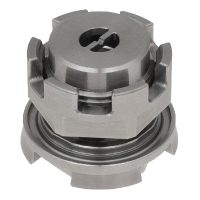
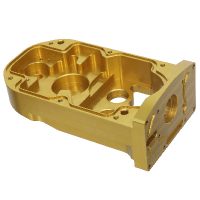
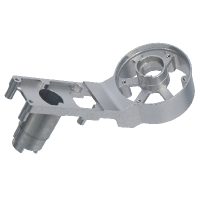
Advantages of Wire EDM Machining
- Ultra-high precision: Achieves extremely tight tolerances and fine features, ideal for complex components.
- Excellent surface quality: Produces burr-free, clean edges with minimal need for secondary processing.
- No cutting force: As material is removed by electrical discharge, it can cut hard materials easily without deformation.
- Strong capability for complex shapes: Handles sharp corners, deep slots, and slender structures that are difficult for traditional machining.
- Ideal for small batches and mold making: Offers high repeatability, making it suitable for precision molds, fixtures, and high-accuracy parts production.

Materials Eligible for Wire EDM Processing
Materials compatible with Wire EDM processing generally require electrical conductivity. Below is a detailed list of such applicable materials.Wire EDM-applicable materials usually must be electrically conductive. Here’s a comprehensive breakdown of suitable options.

Copper Alloys
Brass | Bronze | Copper

Nickel Alloys
Inconel | Monel


Stainless Steels
304 | 316 | 420 | 17-4 PH

Titanium Alloys
Ti-6Al-4V | Ti-6242

Tool Steels
D2 | H13 | M2 | A2

Graphite
Low | Medium| High-Density
Eager to start your wire EDM machining project? Let’s dive in!
Every piece of information and all uploads are protected securely and treated as confidential.
Wire EDM Services
FAQ's
Unlike CNC milling/turning (which use mechanical cutting tools), wire EDM uses electrical discharges for non-contact cutting. It excels at complex shapes, hard materials, and thin parts without causing material deformation. However, it is slower than milling for simple parts and limited to conductive materials.
Key cost factors include the workpiece material (harder materials take longer), part complexity (intricate contours require more programming time), tolerance requirements (tighter tolerances increase processing time), and part size (larger parts need more wire and dielectric fluid).
High-precision wire EDM (especially slow wire EDM) can achieve tolerances as tight as ±0.002mm. It also delivers excellent surface finish (Ra 0.1–0.8 μm) and maintains accuracy for complex contours, thin walls, and small holes.
Post-processing depends on application requirements: ① No post-processing needed for general parts (wire EDM delivers Ra 0.8–1.6 μm surface finish and clean edges); ② High-precision/mold parts: Use polishing (mechanical or electrochemical) to reduce surface roughness to Ra 0.1–0.4 μm; ③ Parts sensitive to HAZ: Perform grinding or lapping to remove the heat-affected layer; ④ Deburring: Use ultrasonic cleaning or manual deburring for tiny burrs in narrow gaps.
Wire EDM has three key limitations: ① It is only suitable for conductive materials (non-conductive materials like ceramics or plastics cannot be processed); ② Processing speed is slower than traditional CNC milling for simple parts (typically 20–200 mm²/min, depending on material and precision); ③ There is a risk of creating a thin Heat-Affected Zone (HAZ) on the workpiece surface, which may require post-processing for high-precision applications.
Our wire EDM service covers a wide range of parts, including: ① Precision mold components (cavities, inserts, slides for injection molds, stamping dies); ② Custom metal parts (thin-walled structures, narrow slots, complex contours, micro-holes); ③ Industry-specific components (aerospace fasteners, medical device parts, electronic connectors); ④ Hardened metal parts (HRC 55+ tool steel, stainless steel, titanium alloy, carbide). We support both small-batch prototypes and mass production, with a maximum workpiece size of 500×400×300mm (customizable for larger parts).