
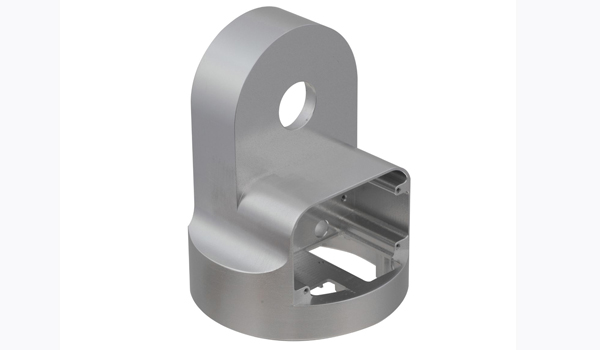
As a buyer or product manager in need of CNC wall thickness machining, our core demand when choosing a machining factory is simple: avoid detours and pitfalls, spend a reasonable cost, and get wall thickness machined parts that meet requirements and have stable quality. Whether you’re producing new energy components, 3C casings, aerospace parts, or medical catheters, any involvement in CNC wall thickness machining—especially for thin-walled and ultra-thin-walled parts—can easily lead to deformation, inaccurate precision, and batch scrapping if not handled carefully. This not only wastes money but also delays project schedules.
Based on years of experience in selecting CNC machining factories and in-depth understanding of wall thickness machining, this article will share, from a customer’s perspective, what to look for, what pitfalls to avoid, and how to choose the right factory for CNC wall thickness machining. It aims to help you accurately match a reliable factory and efficiently fulfill your machining needs.
Table of Contents
ToggleI. 3 Core Questions Customers Care About Most—Factories Must Be Able to Solve Them
When choosing a CNC machining factory, don’t first focus on its scale or publicity. Instead, check if it can solve your most practical pain points. Especially for wall thickness machining, if a factory can’t address these 3 questions, it’s not worth choosing even if it’s cheap:
1. Can the Precision Meet Requirements? Wall Thickness Uniformity Is the Bottom Line
We don’t want “roughly correct” wall thickness machining—we need precision and controllability. For both metal parts (conventional wall thickness ≥ 0.8mm) and plastic parts (conventional wall thickness ≥ 1.5mm), the wall thickness deviation must be ≤ 0.1mm. For ultra-thin-walled parts (≤ 1mm), the tolerance must be controlled within ±0.01mm—this is a rigid requirement.
More importantly, the wall thickness must be uniform, with no local thickening or thinning. Otherwise, it will cause jamming during subsequent assembly or cracking due to uneven force, which will ultimately cost us. Therefore, when choosing a factory, be sure to ask: Does it have online inspection equipment (such as a machine tool probe) to real-time correct dimensional deviations? Will key dimensions be verified with a coordinate measuring machine (CMM)? Can it provide a detailed inspection report clearly marking every wall thickness data?
2. Can Deformation Be Avoided? This Is the Key to Thin-Wall Machining
The most troublesome issue in thin-wall machining is deformation: excessive clamping force will cause compression deformation, while insufficient force will lead to workpiece movement during machining; unreasonable cutting parameters will result in tool deflection and vibration; failure to dissipate cutting heat will cause warping. Many small factories cannot solve these problems, and the final products they deliver are either unusable due to deformation or require secondary correction, which wastes time.
A reliable factory will definitely have mature solutions: for example, using flexible clamping methods such as vacuum adsorption and soft jaws with auxiliary support to avoid clamping deformation; adopting the process of “rough machining first, then finish machining” with multiple light cuts instead of “one-time cutting”; and matching high-pressure cooling to timely take away cutting heat, controlling deformation from the source. When choosing a factory, directly ask, “How do you control deformation in thin-wall machining?” and check if the answer is professional and specific, not vague.
3. Can Mass Production Be Stable? Sample Qualification Is Not Enough
Many factories produce perfect samples, but once mass production starts, the quality becomes inconsistent—some have excessive wall thickness deviation, some have visible tool marks, and some are directly deformed. The pass rate is even less than 80%, leading to production line shutdowns and rework for us, resulting in heavy losses.
For us customers, stable mass production quality is more important than anything else. Therefore, when choosing a factory, be sure to ask: Does it have a standardized process parameter database? Does it have exclusive machining schemes for different materials (aluminum alloy, stainless steel, titanium alloy)? During mass production, is there an inspection mechanism to ensure consistent quality between batches and within the same batch? A reliable factory will have a mass production pass rate of at least 98% and can provide mass production quality records to give you peace of mind.
II. 4 Pitfalls to Avoid When Choosing a CNC Machining Factory
Based on years of experience in avoiding pitfalls, these 4 pitfalls are the most common when choosing a factory for wall thickness machining—be sure to stay alert:
Pitfall 1: Only Quoting Low Prices, Not Discussing Processes
Some small factories quote much lower than the market price to win orders but never mention clamping methods, cutting parameters, or cooling processes. After you place an order, you will find that they use traditional hard clamping and randomly adjust cutting parameters, resulting in deformed products with inaccurate precision. Rework will also require additional costs, making it even more expensive in the end. Remember: Behind low prices, there is likely cut corners and substandard processes.
Pitfall 2: Exaggerating Capabilities, Unable to Actually Process Ultra-Thin Walls
Many factories claim to “be able to process 0.5mm ultra-thin walls,” but in reality, they have no special tools, no precision cooling equipment, and no mature processes. The final products are either severely deformed or directly scrapped. When choosing a factory, be sure to ask for machining cases and inspection reports of similar ultra-thin-walled parts. It’s best to check samples on-site to verify its actual capabilities.
Pitfall 3: Blindly Machining According to Drawings Without Prior Communication
Some factories start machining directly after receiving the drawings without communicating with you about unreasonable design points—such as the superposition of thin-wall and tall-thin features, which is inherently prone to vibration and deformation. However, the factory does not remind you, and when the final product is unqualified, it shifts the blame to your drawings. A reliable factory will take the initiative to help you optimize the drawings, avoid machining difficulties, and predict potential problems in advance.
Pitfall 4: Shifting Blame for After-Sales Issues and Refusing to Solve Them
Problems are inevitable during machining, but once wall thickness deviation, deformation, or other issues occur, some factories shift the blame—either saying “the drawings are problematic” or “the material is bad.” They do not take the initiative to analyze the causes, make rectifications, or provide rework and replacement services. In the end, it is us customers who suffer the losses.
III. 5 Key Points to Choose the Right CNC Machining Factory (Customer-Tested and Effective)
You don’t need to understand complex machining technologies. Just focus on these 5 key points to quickly screen out a reliable CNC wall thickness machining factory, saving time and worry:
1. Check Equipment Strength: Hard Power Determines Machining Precision
Focus on whether the factory has high-precision CNC machine tools (such as 5-axis linkage equipment), online inspection equipment (machine tool probes, CMMs), and special clamping and cooling equipment. Without these equipment, even the most skilled craftsmen cannot produce high-precision wall thickness machined parts. In addition, check the maintenance status of the equipment—clean and well-maintained equipment indicates standardized factory management and more guaranteed machining quality.
2. Check Process Experience: Cases Prove Reliability
Ask the factory if it has machining cases in your industry with the same wall thickness requirements. For example, if you produce new energy battery trays, check if it has experience in machining similar thin-walled parts; if you produce medical catheters, check if it has ultra-thin-wall machining experience. Ask for case inspection reports and customer reviews, and if possible, contact past customers to learn about their actual cooperation experience.
3. Check Quality Control: Processes Ensure Stability
A reliable factory will have a complete quality control process: incoming material inspection (to ensure qualified materials), in-process inspection (to detect problems in a timely manner), and final product 100% inspection (to ensure unqualified products never leave the factory), with records for every step. At the same time, it will establish tool life files and process parameter databases to ensure consistency in mass production.
4. Check Delivery Guarantee: Don’t Delay Your Project Schedule
When we choose a factory for machining, the delivery time directly affects our project schedule. Therefore, ask clearly about the factory’s production capacity—can it match your order volume (sample orders, small-batch orders, mass orders)? Can it give a clear delivery commitment? In addition, check if it has emergency production capabilities—can it shorten the delivery time without compromising quality when encountering urgent orders?
5. Check Service Attitude: Smooth Communication Saves Worry
A good factory will take the initiative to communicate and solve problems: after receiving the drawings, it will help you optimize the process; during machining, it will regularly feedback the progress and take the initiative to inform you of potential problems and provide solutions; when quality objections arise, it will respond in a timely manner, provide quick rework and replacement services, so you don’t have to repeatedly urge or argue.
IV. Practical Cooperation Suggestions: Do This to Make Machining Smoother and Quality More Guaranteed
After choosing the right factory, doing these 3 steps can further avoid problems and make cooperation smoother:
1. Before Machining: Clarify Requirements and Confirm the Plan
Provide complete and accurate drawings, clarify core requirements such as wall thickness dimensions, tolerances, surface roughness, and material grades, and mark key quality control points; ask the factory to issue a detailed machining process plan, including clamping methods, cutting parameters, machining paths, and inspection methods. Sign an agreement after both parties confirm, clarifying quality standards, pass rate, delivery time, after-sales guarantee, and other contents.
2. During Machining: Follow Up in Real Time and Communicate Timely
Ask the factory to regularly feedback the machining progress, such as sending production photos and inspection data every day; for mass orders, you can arrange personnel to conduct on-site inspections to detect and solve potential problems in a timely manner, avoiding batch scrapping.
3. After Machining: Conduct Strict Acceptance and Keep Files
Conduct strict acceptance according to the agreement standards, focusing on testing indicators such as wall thickness dimensions, uniformity, and surface quality—firmly reject unqualified products; ask the factory to provide a final product inspection report, and keep it together with the drawings and process plan for subsequent traceability; establish a long-term cooperation feedback mechanism, and timely feedback problems to the factory to promote its continuous optimization.
Conclusion
For us customers, choosing a CNC machining factory for wall thickness machining is not about “finding any factory that can machine,” but about “finding a reliable partner that can solve problems, guarantee quality, and save worry.” The precision, deformation control, and mass production stability of wall thickness machining are directly related to our product quality and project progress, and cannot be taken lightly.
It is hoped that this article can help every friend in need of CNC wall thickness machining avoid pitfalls, choose the right factory, spend a reasonable cost, and get satisfactory machined parts, making every cooperation efficient and smooth, and laying a solid foundation for your product production.


