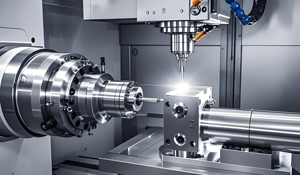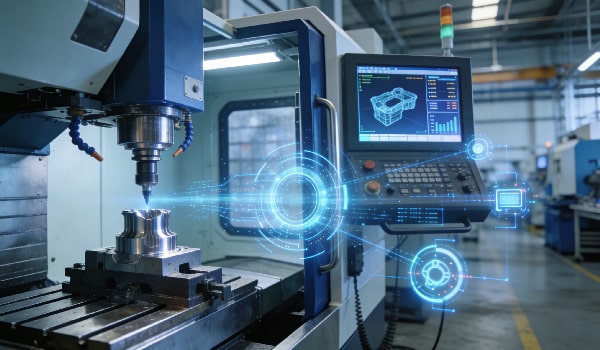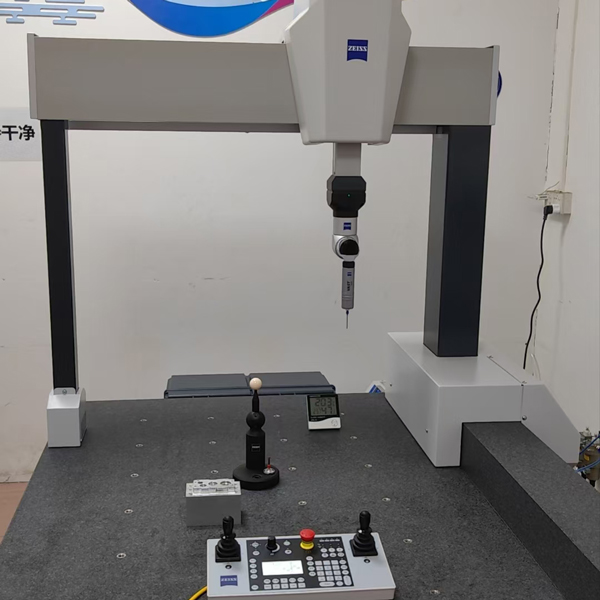
In modern mechanical manufacturing, CNC machining has become the core production technology for critical components across industries such as aerospace, automotive manufacturing, and precision mold production. Its advantages in automation, efficiency, and repeatability make it indispensable. Among all performance indicators, machining accuracy remains the lifeline of CNC manufacturing, directly determining component fit, functional performance, and service life.
From micron-level precision parts to large mechanical structures, machining accuracy is never governed by a single factor. Instead, it results from a systematic interaction of machine capability, tooling, workpiece characteristics, environmental conditions, operational practices, and process parameters. Even minor deviations in any stage can accumulate and ultimately compromise final part quality.
Drawing on industry practice and engineering expertise, this article analyzes the six core factors influencing CNC machining accuracy, providing practical guidance for precision control and process optimization.
Table of Contents
Toggle1. Machine Tool Accuracy: The Foundation of Precision Machining
Machine tool accuracy forms the fundamental basis of CNC machining performance and is one of the most decisive contributors to final part precision. Machine accuracy can generally be divided into mechanical accuracy and electrical control accuracy, both of which jointly determine machining capability.
From a mechanical perspective, spindle rotational accuracy directly affects concentricity and surface finish, while ball screw transmission accuracy determines axis positioning precision. Overall machine rigidity plays a crucial role in minimizing deformation and vibration under cutting loads. Fixture accuracy is equally important, as positioning errors are directly transferred to the workpiece.
Aging or low-end machines often suffer from guideway wear or excessive backlash in drive systems, resulting in poor repeat positioning accuracy and reduced machining quality.
On the electrical side, control architecture significantly influences performance. Full closed-loop control systems, equipped with real-time position feedback, generally achieve higher accuracy than semi-closed-loop systems. Interpolation precision and compensation algorithms are especially critical when machining complex geometries or freeform surfaces, where even small interpolation errors may accumulate during batch production.
Machine installation should not be overlooked. Poor foundation stability, leveling errors, or loose anchor bolts can introduce micro-vibrations that gradually degrade machining accuracy over time.
2. Tool Wear and Tool Selection: Direct Determinants of Accuracy
Cutting tools serve as the direct execution interface of CNC machining, making tool condition a critical factor in dimensional accuracy and surface integrity.
During continuous machining, tool edges inevitably wear, leading to dimensional variation and inconsistent cutting performance. In precision machining applications, radial runout exceeding 0.01 mm can already produce noticeable dimensional deviations.
Beyond wear, proper tool selection is equally important. Different workpiece materials demand specific tool materials and coatings. For example, machining titanium alloys without coated carbide tools may result in built-up edge formation or premature tool failure. Likewise, micro-hole machining requires high-rigidity carbide micro drills rather than conventional twist drills prone to breakage.
Routine tool inspection, timely replacement, and material-specific tool selection are therefore essential measures for maintaining machining precision.
3. Workpiece Material and Geometry: The Basis of Process Planning
Workpiece material properties and structural design largely determine machining difficulty and achievable accuracy.
Materials differ significantly in hardness, strength, thermal conductivity, and machinability. Aluminum alloys are relatively easy to machine and conducive to high precision, whereas titanium and high-temperature alloys generate excessive heat due to poor thermal conductivity, increasing both tool wear and thermal deformation risks.
Residual internal stress within materials can also be released during machining, causing deformation through stress redistribution—an often overlooked source of dimensional error in precision manufacturing.
Geometry further complicates accuracy control. Simple structures are easier to machine consistently, while complex surfaces, deep cavities, and thin-wall components introduce vibration risks and unstable cutting forces. Thin-wall aluminum components, for instance, are highly sensitive to clamping deformation, while deep cavities with aspect ratios exceeding 10:1 often suffer from tool deflection caused by excessive tool overhang.
Proper process planning should therefore include material-based parameter selection, optimized tooling strategies, and stress-relief heat treatment when necessary.
4. Environmental Stability: Ensuring Accuracy Consistency
Environmental stability is a critical prerequisite for maintaining machining precision. Variations in temperature and humidity influence machines, tools, and workpieces through thermal expansion and material behavior changes.
Machine components, cutting tools, and workpiece materials all expand or contract with temperature fluctuations. Heat generated by high-speed spindle operation or ambient temperature variation can cause axis positioning drift. In high-precision machining, even slight temperature differences may lead to measurable dimensional errors.
Humidity also affects machining reliability. Excess moisture may cause corrosion or guideway degradation, while overly dry environments increase static electricity risks that may interfere with CNC control systems.
Dust contamination and external vibration sources further compromise accuracy by accelerating mechanical wear or disturbing cutting stability. Maintaining temperature-controlled workshops along with vibration isolation and dust prevention measures is therefore essential for precision CNC operations.
5. Human Factors: The Most Controllable Source of Error
Operator-related errors remain one of the most common and controllable contributors to machining inaccuracy, particularly in customized or non-standard production environments.
CNC machining extends far beyond simply running programmed operations. Programming quality, setup accuracy, and parameter selection depend heavily on operator expertise. Insufficient system familiarity or process understanding may result in incorrect tool compensation values, improper cutting parameters, or inefficient machining strategies.
For example, excessive feed rates or cutting depth can induce vibration and poor surface finish, while incorrect tool offset inputs directly lead to dimensional deviation. Failure to align machine and fixture reference systems during setup may introduce cumulative errors from the very beginning.
Additionally, inadequate preventive maintenance—such as poor lubrication or infrequent calibration—gradually reduces machine precision. Standardized operating procedures, continuous training, and disciplined maintenance routines are therefore vital for minimizing human-induced errors.
6. Process Parameters: The Key to Error Control
Optimized machining processes and parameters transform equipment capability into actual machining accuracy and serve as an effective means of compensating for minor system deviations.
Precision machining fundamentally revolves around error control, and parameter selection determines cutting stability. Cutting speed, feed rate, and depth of cut must be matched to both tool characteristics and material properties. Excessive feed rates increase vibration, while overly small cutting depths may cause rubbing instead of cutting—both detrimental to accuracy.
Toolpath strategy is equally important for complex parts. In five-axis machining, improper tool-axis orientation may cause deviation between theoretical and actual cutting points. Deep cavity machining using layered milling may also introduce chatter due to extended tool overhang.
Cooling strategy plays a significant role as well. Efficient coolant application removes cutting heat, reducing thermal deformation of both tool and workpiece. For example, adequate cooling is essential when machining titanium alloys to prevent adhesion and distortion.
Experienced process engineers typically rely on iterative cycles of trial cutting, measurement, and compensation to continuously refine machining parameters and minimize deviation.
Multi-Factor Coordination: The Core Principle of Precision Manufacturing
In conclusion, CNC machining accuracy is the outcome of a highly integrated system. Machine capability, tooling condition, workpiece characteristics, environmental stability, operator competence, and process optimization are interdependent factors. Weakness in any single area can become the root cause of precision loss.
As manufacturing industries continue to demand higher precision standards, effective accuracy control requires a holistic approach—from proper machine selection and maintenance, to optimized tooling and process planning, controlled environments, and skilled operation management.
Only through coordinated control across all stages can manufacturers consistently produce high-precision components that fully meet modern engineering requirements.