Surface Treatment

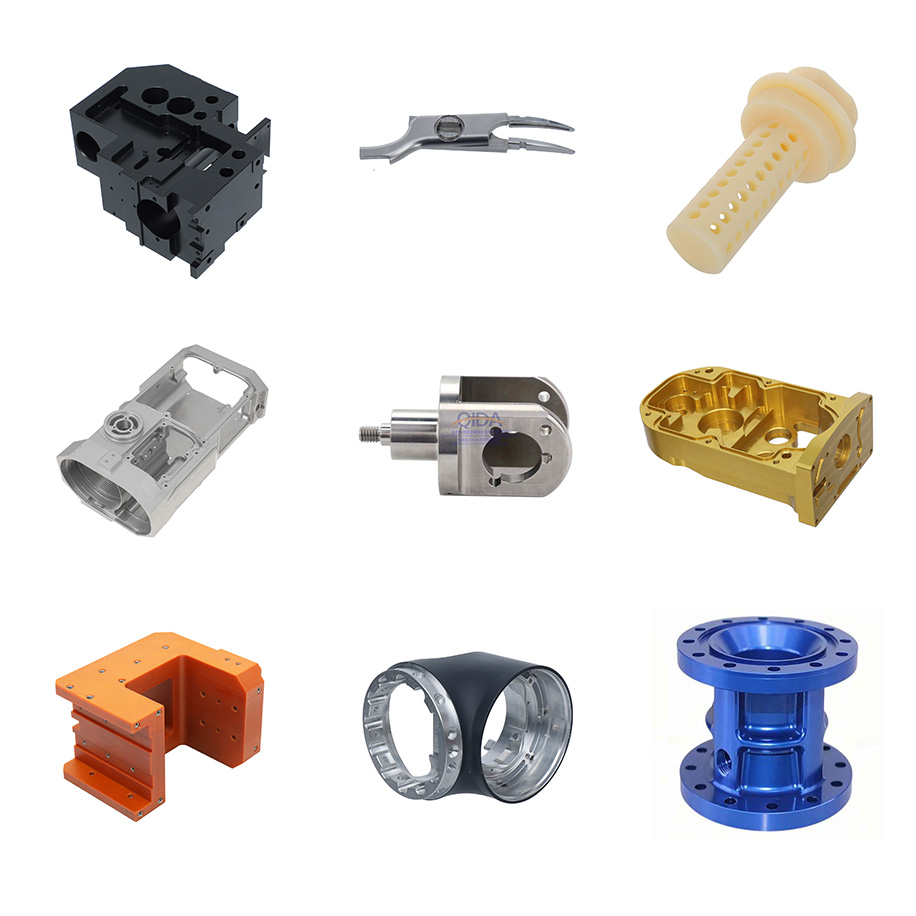
CNC machining surface finishing focuses on optimizing part performance and appearance, providing both protection and improved precision. Common processes include anodizing, electroplating, passivation, polishing, and coating, which help achieve corrosion resistance, enhanced wear resistance, reduced surface roughness, and improved surface smoothness. The finishing method should be selected based on the part material (such as aluminum or steel) and its application scenario to ensure stability and service life.

Name
Please include material, quantity & finishing
Drag & Drop Files, Choose Files to Upload You can upload up to 2 files.
File types:STEP, STP, SLDPRT, STL, DXF, IPT, X_T, X_B, 3MF, 3DXML, CATPART, PRT, SAT(20 MB Maximum Per File)

All your information and uploads are safe and confidential.

Surface Treatment Processes

Extend lifespan and resist environmental erosion

Anodizing Aluminum

Aluminum anodizing is an electrochemical oxidation process where aluminum substrates undergo electrolysis in appropriate electrolytes (e.g., sulfuric, oxalic acids), enabling in-situ growth of a dense, porous Al₂O₃ ceramic film with metallurgical bonding to the base material. It drastically enhances corrosion resistance, microhardness (HV300-500), and dyeability, maintains dimensional stability, improves wear resistance, and provides a compatible surface for subsequent coatings.

Electroplating

Electroplating is an electrochemical deposition process where metal ions in electrolytes are reduced via anode-cathode reactions under an electric field, then electrodeposited onto metal substrates. It forms a uniform, dense metallic coating with strong metallurgical adhesion, significantly boosting corrosion/wear resistance, electrical conductivity, and decorative finish, enhancing service life.

Passivation

Passivation is a chemical/electrochemical conversion process where metal substrates react with passivators (e.g., chromate, chromium-free formulations) via chemical adsorption/redox reactions, forming an inert, dense, adherent passive film (metal oxides/hydroxides). It boosts corrosion resistance drastically, improves surface inertness, preserves dimensional precision, avoids substrate dissolution, and suits post-treatments

Electrophoretic Coating

Electrophoretic coating (e-coating) is an electrochemical deposition process based on colloidal dispersion: charged paint particles (anionic/cationic) migrate to oppositely charged metal substrates under an electric field, undergoing electrophoresis, electrodeposition, electrolysis, electroosmosis. It forms a uniform, dense, pinhole-free film (10-30μm) via crosslinking, with excellent adhesion, boosting corrosion/wear resistance, ensuring edge coverage, using water-based low-VOC formulations, preserving dimensional precision

Chemical conversion membrane

Chemical conversion coating (phosphoric acid treatment) is a chemical surface modification process: metal substrates react with phosphoric acid-based solutions (containing accelerators/complexing agents) via etching, redox, and chemical adsorption, forming a thin (0.5-3μm), dense, adherent metal phosphate/inorganic-organic hybrid film. It boosts corrosion resistance, optimizes surface roughness, enhances subsequent coating adhesion, preserves dimensional stability, and is chromium-free.

Improve hardness, abrasion resistance / adhesion

Nitriding

Nitriding (nitrogen diffusion, hardness enhancement) is a thermochemical surface hardening process: nitrogen atoms (from ammonia/urea) are activated by heat/plasma, diffusing into metal substrates at <550℃ to form a metallurgically bonded layer (nitride compound layer + diffusion layer, 50-200μm). It drastically boosts surface hardness (HV1000-1200), wear resistance, corrosion resistance, and fatigue strength, with minimal distortion and retained dimensional stability

Optimize microstructure and remove processing marks

Polishing

Polishing is a precision mechanical/chemical/electrochemical surface finishing process: via abrasion (abrasive particles/buffing wheels), chemical dissolution, or electrolytic action, it removes micro-defects, reduces surface roughness (Ra 0.01-0.8μm), creating mirror/satin finishes. It enhances reflectivity, improves corrosion resistance, optimizes subsequent coating adhesion, with minimal material removal and retained dimensional accuracy

Aesthetically pleasing and consistent in texture

spray coating

Aluminum anodizing is an electrochemical oxidation process where aluminum substrates undergo electrolysis in appropriate electrolytes (e.g., sulfuric, oxalic acids), enabling in-situ growth of a dense, porous Al₂O₃ ceramic film with metallurgical bonding to the base material. It drastically enhances corrosion resistance, microhardness (HV300-500), and dyeability, maintains dimensional stability, improves wear resistance, and provides a compatible surface for subsequent coatings.

To meet specific working conditions

Insulating coating

Insulating coating provides a uniform dielectric layer that prevents electrical leakage, enhances surface resistance, and protects metal substrates from arcing, moisture, and thermal stress. It ensures stable electrical performance, improves reliability, and supports precise assembly in powered systems.

Surface Finishing Applications

Enhanced components across industries

  • Aerospace components – Anodized aluminium for anti-corrosion protection and lightweight performance
  • Medical instruments – Electropolished stainless steel for biocompatible properties and easy sanitization
  • Optical parts – High-precision polishing for optimal transparency and functional reliability
  • Semiconductor tools – Customized coatings for chemical inertness and ultra-high purity
  • Automotive components – Electrophoretic coating for scratch resistance and long-term durability
  • Consumer electronics – Sandblasted anodization on smartphone casings for tactile texture and fingerprint resistance
  • Marine hardware – Hot-dip galvanizing for saltwater corrosion resistance and structural stability
  • Renewable energy components – Polyurethane coating on wind turbine blades for weather resistance and extended service life
  • Construction materials – Fluorocarbon coating on aluminum profiles for UV resistance and color retention
  • Tooling & machinery parts – Chrome plating for wear resistance and low friction
  • Jewelry & luxury goods – Rhodium plating on silver accessories for tarnish resistance and premium luster
  • Heavy-duty truck parts – Powder coating on chassis components for impact resistance and anti-rust performance

precision surface treatment cnc parts

Looking to Upgrade Your Parts?

Get a surface finish customized precisely to your application requirements. Our experts provide personalized finish advice and all-inclusive quotes, covering complete machining and finishing services.