
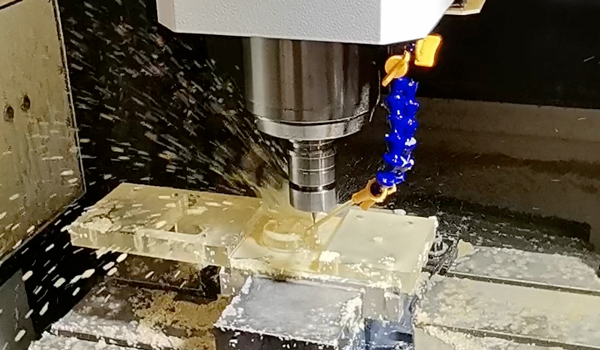
Stainless steel is widely used in machinery manufacturing, automotive, aerospace, and other industries due to its excellent corrosion resistance, high temperature resistance, and mechanical properties. However, its unique material characteristics—such as high toughness, poor thermal conductivity, strong adhesion, and easy work hardening—bring many challenges to machining processes. Below, we summarize 10 common problems in stainless steel machining, along with their core manifestations and impacts, to help manufacturers and technicians identify and address issues efficiently.
Table of Contents
ToggleWork Hardening (Severe Machining Hardening)
This is the most fundamental and common problem in stainless steel machining, especially for austenitic stainless steel (such as 304, 316L). During the cutting process, the surface metal of the workpiece undergoes severe plastic deformation, leading to a rapid increase in hardness (the hardness can be increased by more than 50% compared with the base material). This hardened layer makes it more difficult for the tool to cut in subsequent processes, increases cutting resistance sharply, and easily causes tool chipping and accelerated wear, ultimately reducing machining efficiency and increasing costs.
Rapid Tool Wear
Stainless steel has high toughness, strong adhesion, and poor thermal conductivity. During machining, the tool edge is easily worn by the abrasive action of the workpiece material; at the same time, the adhesion between chips and the tool rake face forms built-up edges, which further aggravates tool wear. Common wear forms include abrasive wear, adhesive wear, and crater wear. The service life of tools in stainless steel machining is only 1/3 to 1/5 of that in carbon steel machining, which greatly increases the frequency of tool changes and production costs.
Poor Chip Control (Difficult Chip Removal)
Stainless steel chips have extremely high toughness and are not easy to break during cutting, often forming long, continuous curly chips or tangled chips. These chips cannot be discharged naturally, and will wrap around the tool and workpiece, scratching the machined surface, causing dimensional deviations, and even jamming the CNC spindle. In addition, tangled chips will block the cutting fluid from reaching the cutting area, which further exacerbates tool adhesion and thermal deformation.
High Cutting Force
Stainless steel has strong deformation resistance and high hardness (especially after work hardening), which leads to large cutting resistance during machining. High cutting force puts high requirements on the rigidity of the machine tool and fixture; if the rigidity is insufficient, it is easy to cause machine tool vibration, tool deflection, and unstable machining dimensions, affecting the overall processing accuracy.
Poor Surface Finish
Affected by factors such as built-up edges, chip scratching, tool vibration, and unreasonable cutting parameters, the machined surface of stainless steel is prone to burrs, tool marks, scratches, and other defects. The surface roughness (Ra value) fluctuates greatly, failing to meet the requirements of high-precision orders (such as Ra ≤ 1.6μm). Poor surface finish is one of the main reasons for order rejection in high-end foreign trade orders.
High Cutting Temperature
Stainless steel has poor thermal conductivity, which makes it difficult for the heat generated during cutting to be quickly dissipated. Most of the heat (about 70%~80%) is concentrated in the tool tip area, leading to a sharp increase in the temperature of the tool tip (up to 800~1000℃). High temperature will accelerate tool failure, soften the tool material, and cause thermal deformation of the workpiece, further affecting machining accuracy.
Dimensional Inaccuracy
The main causes of dimensional deviation in stainless steel machining are two aspects: on the one hand, the high cutting temperature leads to thermal deformation of the workpiece and tool (especially for thin-walled stainless steel parts, the thermal deformation can reach more than 0.05mm); on the other hand, the obvious elastic recovery of stainless steel and tool deflection caused by work hardening will also lead to deviations in hole diameter, outer circle, flatness, and other dimensions, making it difficult to meet the precision requirements.
Chatter & Vibration
Due to the high cutting force, poor rigidity of the machine tool/fixture, or unreasonable cutting parameters, stainless steel is prone to “tool biting” during machining, resulting in abnormal machining noise (such as harsh squeaking). This vibration and chatter will leave obvious ripples on the workpiece surface, aggravate tool wear and chipping, and even damage the machine tool spindle in severe cases.
Low Machining Efficiency (Limited by Low Speed Machining)
To avoid problems such as severe work hardening, built-up edges, and tool chipping, stainless steel machining cannot adopt high-speed cutting parameters. The cutting speed and feed rate are greatly limited, resulting in long machining cycles and low production efficiency. For mass production, low efficiency will directly lead to increased comprehensive processing costs and reduced market competitiveness.
Material Grade Sensitivity (Large Differences Between Grades)
Different grades of stainless steel have significant differences in machining performance. For example, austenitic stainless steel (304, 316L) is prone to work hardening and tool adhesion; martensitic stainless steel (410, 420) has high hardness and is prone to tool wear; precipitation-hardening stainless steel (17-4PH) has complex machining performance and high requirements on cutting parameters. Using the same machining parameters for different grades will result in completely different machining effects and precision.
Stainless Steel Grade | Steel Type | Key Machining Problems |
|---|---|---|
304 / 316 / 316L | Austenitic | Severe work hardening, strong tool adhesion, built-up edge formation, poor chip control |
410 / 420 / 440C | Martensitic | High hardness, rapid tool wear, easy tool chipping, high cutting force |
17-4PH | Precipitation-hardening | Complex machining performance, strict requirements on cutting parameters, dimensional inaccuracy |
2205 / 2507 | Duplex | Severe work hardening, rapid tool wear, high cutting temperature, poor surface finish |
430 / 409L | Ferritic | Mild work hardening, poor surface finish, slight tool adhesion |


